

Infrastructure
Built to Scale
Built for live and on-demand demand
Scales with audience growth
Supports peak traffic periods


TRUSTED BY GLOBAL LEADERS










Built for Demanding Streaming Workloads
Support changing traffic conditions across live and on-demand streaming with infrastructure designed to stay steady as demand becomes more complex.
Audience Growth
Support rising viewership without reworking your infrastructure.
Peak Traffic Periods
Stay better prepared for sudden spikes in platform activity.
High-Concurrency Streaming
Support more simultaneous viewers with greater stability.
Live Event Surges
Handle time-sensitive demand during live streaming peaks.
Expanding Content Operations
Keep up as your platform, catalog, and usage grow.
Core Capabilities Behind Scalable Streaming
High AvailabilitySupport continuous access during peak usage with infrastructure designed for stronger uptime and resilience.
Advanced MonitoringTrack infrastructure health to identify issues early and reduce performance bottlenecks.
Load DistributionBalance incoming traffic across resources to support steadier platform performance.
Storage OptimizationSupport heavier media workloads with scalable storage layers built for efficient delivery.
How Muvi Scales Streaming Infrastructure
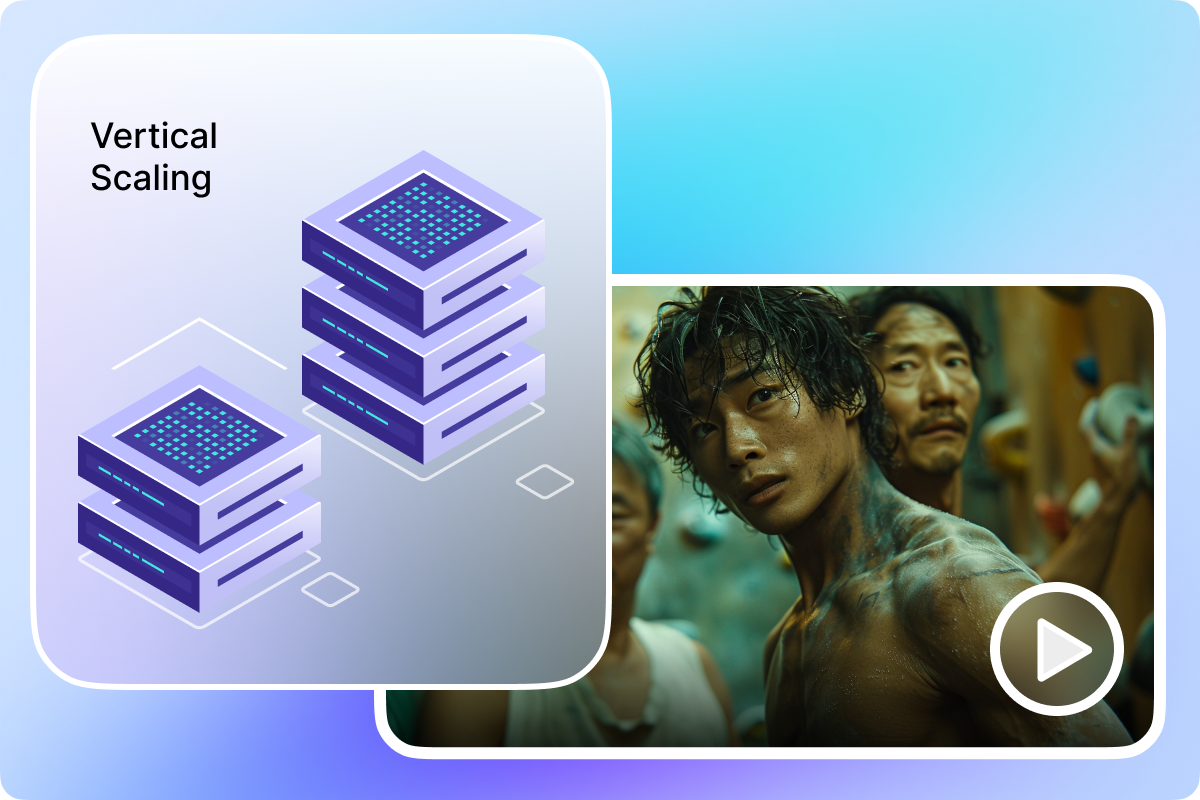
Strengthen an existing infrastructure resource.
Vertical scaling increases the capacity of a current server or resource by adding more compute power, memory, or storage. It is useful when a workload needs more power within the same infrastructure layer.
- Add more vCPUs, memory, or storage
- Improve performance for heavier processing demand
- Strengthen an existing resource before adding new instances

Add more resources to distribute demand.
Horizontal scaling increases capacity by adding more servers or infrastructure resources. It helps spread traffic across the system instead of depending on a single resource.
- Add servers or instances as traffic grows
- Distribute demand across multiple infrastructure resources
- Support larger audiences with greater flexibility
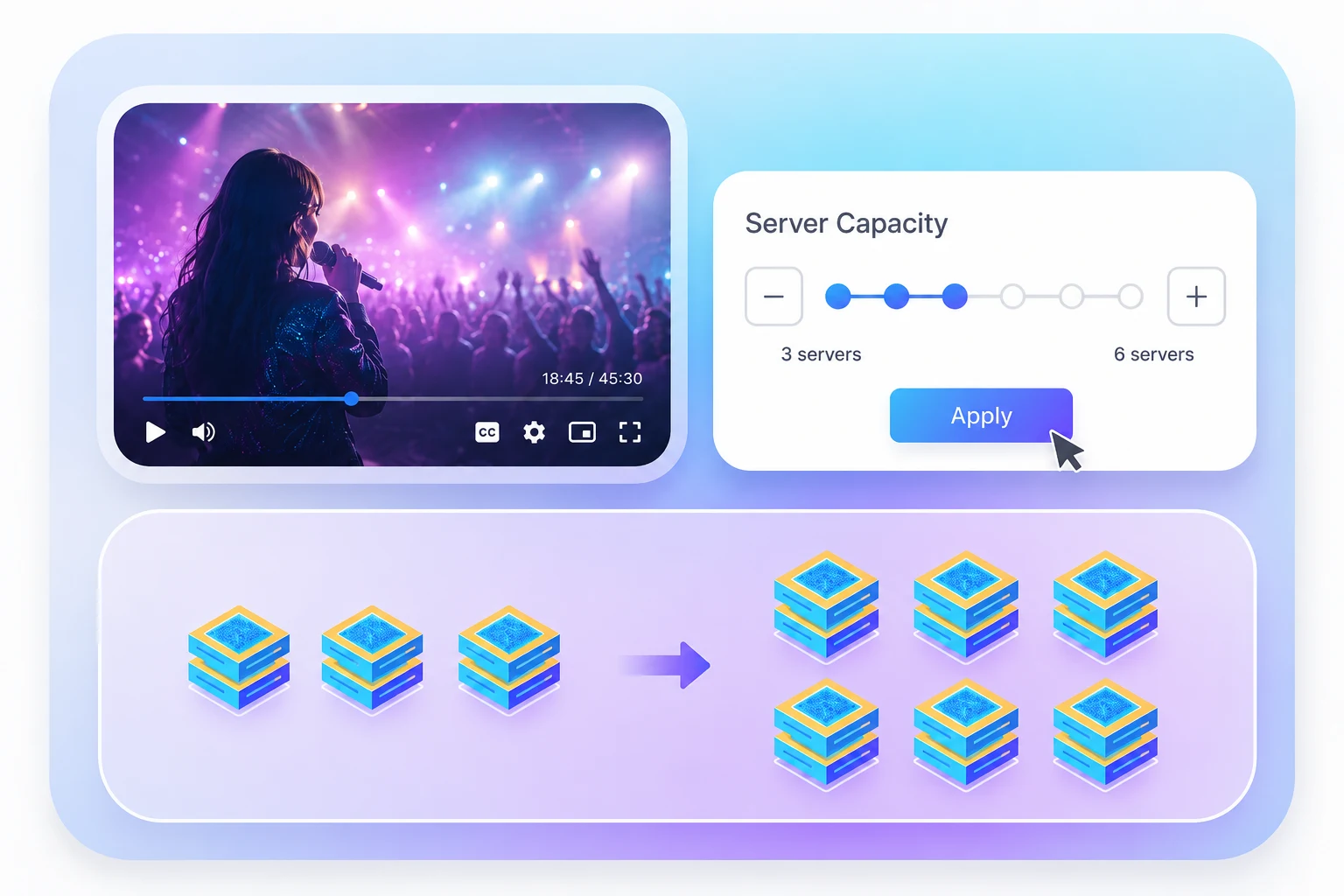
Make planned capacity changes with direct control.
Manual scaling allows teams to change infrastructure capacity based on expected needs, planned events, or operational decisions. It works well when capacity changes are known in advance.
- Useful for launches, campaigns, and planned events
- Gives teams control over infrastructure adjustments
- Helps align capacity with operational planning
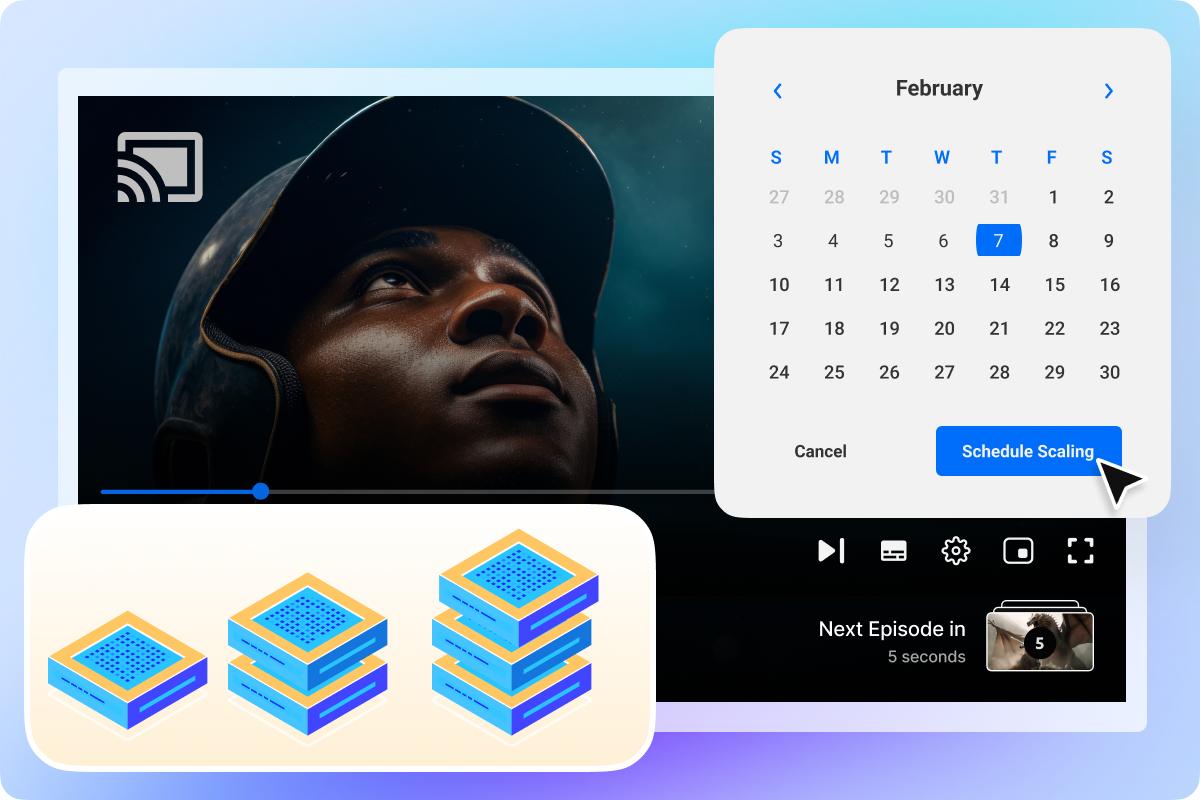
Prepare capacity before known traffic windows.
Scheduled scaling adjusts infrastructure capacity at pre-defined times. It is useful when traffic patterns are predictable or tied to recurring events.
- Scale ahead of recurring demand periods
- Support scheduled releases, premieres, or campaigns
- Reduce last-minute infrastructure changes
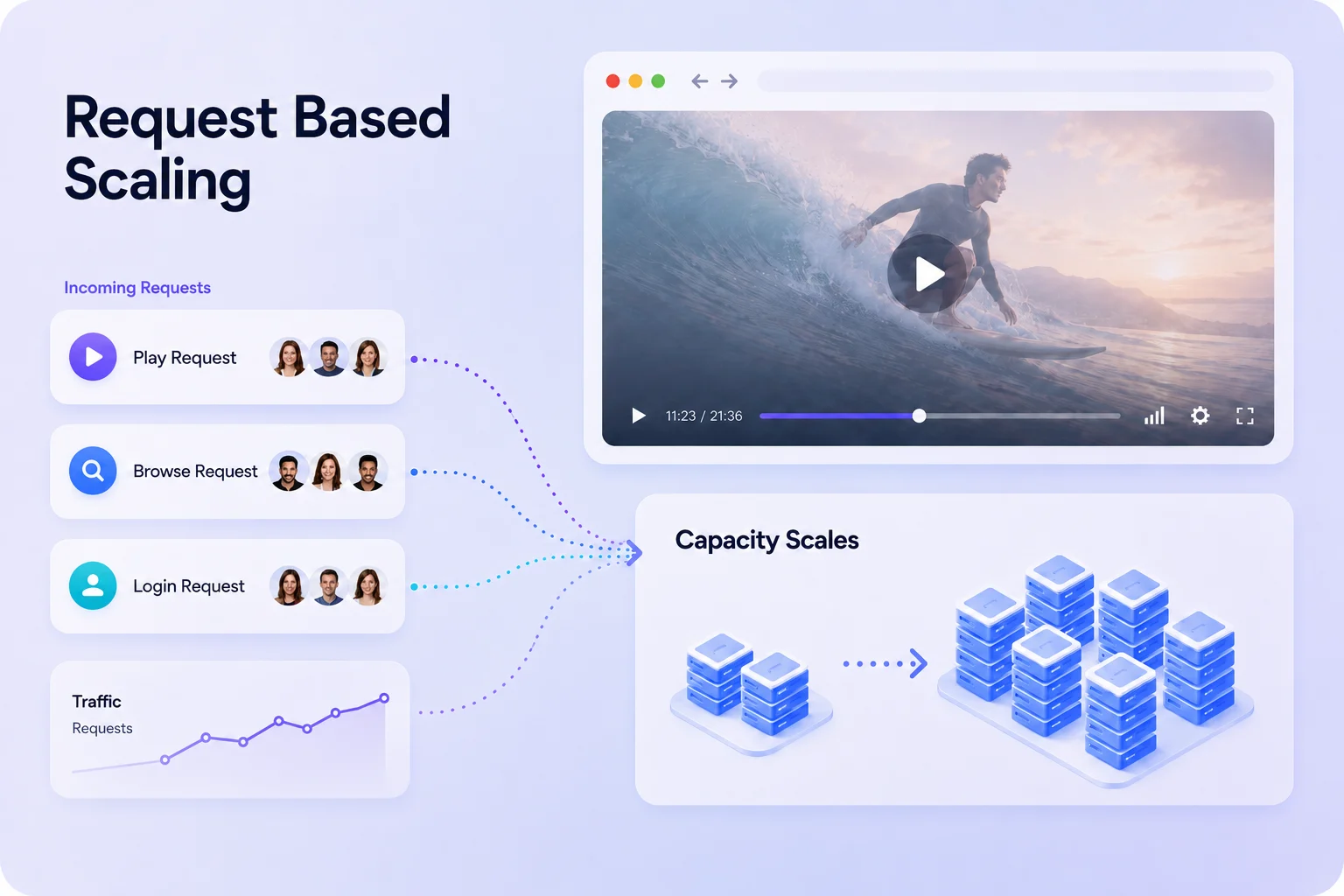
Let incoming platform activity drive capacity changes.
Request-based scaling adjusts capacity based on incoming traffic, viewer activity, or request volume. It helps infrastructure respond when platform usage starts rising.
- Track traffic and request volume
- Add capacity as viewer activity increases
- Support demand that changes with audience behavior
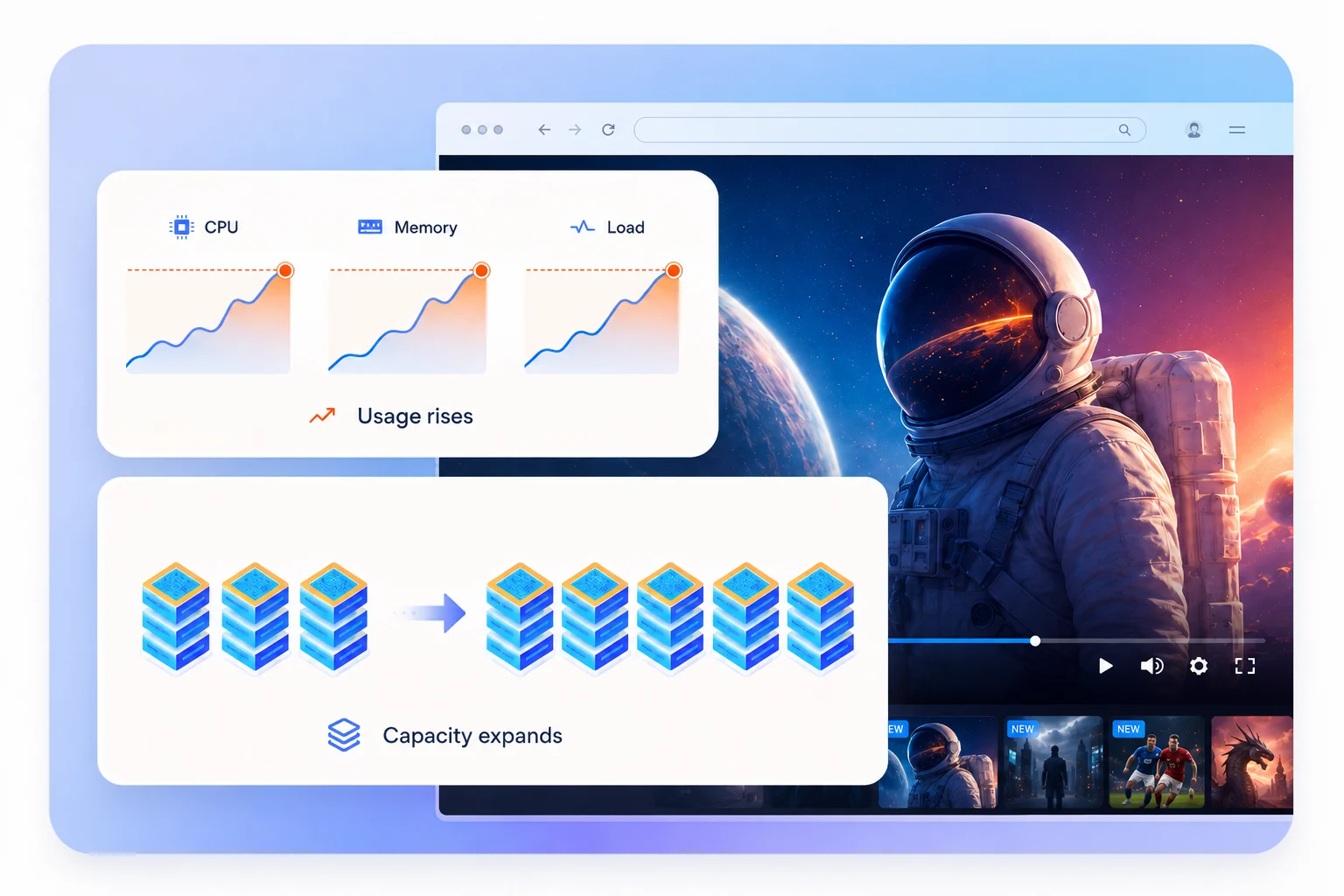
Scale when system usage shows pressure.
Resource-based scaling adjusts capacity based on infrastructure signals such as CPU usage, memory usage, load, or overall resource pressure. It helps reduce strain before performance is affected.
- Respond to CPU, memory, or load thresholds
- Reduce pressure during heavier workloads
- Keep infrastructure more responsive under usage spikes
Why Muvi for
Scalable Streaming
Support live, on-demand, and high-traffic viewing experiences with infrastructure designed around streaming workloads.
Let Muvi handle the infrastructure layer needed to support changing traffic, workload, and usage conditions.
Power web, mobile, and TV apps on top of infrastructure designed to support growth across devices.
Reduce the need to plan, manage, and maintain every infrastructure layer separately as your platform scales.
Support audience expansion, larger catalogs, and peak streaming periods with a platform built to grow with demand.
Frequently Asked Questions
Scalable streaming infrastructure allows a platform to support growing traffic, heavier workloads, and peak viewing periods by adjusting infrastructure capacity as demand changes.
Muvi supports infrastructure scaling, traffic distribution, monitoring, and storage optimization to help streaming platforms stay responsive during sudden or expected increases in usage.
Vertical scaling increases the capacity of an existing resource by adding more compute power, memory, or storage. Horizontal scaling adds more servers or resources to distribute demand across the infrastructure.
Yes. Muvi’s infrastructure is designed to support both live and on-demand streaming workloads, including audience growth, peak traffic periods, and high-concurrency viewing conditions.
Manual scaling allows infrastructure capacity to be adjusted based on planned needs, such as launches, events, campaigns, or expected traffic periods.
Scheduled scaling adjusts infrastructure capacity at pre-defined times. It is useful for recurring events, planned premieres, campaigns, or known high-traffic windows.
Request-based scaling adjusts infrastructure capacity based on incoming traffic, viewer activity, or request volume. It helps capacity follow platform usage more closely as demand increases.
Resource-based scaling adjusts capacity based on infrastructure usage levels such as CPU, memory, load, or overall resource pressure. It helps reduce strain when workloads become heavier.
Monitoring helps track infrastructure health, usage levels, and performance signals so potential bottlenecks can be identified early and addressed before they affect the streaming experience.
OTT platforms often face changing demand from live events, content releases, audience growth, and concurrent viewing. Scalable infrastructure helps support these changes without forcing teams to rework the platform every time demand increases.