These days, streaming video isn’t just for Netflix-scale services. Whether you’re launching a corporate training portal, a niche content hub, a live-event channel, or a monetized OTT offering — you need a platform that gives you full control over branding, content, distribution and monetization. That’s where whitelabel video streaming platforms come in.
But here’s the challenge: with dozens of white label OTT platforms flooding the market in 2025, each promising to be “the best,” how do you separate the true powerhouses from the pretenders?
Don’t worry. We’ve done the heavy lifting for you. This guide is built for broadcasters looking to scale with white label streaming services that offer full branding, secure delivery, and flexible monetization. In this guide, we list the top whitelabel OTT platforms — including Muvi One and popular alternatives — compare their features, pricing, pros, and cons, and help you pick the right one for your needs.
What Is a White Label Video Streaming Platform?
A white label OTT platform is a fully functional, professionally built streaming solution that comes without the provider’s branding. You customize it with your logo, colors, domain name, and design elements. The technology provider stays completely invisible to your viewers—they only see YOUR brand.
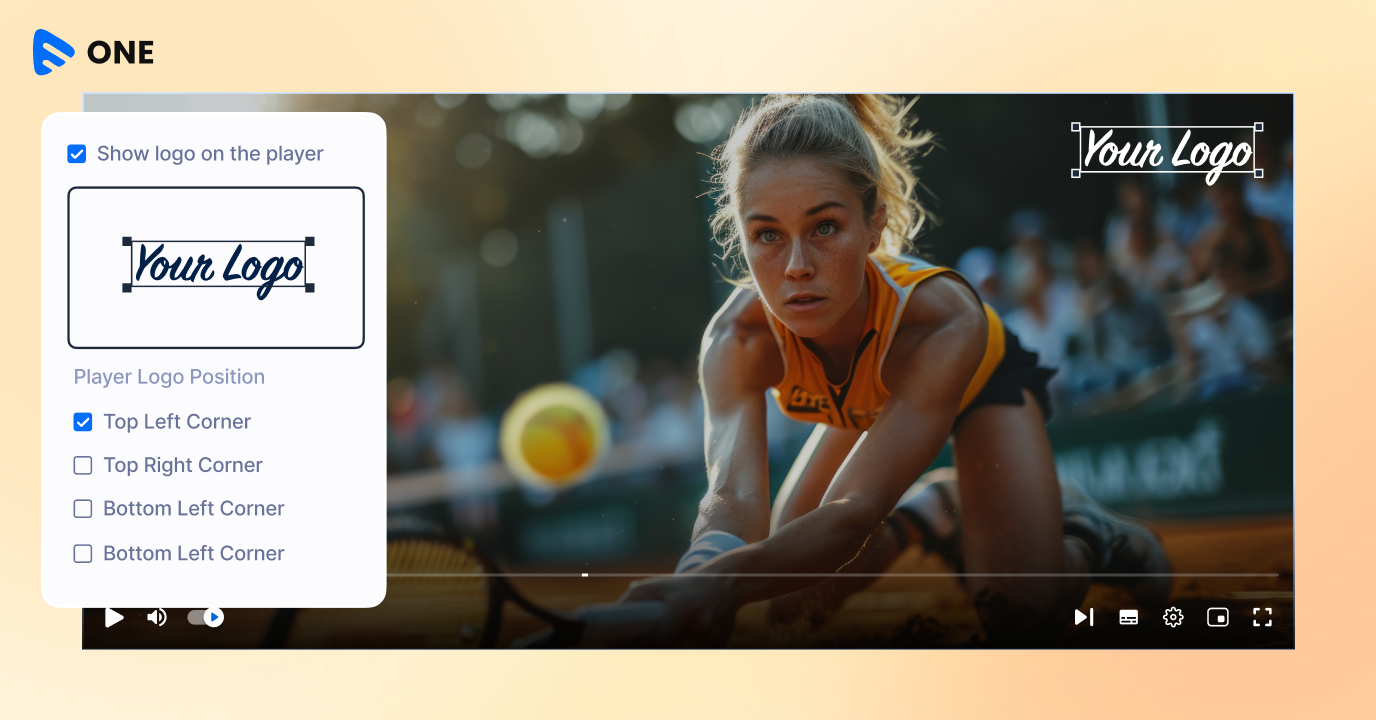
For example, if you want to customize the video player for streaming content, you simply buy the platform from the video streaming solution provider and customize the player without their company logo or link. In this way, viewers only see your brand, nothing else.
Here’s what makes it powerful:
- Your domain www.yourbrand.com, not a subdomain www.platform.com/yourbrand
- Your logo on every player, not theirs
- Your apps in the app stores under your name
- Complete control over the viewer experience
- All the revenue goes to you, not split with a platform
It’s like owning a turnkey streaming business where all the complex technical infrastructure is handled, but you maintain complete creative and business control.
Why Do you Need White Label OTT Platforms
Here’s why white label video streaming platforms are essential for professional streaming businesses:
1. Brand Consistency and Revenue Growth
Research consistently shows that businesses with consistent brand presentation across all platforms can increase revenue by up to 23%. When viewers recognize and trust your brand, they convert to paying subscribers.
Using YouTube means your premium content sits next to your competitors’ videos, surrounded by ads for products you don’t endorse, with recommendations actively pulling viewers away from your content.
2. Complete Control
When YouTube suddenly changed monetization requirements, thousands of creators lost their income overnight. With a white label OTT platform, you control everything. Your content, your rules, your revenue. No surprise policy changes. No arbitrary demonetization. No risk of losing your channel because some algorithm flagged your perfectly legitimate content.
3. Professional Security
Free platforms offer security on their terms. White label video streaming platforms give you enterprise-grade security tailored specifically to your needs:
- Multi-DRM protection Widevine, FairPlay, PlayReady
- Dynamic watermarking visible and forensic
- AES encryption
- Domain and IP restrictions
- Role-based access control
- SSO integration for enterprise deployments
- Geo-blocking with VPN detection
- Screen capture protection
4. Monetization
YouTube takes 45% of ad revenue. Patreon takes 5-12%. Other platforms have their own cuts and restrictions.
White label OTT platforms let you keep 100% of your revenue and offer multiple monetization models:
- SVOD – Netflix-style recurring revenue
- TVOD – Rent or buy individual content
- AVOD – Monetize through ads you control
- Hybrid models – Mix and match for maximum revenue
- Premium tiers – Offer exclusive content at higher price points
- Bundles and packages – Create custom offerings for different audiences
You decide your pricing strategy, choose your payment processors, and design your monetization approach without anyone taking a cut of your hard-earned revenue.
5. Data Ownership
On free platforms, you don’t have control over your data. They own your viewer data, and you get basic analytics at best.
White label video streaming platforms give you complete data ownership and comprehensive analytics:
- Detailed viewer behavior patterns
- Engagement metrics
- Device and location analytics
- Revenue tracking and forecasting
- A/B testing capabilities
- Conversion funnel analysis
Key Features Every White Label Video Streaming Platform Must Have
Not all white label OTT platforms are created equal. Some call themselves “white label” but only offer basic logo customization. Others give you enterprise-grade control over every aspect of the viewing experience.
Here’s what you should absolutely demand:
What Makes a Great Whitelabel Video Streaming Platform?
Here’s a quick checklist of what a true whitelabel OTT platform should offer:
- Custom branding domain, UI, player — no vendor logos
- Full support for live streaming + on-demand content VOD
- Scalable CDN-based delivery global reach
- Content management system CMS and media library
- Monetization options subscriptions, pay-per-view, ads, hybrid
- Content security (DRM, watermarking, geo/domain restrictions)
- Playback across devices: web, mobile, smart TVs, set-top boxes
- Analytics and reporting viewers, engagement, performance
- Ability to build and manage content catalogs, channels, playlists
Why Muvi One Dominates the White Label OTT Space
Let’s be transparent about why Muvi One consistently ranks as the best white label video streaming platform for businesses serious about streaming success.
1. True All-in-One Solution No Hidden Costs
Most platforms advertise “all-in-one” but then nickel-and-dime you with add-ons. Muvi One includes EVERYTHING out of the box:
✅ Multi-DRM protection
✅ Native apps for 16+ platforms
✅ Advanced analytics with AI insights
✅ Unlimited live streaming
✅ Content partner portal
✅ Marketing automation tools
✅ 50+ payment gateway integrations
✅ 24/7 dedicated support
What you see in pricing is what you pay. No surprise costs, no mandatory upgrades, no features locked behind higher tiers.
2. Launch in Hours, Not Months
While competitors have you waiting weeks for apps or months for customization, Muvi One gets you live in literally one day:
Real businesses report going from concept to revenue-generating platform in under 24 hours. Try getting that with any other platform.
3. Zero Muvi Branding Anywhere
Many “white label” platforms still sneak their branding into subtle places—a small logo in the player, a “Powered by” text in the footer, their name in app store descriptions.
Muvi One is 100% YOUR brand
4. Industry-Specific Solutions That Actually Work
Generic platforms force you to adapt your needs to their one-size-fits-all approach. Muvi One offers pre-configured solutions optimized for specific industries like fitness and wellness, eLearning, Entertainment and media, corporate training, religious streaming, etc.
5. Content Partner Portal for Multi-Creator Platforms
Planning to build a marketplace where multiple creators upload content? Most platforms make you build this from scratch or offer clunky third-party integrations.
Muvi One’s Content Partner Portal comes built-in:
- Let creators upload and manage their own content
- Automated revenue sharing
- Individual creator analytics
- Content approval workflows
- Creator onboarding tools
- Payment automation for creators
6. Marketing Automation That Drives Growth
Most white label OTT platforms focus purely on video delivery. Muvi One includes comprehensive marketing tools that help you actually grow your business like email marketing, social media integration, push notifications, affiliate marketing, etc.
7. AI-Powered Features for 2026 and Beyond
Muvi One isn’t just keeping up with trends—it’s setting them:
- AI Content Recommendations: Netflix-style personalization for your viewers
- AI Video Analytics: Automatically identify trending content and optimization opportunities
- AI Content Moderation: Automated screening for user-generated content
- AI Subtitle Generation: Automatic captions in multiple languages
- AI Content Tagging: Smart categorization and metadata generation
- Predictive Analytics: AI-powered forecasting for revenue and growth
8. Exceptional Support That Actually Helps
24/7 support isn’t just a checkbox feature at Muvi—it’s a commitment:
- Dedicated Account Managers:
- Migration Assistance
- Design Services
- Technical Support
- Training Resources
Ready to see why thousands choose Muvi One? Start your 14-day free trial and launch your streaming empire today! 🚀
Top Whitelabel Video Streaming Platforms in 2026
Here’s a curated list of top platforms — including Muvi One — along with features, pricing, pros & cons.
1. Muvi One — Best All-Round Whitelabel OTT / Streaming & Meeting Platform
Muvi One delivers a complete end-to-end OTT stack — from live streaming to VOD, an integrated video content management platform, monetization, apps, security, analytics — all under your brand. It’s not just a broadcaster; it’s your own video platform.
Core Features
- Full whitelabel branding: your domain, UI, no Muvi branding
- Live streaming + VOD + on-demand + playback apps web, mobile, TV
- Robust dashboard and media library
- Monetization: subscriptions, pay-per-view PPV, ad-supported, hybrid models
- Global CDN — scalable streaming to large audiences
- DRM, watermarking, geo-/domain restrictions, access control
- Channel/playlist creation and content cataloging
- Analytics & engagement tracking live & VOD
- Support for webinars, live events, meetings — and conversion to content assets
Pricing Model
Muvi One’s pricing is usage- and scale-based rather than per-user seat. Because of its flexibility, enterprises pay according to their streaming volumes, feature usage, and audience size — making it especially cost-efficient for content-heavy or high-audience projects. Check out pricing here in details.
Pros
- Fully whitelabel
- Scalable, flexible — grows with your needs
- Turn meetings/events into monetizable content assets
- Enterprise-grade security & compliance
- Unified ecosystem: live → VOD → apps → analytics
- 24 X 7 customer support
Cons
- Might be overkill for small teams that only need simple video calls
- Requires setup branding, CMS organization before full value
Best Suited For
Media companies, content creators, educational portals, corporations doing webinars/training, faith/wellness groups, entertainment networks, enterprises wanting a full streaming + monetization stack.
2. Dacast
Dacast is a streaming platform offering live and VOD streaming with white label options — including a customizable player, domain configuration, and monetization tools. It caters to businesses, broadcasters, and content creators wanting a turnkey streaming solution.
Key Features
- Live streaming + VOD hosting & delivery via CDN
- White label player & custom domain support
- Monetization: pay-per-view PPV, subscriptions, ad revenue with ad server integration
- Analytics and viewer tracking streaming stats, engagement, live + VOD
- API access for custom integrations
- Security controls: geo-restriction, password protection, token-based access
Pros
- Flexible pricing plans suited for small to mid publishers
- Easy to set up and deploy — good for quick go-to-market streaming
- Reliable CDN-based delivery globally
- Solid for both live events and on-demand content
Cons
- For very large audiences or complex OTT needs apps, DRM, multi-device, may feel limited
- Compared to full-stack OTT platforms, fewer advanced content management features
- White labeling is somewhat limited compared to fully managed OTT stack
Pricing
Dacast typically uses a subscription + bandwidth/storage model. Plans vary depending on streaming minutes, storage, and CDN bandwidth usage. Overages apply for heavy usage or large audiences.
3. Vimeo OTT
Vimeo provides both enterprise-level live streaming solutions and on-demand video hosting. With Vimeo OTT and Vimeo On Demand, users can create branded streaming channels, embed videos, and monetize content.
Key Features
- Video hosting (VOD) and livestream capabilities
- Customizable player, embed, and branding options
- Monetization support: subscriptions, rentals, purchases via Vimeo On Demand / OTT services
- Analytics — view counts, engagement, geographical data
- Privacy & access controls (passwords, domain restrictions, private links)
Pros
- Trusted brand with strong video performance and global reach
- Easy-to-use interface for upload, management, and streaming
- Suitable for creators, educators, and small-to-medium publishers
- Good balance of ease-of-use and quality for VOD and live
Cons
- For a full OTT-style platform (apps, multi-DRM, global CDN at scale), Vimeo might lack deeper enterprise-level features
- White label or domain customization may have limitations depending on plan
- Monetization and feature set may be constrained compared to full OTT solutions
Pricing
Vimeo’s pricing is plan-based depending on features (livestreaming, on-demand hosting, privacy, OTT tools). There are tiered plans; higher tiers offer more storage, streaming quality, and monetization tools.
4. UScreen
Uscreen is a video monetization and distribution platform aimed at creators, educators, fitness brands, and niche publishers. It combines video hosting, streaming, monetization, and white label capabilities to create subscription-based or pay-per-view video services.
Key Features
- Live streaming + VOD hosting
- White label video website / player / domain (branding control)
- Monetization: subscriptions, rentals, PPV, memberships
- Built-in store & checkout flow for selling video content
- Apps support: mobile + TV apps (depending on plan)
- Analytics and user management (subscribers, watch history)
Pros
- Great for creators, fitness, education, niche content — very focused monetization and community model
- Fully white label — strong brand ownership for end customers
- Built-in billing / storefront — reduces need for external e-commerce integration
- Good entry point for small to medium content businesses
Cons
- Scalability limitations for very large global audiences compared to enterprise CDN-based OTT platforms
- Feature set optimized for smaller catalog or niche content — less suited for large, diverse OTT libraries
Pricing
Uscreen uses subscription-based pricing tiers: typically including a base fee + revenue share or transaction fees depending on monetization volume. Good for SMBs, indie creators, niche services.
5. Brightcove
Brightcove is an enterprise-grade video platform with tools for video hosting, streaming, monetization, analytics, and global content delivery. It supports large-scale OTT deployments, corporate streaming, and professional broadcasting needs.
Key Features
- Live & on-demand video streaming
- Global CDN distribution and adaptive bitrate streaming
- White label player and domain customization
- Multi-DRM support for secure content delivery
- Advanced analytics & reporting
- Video CMS with metadata, playlists, scheduling, and content management
- Integration capabilities with other enterprise systems (authentication, CRM, ad servers)
Pros
- Built for scale — ideal for large audiences, enterprise customers, corporate broadcasters
- Enterprise-grade security and DRM for premium content
- Flexible integration possibilities for custom workflows
- Comprehensive feature set for OTT-grade operations
Cons
- Higher cost — more suitable for mid- to large-sized businesses
- More complex setup and onboarding compared to simpler platforms
- For smaller publishers, may be overkill and underutilized
Pricing
Brightcove’s pricing tends to be enterprise-based and customized — dependent on streaming volume, required features (DRM, CDN, user limits), and support. Public pricing details are limited; typically involves license fees + usage-based costs.
6. JW Player
JW Player started as a video player technology but has expanded into a full video platform offering hosting, video delivery, analytics, and some white label streaming capabilities. It’s often used by publishers needing fast video delivery and flexible playback.
Key Features
- Video hosting + CDN-based delivery
- White label embeddable player with customizable look & feel
- Adaptive bitrate streaming (ABR) and broad device/browser support
- Analytics — video performance, viewer data, playback metrics
- API support for custom integrations and control
Pros
- Strong reputation for fast, reliable playback and video delivery performance
- Easy to integrate, especially for publishers embedding video on existing sites
- Great for publishers who just need video-hosting + delivery + basic analytics
Cons
- Limited native monetization tools compared to full OTT platforms — often requires external integrations for paywalls or subscriptions
- Not optimized out-of-the-box for large-scale OTT services with subscriptions, multi-DRM, or app ecosystems
- White label capabilities are more limited than enterprise OTT stacks
Pricing
JW Player’s pricing is usually usage-based (bandwidth, storage, delivery), with tiered plan levels depending on delivery volume and features. It’s often chosen by publishers needing high-performance delivery rather than full OTT features.
7. Kaltura
Kaltura is an open-source / enterprise video platform known for flexibility, extensibility, and a broad set of video management and streaming features. It serves a wide range of use cases: education, enterprise collaboration, media publishing, OTT services, internal communications, and more.
Key Features
- Live streaming + VOD hosting & management
- White label player and extensive customization (UI, domain, branding)
- Video CMS with metadata, categories, playlists, user & access management
- Monetization support (depending on configuration) — subscriptions, pay-per-view, access control
- Multi-DRM support, security controls, content protection
- APIs and SDKs for integration and customization (web, mobile, smart TV apps)
- Analytics, reporting, user management & permissions — good for enterprise or education use cases
Pros
- Highly flexible and customizable — great for enterprises needing control over workflow, integrations, branding
- Supports diverse use cases: internal training, eLearning, OTT, media streaming
- Strong developer tools — APIs/SDKs for building custom front-ends or apps
- Scalability and extensibility; you can build exactly what you need
Cons
- Setup and configuration complexity — may require technical resources to leverage full power
- For smaller publishers, might be overkill and resource-intensive
- Cost and maintenance depend heavily on usage, integrations, and deployment scale
Pricing
Kaltura offers both on-premise and cloud-hosted versions. Pricing is typically custom based on required features, scale, hosting, support, and services. Because of its flexibility, cost varies widely depending on use case and configuration.
The Complete Platform Comparison: Finding Your Perfect Match
Now let’s get into the detailed comparison of the leading white label video streaming platforms in 2026. We’ve analyzed features, pricing, ease of use, and real user experiences to give you an honest assessment.
Feature | Muvi One | Dacast | Uscreen | Vimeo OTT | Brightcove | JW Player | Kaltura |
Setup Complexity | No-code, instant | Moderate | Easy | Easy | Complex | Moderate | Complex |
Time to Launch | 1 day | 1-2 weeks | Few days | 1-2 weeks | 4-6 weeks | 2-3 weeks | 4-8 weeks |
Native Mobile Apps | iOS, Android (included) | Limited | iOS, Android | iOS, Android, Roku | Custom development | Limited | Custom development |
Smart TV Apps | 16+ platforms included | Limited | Limited | Limited | Custom development | Limited | Custom development |
Complete White labeling | 100% | Partial | Yes | Partial | yes | Partial | Yes |
Custom Domain | Included | Included | Included | Included | Included | Included | Included |
DRM Protection | Multi-DRM included | Add-on | Add-on | Limited | included | Add-On | Included |
Live Streaming | unlimited | Included | Included | Included | Included | Included | Included |
VOD Management | Unlimited content | Included | Included | Included | Included | Included | Included |
Monetization Options | SVOD, TVOD, AVOD, Hybrid | SVOD, TVOD, AVOD | SVOD, TVOD | SVOD, TVOD | All models | AVOD focus | All models |
Payment Gateways | 50+ integrated | 20+ | Limited | Stripe, Paypal | Custom integration | Limited | Custom integration |
CDN | Built-in multi-CDN | Built-in | Third-party | Built-in | Built-in | Built-in | Built-in |
Analytics | Advanced | Standard | Standard | Standard | Advanced | Advanced | Advanced |
Content Partner Portal | Included | No | No | No | Custom | No | Available |
China Delivery | Yes | No | No | No | Yes | No | Yes |
How to Choose the Right White Label Video Streaming Platform for Your Business
With so many options, how do you actually decide? Here’s a practical framework:
Step 1: Define Your Core Requirements
Ask yourself:
- What’s my primary content type? (Live, VOD, or both?)
- Which devices MUST my audience access content on?
- What’s my monetization strategy? (SVOD, TVOD, AVOD, or hybrid?)
- How technical is my team?
- What’s my timeline to launch?
- What’s my realistic budget for the first year?
Step 2: Create Your Must-Have List
Separate features into three categories:
Must-Have :
- Complete white labeling
- Native mobile apps
- Your specific monetization model
- Required security features
- Essential integrations
Nice-to-Have :
- Advanced analytics
- Marketing automation
- Content partner portal
- A/B testing
- Additional device support
Future Needs :
- API access for custom development
- Enterprise features
- Advanced reporting
- White label streaming for multiple brands
Step 3: Calculate True Total Cost of Ownership
Don’t just look at the monthly subscription. Consider:
Direct Costs:
- Monthly/annual platform subscription
- Transaction fees on revenue
- Add-on feature costs
- Storage and bandwidth overages
Hidden Costs:
- Setup and migration fees
- Developer time for customization
- Design and branding services
- Support and maintenance
- Training for your team
Scaling Costs:
- How does pricing change as you grow?
- Are there viewer/subscriber limits?
- What happens when you hit bandwidth caps?
Step 4: Test Before Committing
Always take advantage of free trials. Actually USE the platform:
- Upload real content
- Customize the design
- Test the video player across devices
- Try the mobile apps
- Explore the analytics
- Contact support with questions
- Have colleagues/friends test the user experience
Critical questions to ask during your trial:
- Is the platform intuitive or frustrating?
- Does the video quality meet your standards?
- How responsive is customer support?
- Are there any deal-breaker limitations?
- Can you see yourself using this long-term?
Step 5: Think Long-Term
Ask critical future-focused questions:
Scalability:
- Can this platform handle 10x your current needs?
- What’s the migration path as you grow?
- Are there growth-tier pricing options?
Company Stability:
- How long has the company been in business?
- Are they actively developing new features?
- What’s their financial situation?
- Do they have major clients?
Ready to skip the trial-and-error? Start with Muvi One—the platform trusted by 1000+ successful streaming businesses.
Final Thoughts: One Size Does Not Fit All — Choose Based on Your Needs
Every platform above brings something different to the table. If your needs are simple — a small content library, occasional live sessions, minimal overhead — platforms like Dacast, Vimeo, Uscreen, or JW Player are solid choices.
If you are building for scale — a full OTT offering, global audience reach, monetization, security, multi-device support — platforms like Brightcove or Kaltura give enterprise-grade robustness and flexibility, albeit at higher complexity and cost.
When you want a full-featured OTT-ready stack (live + VOD + monetization + content management + global CDN + DRM + apps + scalable delivery) with minimal friction — that’s when a purpose-built platform like Muvi One shines.
As you build your video strategy, use this list as a starting point — weigh your audience size, content goals, budget, technical resources, and growth plans.
Choose Muvi One! Take a 14-Day Free Trial!



Add your comment