Video streaming today is about delivering consistency. A viewer on high-speed Wi-Fi and another on unstable mobile data expect the same thing: instant playback, minimal buffering, and the best possible quality.
Behind that seamless experience is a foundational concept most viewers never see: encoding ladders.
If your streaming quality feels inconsistent or your CDN costs keep rising, your encoding ladder strategy is usually where the problem—and the opportunity—lies.
What is an Encoding Ladder?
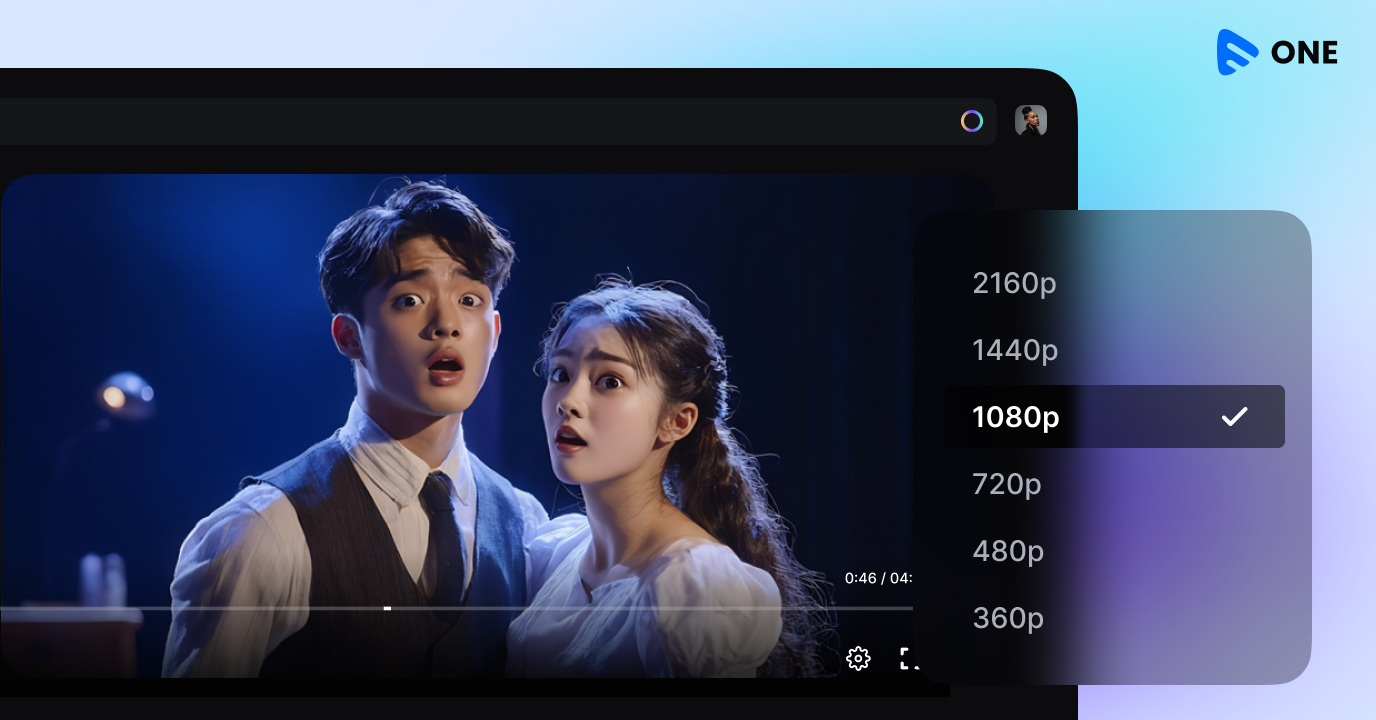
An encoding ladder is a set of multiple renditions of the same video, each encoded at different resolutions and bitrates.
These renditions are used by adaptive bitrate (ABR) streaming protocols like HLS and MPEG-DASH to dynamically adjust video quality during playback.
Instead of streaming a single file, the player switches between renditions based on:
- Available bandwidth
- Device capability
- Buffer health
This ensures continuous playback—even when network conditions fluctuate.
A simplified ladder might include:
- 240p — 300 kbps
- 360p — 800 kbps
- 480p — 1.2 Mbps
- 720p — 2.5 Mbps
- 1080p — 5 Mbps
As bandwidth drops, the player “steps down” the ladder to maintain playback instead of buffering.
Why Encoding Ladders Matter
Encoding ladders directly impact three core areas of your streaming pipeline:
1. Playback Stability
Adaptive bitrate streaming relies entirely on the availability of well-structured renditions. If your ladder has gaps or inefficient spacing, users experience:
- Abrupt quality drops
- Frequent switching
- Playback interruptions
2. Quality vs Bitrate Efficiency
Encoding is always a trade-off: smaller files vs better quality.
An optimized ladder ensures you hit the sweet spot—maximizing perceptual quality (often measured via VMAF) without over-consuming bandwidth.
3. Infrastructure Costs
Each additional rendition:
- Increases storage requirements
- Adds encoding time
- Drives CDN delivery costs
Multiply that across thousands of videos, and inefficiencies scale fast.
The Traditional Approach: Static Encoding Ladders
Most streaming platforms still rely on predefined, one-size-fits-all ladders.
These ladders apply the same bitrate-resolution combinations across all content types—whether it’s:
- High-motion sports
- Animation
- Dialogue-heavy interviews
- Dark cinematic scenes
The problem?
Different content behaves differently under compression.
- Fast motion requires higher bitrates
- Animation compresses more efficiently
- Grainy or dark scenes need smarter bitrate allocation
Static ladders ignore this variability—leading to either wasted bandwidth or compromised quality.
The Shift Toward Smarter Encoding
Modern streaming workflows are moving toward content-aware encoding strategies.
Instead of forcing content into fixed ladders, the ladder adapts to the content itself.
This is where per-title encoding comes in.
Per-Title Encoding: A Better Way to Build Ladders
Per-title encoding analyzes each video and generates a custom encoding ladder based on its complexity.
Rather than assuming what bitrate a 720p video should use, it determines what bitrate it actually needs.
What changes with per-title encoding?
- Bitrates are optimized per resolution
- Redundant renditions are removed
- Complex scenes get more data; simple scenes use less
The result:
Better quality with lower bitrates—and significantly improved efficiency.
Practical Examples of Encoding Ladders
Let’s look at some real-world examples of encoding ladders used by leading platforms:
Apple’s H.264 Ladder
From the HLS Authoring Specification, Apple recommends the following for H.264:
Resolution | Bitrate (kbps) | Frame Rate |
416×234 | 145 | 15 |
640×360 | 365 | 30 |
768×432 | 730 | 30 |
960×540 | 1,100 | 30 |
1280×720 | 2,000 | 30 |
1280×720 | 3,000 | 30 |
1920×1080 | 4,500 | 30 |
1920×1080 | 7,800 | 30 |
Apple notes these are “initial encoding targets for typical content delivered via HLS” and recommends evaluating them against your specific content and encoding workflow.
Real-World Impact of Optimized Encoding Ladders
When encoding ladders are built intelligently, the benefits are measurable:
Improved Viewer Experience
- Fewer buffering events
- Smoother bitrate transitions
- More consistent visual quality
Lower Delivery Costs
- Reduced CDN usage
- Optimized storage footprint
- Less redundant encoding
Scalable Streaming Operations
- No manual tuning per content type
- Automated optimization at scale
- Faster content processing workflows
Best Practices for Building Encoding Ladders
To get the most out of your encoding strategy:
- Avoid overloading ladders with unnecessary renditions
- Use perceptual quality metrics (like VMAF) instead of fixed bitrate assumptions
- Ensure smooth bitrate progression between levels
- Optimize for both mobile and large-screen viewing scenarios
- Move toward content-aware or per-title encoding wherever possible
The goal isn’t more renditions—it’s smarter ones.
Measuring the Effectiveness of Your Encoding Ladder
Designing an encoding ladder is only half the job—the real test lies in how it performs under actual viewing conditions.
To understand whether your ladder is truly optimized, you need to look beyond configurations and focus on playback behavior and user experience metrics.
Here are a few key indicators to track:
- Rebuffering rate – How frequently playback is interrupted due to buffering. Even small increases here can significantly impact viewer satisfaction.
- Average delivered bitrate – The real-world bandwidth consumed during playback, which helps assess efficiency versus quality.
- Quality switch frequency – How often the player shifts between renditions. Excessive switching may indicate poor ladder spacing or bitrate gaps.
- Startup time – The time it takes for a video to begin playing after hitting “play.” Faster startup typically reflects better initial bitrate selection.
- Viewer engagement – Watch time and completion rates can reveal whether your quality delivery is keeping users engaged—or driving them away.
By combining these metrics with insights from video analytics tools, you can continuously refine your encoding ladder based on actual user conditions, not assumptions.
What’s Next: The Evolution of Encoding Ladders
Encoding strategies are evolving rapidly, driven by both technological advancements and shifting viewer expectations.
AI-Driven Encoding
We’re moving toward a future where encoding decisions are no longer static or rule-based.
AI-driven systems can analyze both content complexity and viewer behavior patterns to dynamically generate and adjust encoding ladders. Instead of predefined renditions, ladders become adaptive—responding in real time to optimize both quality and efficiency.
Sustainability as a Streaming Priority
As streaming demand grows, so does its environmental impact.
Encoding optimization is emerging as a practical way to reduce this footprint. By eliminating unnecessary renditions, lowering redundant bitrates, and adopting more efficient codecs, platforms can significantly cut down on data transfer and energy consumption—without compromising viewer experience.
Preparing for 8K and Next-Gen Streaming
With the gradual rise of 8K and larger display formats, encoding ladders will need to expand to support higher resolutions and increased bitrate demands.
At the same time, platforms must continue to serve users on constrained networks. This creates a dual challenge:
- Supporting ultra-high-quality streams
- While maintaining accessibility across diverse bandwidth conditions
Future-ready encoding ladders will need to strike this balance—scaling upward without leaving segments of the audience behind.
Where Muvi One Fits In
Most platforms stop at basic ladder configuration. That’s no longer enough.
Muvi One takes a more advanced approach by integrating per-title encoding directly into the workflow.
This means:
- Each video is analyzed individually
- Encoding ladders are dynamically generated
- Bitrate allocation is optimized per content
Instead of relying on guesswork or static presets, Muvi ensures that every video is delivered with the most efficient quality-to-bitrate ratio possible.
For streaming businesses, that translates into:
- Better playback experiences
- Lower infrastructure costs
- A more scalable encoding pipeline
Final Thoughts
Encoding ladders are no longer just a technical detail—they’re a competitive advantage.
As streaming audiences grow and expectations rise, platforms that rely on static encoding strategies will struggle to keep up—both in quality and cost.
The future lies in intelligent, adaptive encoding—where ladders aren’t predefined, but dynamically built for every piece of content.
Take a 14-Day Free Trial of Muvi One!








Add your comment