A gaming creator platform in 2026 is judged less by whether the video plays and more by whether the stream stays stable when 50,000 viewers join in under two minutes.
That is why building a live streaming platform like Twitch is no longer just a frontend product exercise. It is an infrastructure decision involving ingest pipelines, adaptive delivery, latency management, chat orchestration, moderation systems, monetisation controls, and global delivery reliability. A startup launching a Twitch-style product today is competing against viewer expectations shaped by years of mature streaming behaviour: rewind during live sessions, multi-device playback, instant chat response, creator subscriptions, and near-zero playback interruption.
This guide explains what actually sits underneath a Twitch-like product, what decisions matter early, and where using existing infrastructure prevents years of unnecessary engineering debt.
Why Twitch-style live streaming is harder to build than most founders expect
Real-time video is only one part of the system
The visible part of Twitch is the player, chat window, creator page, and recommendation layer. The invisible part is far heavier. Every live stream starts with video ingestion—typically through RTMP from OBS or similar encoders. That incoming feed then moves into transcoding pipelines where multiple bitrate versions are created for adaptive delivery.
Without adaptive bitrate packaging, viewers on weaker mobile networks experience constant buffering. This is why every serious live streaming platform relies on HLS output even if ingest begins with RTMP.
A gaming creator streaming at 1080p60 may upload one source feed, but your platform must produce multiple playback layers automatically.
That usually means:
The player then switches streams dynamically depending on network quality. Without that layer, user retention drops quickly.
Audience behaviour now expects more than live playback
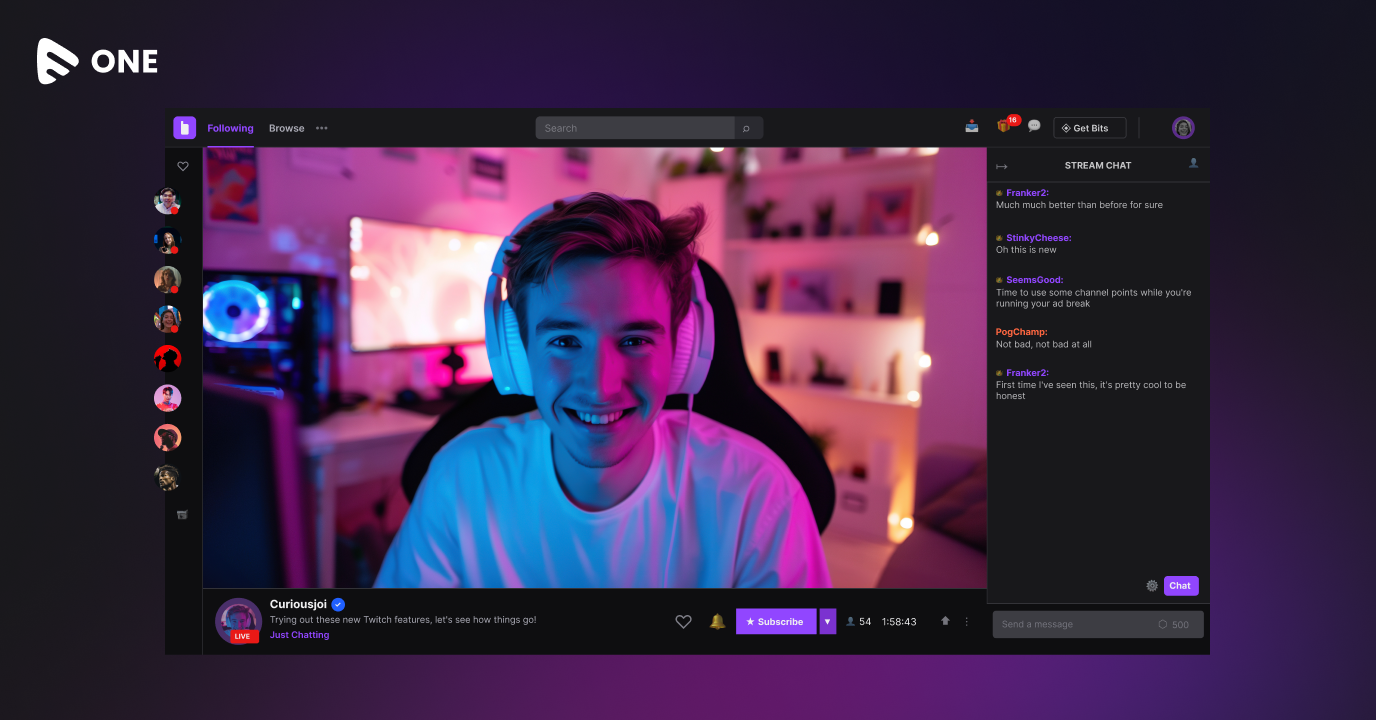
Twitch users do not simply watch. They pause briefly, rewind key moments, clip highlights, chat instantly, and expect no visible sync loss between chat and stream. That means live streaming infrastructure now needs DVR capability—not just raw playback.
A viewer joining a tournament stream ten minutes late expects to rewind instantly without leaving the live event. This is where infrastructure becomes storage-aware. Professional live deployments often combine live delivery with rolling segment retention so playback remains rewindable while the stream continues.
A sports broadcaster streaming 40 seasonal matches cannot afford separate replay workflows for every event. That is why DVR has become operationally necessary rather than optional.
What a Twitch-like live streaming platform needs at its core
Start with ingest, transcoding, and adaptive delivery
Your technical stack begins with three mandatory layers:
- Encoder ingest
- Transcoding engine
- Delivery protocol packaging
RTMP remains common for ingest because creator tools already support it. HLS dominates playback because browser support remains strong across devices. WebRTC becomes useful when ultra-low latency matters, but it increases delivery cost significantly.
Low latency below three seconds sounds attractive, but it usually introduces quality trade-offs under unstable bandwidth conditions. This is why many platforms still balance latency rather than aggressively minimising it.
A useful technical reference here is live streaming latency, because reducing latency too far without infrastructure planning often damages playback consistency.
Chat, presence, and viewer interaction must stay in sync
A Twitch-like product without synchronized chat feels broken. The video may work perfectly, but if viewers react five seconds before a visible event happens, engagement collapses. That means your chat architecture needs a WebSocket-based delivery or equivalent persistent connection logic.
You also need:
- Presence awareness
- Moderator roles
- Spam throttling
- Delayed message control
- Ban systems
At scale, chat often becomes a separate microservice because it scales differently from video. Video traffic grows bandwidth-heavy. Chat grows concurrency-heavy. Treating both as one backend usually creates failure points during audience spikes.
Infrastructure decisions that determine whether your platform scales
CDN strategy affects latency and retention
A stream can leave your encoder perfectly and still fail globally if your delivery path is weak.
This is where video CDN decisions become central.
A CDN determines:
- Segment caching speed
- Regional delivery consistency
- Startup delay
- Rebuffer frequency
According to Akamai’s delivery studies, even small startup delays increase abandonment sharply during live events. That matters even more in gaming, where users leave quickly if stream startup feels slow. A creator platform targeting India, Southeast Asia, and Europe simultaneously cannot depend on one regionally weak CDN arrangement.
Multi-region delivery becomes necessary early.
Storage design changes your DVR and replay capabilities
Twitch-style live systems often underestimate storage until replay becomes important.
The moment you want:
- Rewind
- Highlights
- Replay exports
- Creator archives
You are no longer building a temporary stream delivery. You are building rolling media retention. That storage must work alongside segment indexing so the player can jump backward instantly.
This is one reason many professional teams separate live archive storage from VOD publishing systems. If long-term replay matters, pairing live with allows archived live sessions to move into full OTT delivery without separate migration work.
Monetisation changes your architecture from day one
Subscriptions, ads, and pay-per-view require different workflows
Twitch monetises through subscriptions, ads, and creator support. But not every live platform should copy that model. A gaming tournament platform may work better with pay-per-view streaming.
A niche creator network may depend on subscription tiers. A sports rights owner may require dynamic ad insertion. Each path changes entitlement logic. Subscriptions require persistent user access control.
PPV requires event-specific entitlement expiry. Ads require cue point insertion inside live streams. These decisions affect your architecture before launch—not later.
Payment logic and entitlement cannot be added later casually
The biggest mistake early founders make is assuming payment layers can sit outside stream control. They cannot. Playback entitlement must connect directly to stream authorization. Otherwise premium streams leak. For premium live events, tokenized playback URLs and DRM become important.
That is especially true if you expect international paid audiences.
Professional rights holders increasingly require DRM for video security even during live delivery.
Where Muvi Live fits if you want launch speed without rebuilding core streaming infrastructure
A full Twitch clone built entirely from scratch can take years before reliability matches viewer expectations. That is why many teams separate product differentiation from infrastructure ownership.
Muvi Live fits where the heavy operational layer already needs to exist: ingest, live delivery, DVR, interactivity, and secure streaming. It is designed for professional live workflows rather than casual creator streaming.
You can explore DRM-protected live delivery with a 14-day free trial of Muvi Live — no credit card required.
DRM and DVR solve problems that many Twitch clones ignore
Many early live products launch without DVR because it appears secondary. It becomes critical the moment viewers arrive late. Muvi Live supports DVR so users can rewind during active live sessions without forcing replay publication later.
That matters for:
- esports streams
- corporate live sessions
- faith broadcasts
- paid event delivery
It also supports DRM-protected live streams, which many social-first live tools still do not handle well.
Multi-platform output reduces operational overhead
A creator brand often streams to owned platform plus social destinations simultaneously. Muvi Live supports simultaneous output across platforms, reducing encoder duplication. That becomes operationally important during major events where backup distribution matters.
Conclusion
A Twitch-like platform in 2026 is less about copying interface patterns and more about deciding which infrastructure you truly want to own.
Video ingest, transcoding, CDN delivery, DVR, monetisation, entitlement, and chat reliability are where most engineering costs live. If you’re planning to launch a creator-led live product, Muvi Live offers professional live delivery, DVR, and DRM without rebuilding your operational core. Start your free trial here.




Add your comment