Netflix is the world’s most successful streaming platform, with 300+ million global subscribers and tens of billions in annual revenue. But Netflix doesn’t make money from subscriptions alone.
Over the years, Netflix has built a multi-layered revenue engine that includes subscriptions, advertising, content licensing, and even merchandising.
For anyone looking to launch their own OTT platform, understanding how Netflix monetizes its content ecosystem is incredibly valuable. In this blog, we’ll delve into the foundational pillars of Netflix’s revenue and business model, and understand its revenue streams, cost structure, expenses, and profitability, and key lessons of launching a Netflix-styled streaming platform.
Netflix’s Growth Journey
Since its launch in 1997 as a DVD rental service, Netflix has transformed into the largest video streaming service in the world. The growth journey of Netflix is remarkable, especially as it expanded its service globally and marked a strong presence across nearly every continent.
Global Subscriber’s Growth:
Netflix has over 300 million subscribers globally as of the second quarter of 2025. When Netflix launched its video streaming service in 2007, it had only 7.32 million subscribers worldwide.
In 2011, it reached 25 million global subscribers. Subscriber numbers grew to 100 million in 2017, driven by global expansion and original content. In 2021, Netflix surpassed 200 million subscribers, and since then it is roaring up high in the competitive video OTT market.
Netflix’s Subscribers Growth by Region:
According to Statista, Netflix has an overall of 325 million subscribers in the second quarter of 2025. Netflix’s subscriber base across the US and Canada accounts for 30.32 % of the global share.
Netflix has seen rapid growth in the APAC region (particularly in Japan, South Korea, and India) with 45.34 million digital streaming subscribers, accounting for 17.42% of Netflix’s global share.
Netflix’s Latin America market has 46 million paid members, and is one of its significant penetration, with Brazil and Mexico leading in subscribers.
In the EMEA region, Netflix’s growth is outstanding with 88.81 million subscribers accounting for 34.12% of Netflix’s global paying customers.
Netflix’s Revenue Growth
Netflix’s revenue has seen exponential growth over the years. If you would ask how Netflix makes money, the major factors would refer to subscriber growth, price increases, and strategic expansion. Netflix revenue for the twelve months ending December 31, 2025 was $45.183 billion, a 15.85% increase year-over-year.
In 2017, Netflix generated $11.69 billion in revenue. The streaming giant’s revenue grew to $24.99 billion by 2020.
Currently, in 2026, the US and Canada remain Netflix’s largest markets by revenue followed by the EMEA region (Europe, Middle East, and Africa).
Launch a Netflix-Liek Platform in Minutes with Muvi One!
Netflix Revenue Growth Over the Years
Netflix’s revenue growth mirrors the rapid rise of streaming as the dominant form of entertainment consumption.
Year | Revenue |
2018 | $15.7 Billion |
2019 | $20.1 Billion |
2020 | $24.9 Billion |
2021 | $29.7 Billion |
2022 | $31.6 Billion |
2023 | $33.7 Billion |
2024 | $38–39 Billion |
2025 | $45.2 Billion |
The steady growth highlights the strength of Netflix’s recurring subscription model combined with global expansion.
Several factors have contributed to this growth:
- massive investments in original content
- expansion into international markets
- improved personalization and recommendation systems
- introduction of ad-supported subscription plans
How Does Netflix Work?
Netflix, the world’s leading video streaming platform, delivers billions of hours of content to over 277 million users across the globe. But behind its seamless content delivery lies a highly sophisticated technical infrastructure and cutting-edge streaming technology.
As viewers hit play on their favorite shows, Netflix’s automated OTT infrastructure works tirelessly to ensure instant playback, high-quality video, and minimal buffering regardless of network or device.
Let’s delve into how Netflix works from a technical perspective.
State-Of-The-Art Cloud Server Infrastructure:
Netflix’s cloud infrastructure is powered by Amazon Web Services (AWS). The entire OTT framework is cloud-based and has micro-services architecture for independent functionality i.e. content delivery, encoding, transcoding, online video player, recommendation engine, etc…
Netflix’s proprietary CDN – Open Connect, is designed to optimize video delivery and reduce latency. It uses the local caching method through nearby data centers to ensure seamless video streaming without any compromise.
Cutting-Edge Streaming Technology
Netflix follows a high-standard encoding approach by adopting more efficient video codecs like AV1, which saves bandwidth while maintaining video quality.
The video streaming giant has also adopted the trends of Adaptive Bit-rate streaming to support seamless streaming across various devices and network conditions.
By developing custom UIs and apps for different streaming ecosystems, Netflix ensures compatible streaming on Smartphones, Smart TVs, tablets, game consoles, and more.
Netflix’s performance on mobile devices is one of the significant factors behind its increasing number of subscribers. Enhanced interactivity through advanced search functions, easy-to-use dark-themed UI, wishlist, and offline viewing also cater to Netflix’s user-friendliness.
Automated Data Processing and Personalized Recommendations
Netflix’s machine learning system is constantly capturing user’s behavior and preferences. The algorithm auto-analyses and stores all the data sets and helps continually improve the user experience through A/B testing with thumbnails, user interfaces, and even content order for different viewer segments.
Netflix’s evolving recommendation engine uses this machine learning system to analyze viewing habits, history, content choices and accordingly personalizes content suggestions and viewing experience for each user.
Though Netflix is a media company, the way it has developed its technological foundation, it has managed to influence streaming trends and technology. Understanding how Netflix works is the secret to reliability, scalability, and unparalleled user experience in the world of video streaming.
How Much Money Does Netflix Make?
Netflix’s revenue and profitability have been impressive as the company has grown into one of the largest video-streaming platforms in the world. In 2025, Netflix generated $45.183 billion in annual revenue, 16.% increase than the previous year.
- Netflix annual revenue for 2025 was $45.183B, a 15.85% increase from 2024.
- Netflix annual revenue for 2024 was $39.001B, a 15.65% increase from 2023.
- Netflix annual revenue for 2023 was $33.723B, a 6.67% increase from 2022.

Is Netflix Profitable?
Yes, Netflix is highly profitable. In recent years, the company has consistently reported strong profits as its global subscriber base and monetization strategies continue to grow. In 2025, Netflix reported a net income of approximately $10.98 billion, a significant increase compared with $8.71 billion in 2024 and $5.41 billion in 2023. This steady growth highlights how Netflix has successfully expanded its streaming ecosystem through subscriptions, advertising, and global content distribution.
The company’s profitability has also improved alongside its growing global revenue, which crossed $45 billion in 2025, driven by higher subscription prices, expanding advertising revenue, and continued growth in international markets.
Another important metric behind Netflix’s profitability is its Average Revenue Per User (ARPU). Globally, Netflix generates an average monthly revenue of around $16.64 per subscriber, reflecting both subscription fees and monetization improvements across its platform.
In the EMEA region, Netflix makes around $12 – $13 monthly revenue from each member. The ARPU is lower for Latin America and APAC regions, ranging between $8 to $9.
Overall Netflix’s financials have been inspiring so far, and the giant video-streaming platform is making whopping profits year after year.
Build a secure and scalabale video streaming platform like Netflix. Sign-up now!
How Does Netflix Make Money? – Netflix Business Model Explained
Netflix has a sophisticated and diversified business model that has evolved over time. What started as a simple subscription-based video-streaming service has grown into a multi-billion dollar business with multiple revenue streams. Netflix’s business model is primarily centered around subscription fees, but it has expanded into content licensing, advertising, and strategic collaborations.
Let’s take a close look at the core component of Netflix’s business model and understand how does Netflix make money.
Tiered Subscription-Based Revenue: The Core of Netflix’s Monetization
A majority of Netflix’s revenue comes from subscriptions. The video streaming company charges a recurring monthly fee in exchange for unlimited access to its extensive content library.
Currently, Netflix offers tiered subscription plans: Mobile Only Plan (exclusive to India), Basic Plan (SD streaming), Standard Plan (HD streaming), and Premium Plan (4k Ultra HD streaming) to cater to different types of users.
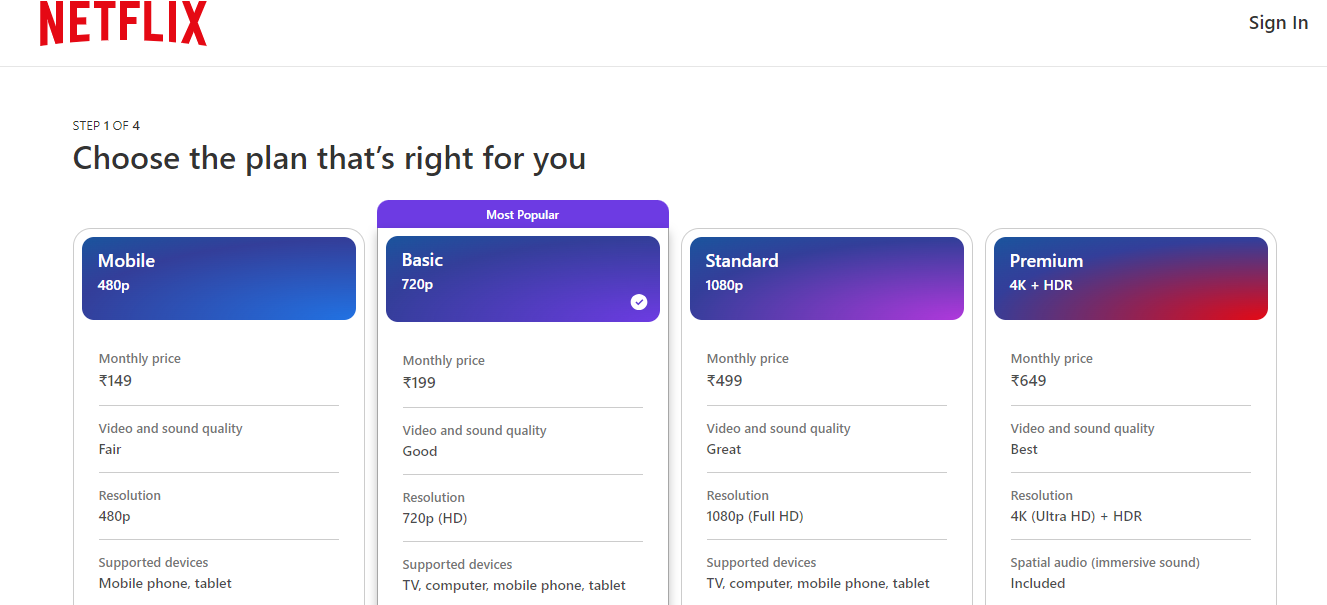
The platform also periodically raises its subscription charges to balance out its increasing investments in technological improvement and content production. This helps Netflix maintain profitability, even as costs rise.
Content Licensing Revenue:
In the early years, Netflix relied heavily on third-party licensing deals with content producers like Disney, Warner Bros, and NBC Universal. While this method still pays, the video streaming platform has pivoted towards creating its own content to reduce dependency on costly content licensing deals.
Recently, Netflix has become a major content producer with its original movies & shows and has started to license its original productions to other streaming platforms, Networks, or TV channels in certain markets, where its platform is not as dominant.
By licensing its original content, Netflix creates additional revenue streams while also increasing the global visibility of its Originals.
Netflix also makes money by releasing exclusive movies, series, or documentaries on its streaming platform. There are many content producers or filmmakers who prefer an OTT release on Netflix rather than releasing the content on the big screen.
Localized Content Strategy:
The secret to Netflix’s international growth lies in leveraging localized content. The production of localized content provides new opportunities for Netflix to license or co-produce content with local studios and production houses, opening up another revenue stream.
For penetration into highly competitive markets such as South Korea, Japan, India, and Brazil, Netflix has ventured into region-specific shows or movies to attract local subscribers. Localized content like Money Heist (Spain), Sacred Games (India), and Squid Game (South Korea) have greatly helped Netflix garner local subscribers and also expand globally.
In addition to content localization, Netflix modifies its subscription tiers based on regional economic conditions. For example, it has launched a Mobile-Only plan for countries like India, where smartphone penetration is higher, but the income levels are low.
Such localization strategies have helped Netflix to capture price-sensitive competitive markets while still generating revenue.
Strategic Partnerships For Expanding Netflix’s Reach:
How does Netflix make money? Strategic partnerships or collaborations are one of the significant answers to Netflix’s revenue.
Partnering with Internet Service Providers and Telecom Operators, Netflix has tapped into a new segment of users. By bundling its subscription plans with Internet providers and Telecom services, Netflix gets access to customers who may not have signed up for the video streaming service otherwise.
Netflix has also partnered with smart TV manufacturers, smartphone companies, and streaming devices like Roku and Amazon Fire TV to have its app pre-installed on the devices. These collaborations not only extend Netflix’s reach but also simplify the onboarding process for new subscribers, enhancing the scope for customer acquisition.
Ad-Supported Tier: A New Revenue Frontier
Competitors like Disney+ and Hulu already offering ad-supported models and Netflix recognized the need to match these offerings to remain competitive in price-sensitive markets.
In 2022, Netflix introduced a new ad-supported tier to target more price-conscious users. This model helps attract subscribers who are unwilling to pay for subscription plans but are open to viewing ads. The ad-revenue model is relatively new and being tested in different markets, but for sure this could open a significant revenue stream for Netflix in the coming years.
By March 2026, this tier is expected to generate approximately $3 billion in annual revenue—doubling its 2025 performance. Roughly 47% of all new sign-ups now choose the ad-supported model, allowing Netflix to capture price-sensitive audiences while maintaining high margins through premium ad placements.
Data-Driven Personalization For Customer Retention:
Netflix leverages data analytics to enhance the user experience, leading to higher customer satisfaction, longer retention, and reduced churn.
Netflix collects vast amounts of data on user preferences, viewing habits, and content interaction. This data is used to personalize the content recommendations that users see on their home screen, increasing the likelihood that they will find content they enjoy.
The user data is also used to identify which genres, themes, and types of shows or movies are performing well in terms of engagement as well as revenue. Accordingly, Netflix invests in those content types to retain its paying subscribers.
Well, this is the foundational business model of Netflix. No, doubt, the video streaming giant has built a diversified and resilient approach to revenue streams. However, the earnings or revenue do not give the complete picture of how does Netflix make money. It is also essential to consider Netflix’s expenses in maintaining the platform and delivering quality content to its subscribers.
Paid Sharing Results: Converting Borrowers into High-Value Members
The controversial “password crackdown” of previous years has evolved into a standardized “Paid Sharing” feature. By early 2026, Netflix has successfully converted millions of former “borrowers” into paying members or “extra member” slots. This move unlocked a massive pool of untapped revenue, proving that clear monetization policies are essential for protecting a platform’s value.
Merchandising
Popular shows generate merchandise sales, including collectibles, apparel, and themed products.
Live Experiences and Events
Netflix has also begun exploring immersive experiences and live events tied to its original content franchises.
Create Netflix-like video streaming platform with Muvi One – Click Here!!!
Global Revenue Distribution
Netflix has a global presence which is backed by its revenue growth. The video streaming company generates income from four major geographic regions:
- United States & Canada (UCAN)
- Europe/Middle East/Africa (EMEA)
- Latin America (LATAM), and Asia-Pacific (APAC)
USA and Canada
The United States and Canada remain Netflix’s largest and most profitable market, generating approximately $19.96 billion in revenue in 2025, which accounts for roughly 44% of Netflix’s total global revenue.
Europe/Middle East/Africa
Europe, the Middle East, and Africa represent the second-largest revenue region for Netflix, contributing about $14.5 billion in 2025 (around 32% of total revenue) as the platform continues to expand its presence through localized content and regional productions. Latin America generated approximately $5.36 billion in revenue in 2025, accounting for nearly 12% of Netflix’s global revenue,
APAC
Despite contributing a smaller share of revenue today, Asia-Pacific remains one of Netflix’s fastest-growing markets, driven by increasing internet penetration, mobile-first viewing behavior, and strong adoption in countries such as India, South Korea, and Japan. The Asia-Pacific region contributed about $5.35 billion, representing roughly 11–12% of the company’s global earnings.
Netflix Revenue Breakdown: What Does It Cost To Run Netflix?
While Netflix generates significant revenue, the streaming company incurs substantial expenses to keep its platform running among all the competition. Most of Netflix’s expenses are related to content creation or acquisition and technological infrastructure.
Let’s understand Netflix’s cost structure and expenses in detail.
Content Spendings: Netflix spends a huge amount on content production and acquisition. In the last 5 years, Netflix’s average spending on content is $17 billion annually. This involves both content licensing and production costs.
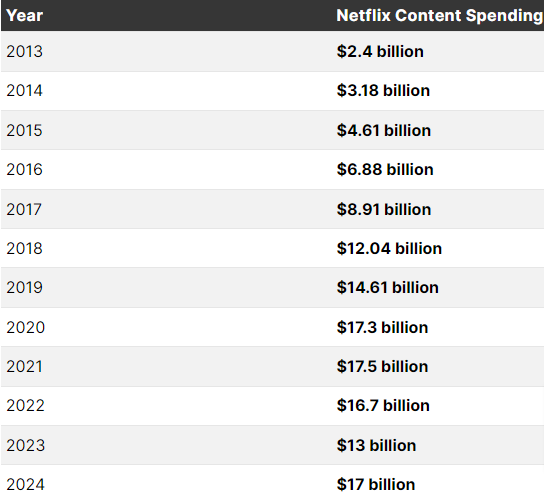
The company continues to increase this investment to stay ahead of competitors. For 2025, Netflix plans to spend approximately $18 billion on content, according to company executives, as it expands into large-scale productions, international content, and even live entertainment formats.
Infrastructure and Technology Cost: Netflix spends around a billion dollars every year to incur the costs of servers, CDNs, and cloud data security services. The streaming company continuously invests in optimizing its platform for seamless video delivery to users, regardless of geography, internet connection, or device.
Marketing and Subscriber Acquisition Cost: With increasing competition, Netflix has ramped up its marketing spending to attract new customers and retain the existing ones. Promotions, partnerships with a reputable development agency, and advertising costs are all part of this growing expenditure.
Research and Development Cost: Back then in 2007, Netflix was the first media company to leverage streaming technology and deliver on-demand videos to users via the Internet. It has always prioritized R&D in technology and even today also Netflix spends a huge amount on Machine Learning and AI-based solutions to enhance the platform’s performance.
Netflix Content Spending: Why is Netflix so Profitable?
1. Original Content:
One of the biggest drivers of Netflix’s success is its massive investment in original and licensed content. Producing exclusive movies and TV shows helps the platform attract new subscribers while retaining existing ones. In 2024, Netflix spent around $16 billion on content production and acquisition, making it one of the largest content investors in the global entertainment industry.
2. Advertising Revenue
In 2022, Netflix introduced an ad-supported subscription tier, allowing viewers to pay a lower monthly fee in exchange for watching limited advertisements during streaming.
The advertising business has grown rapidly since launch. Netflix generated over $1.5 billion in advertising revenue in 2025, more than doubling its ad revenue compared with the previous year. Some forecasts suggest Netflix’s advertising revenue could approach $3 billion by 2026 and continue growing as advertisers increasingly shift budgets toward connected TV platforms.
3.Netflix Average Revenue Per User (ARPU):
Another important factor behind Netflix’s profitability is its Average Revenue Per User (ARPU)—a metric that measures how much revenue the company generates from each subscriber.
Netflix typically earns the highest ARPU in North America, where subscription prices are higher and consumers are willing to pay more for premium streaming services. In contrast, emerging markets such as Asia-Pacific and Latin America tend to have lower ARPU due to regional pricing strategies designed to expand subscriber growth.
This pricing strategy allows Netflix to balance market expansion with revenue optimization. Higher-income regions generate stronger revenue per subscriber, while lower-priced markets contribute to rapid global user growth. According to industry reports, Netflix generated $39 billion in total revenue in 2024, supported by both subscriber growth and pricing adjustments across several regions.
Key Takeaways from Netflix’s Growth Journey
Be adaptable to market changes and emerging technologies:
Netflix was originally not a streaming service. In 2007, it launched its streaming service seeing that online streaming was the future as internet speeds improved. The willingness to pivot and invest in future technologies is the key to scale.
Invest in scalable cloud-based infrastructure:
Netflix shifted its streaming infrastructure to AWS in 2010, transitioning to a cloud-based micro-services architecture. This helped Netflix scale globally and handle millions of concurrent streams.
Provide a personalized user experience to enhance engagement:
Netflix’s user interface is intuitive, visually appealing, and easy to navigate. This ensures Netflix provides a seamless experience across all devices – smartphones, smart TVs, tablets, and desktops…
Build a diverse and strategic content library with original programming:
While licensed content can be a good starting point, investing in original content is crucial for long-term success in the video streaming industry. Netflix moved from relying on licensed content to creating original shows and movies (Stranger Things, House of Cards, The Crown). This helped differentiate Netflix from its competitors and reduce dependency on external studios.
Use data for content decisions, and recommendations:
Netflix leverages user data to improve content, marketing, and UX. From content creation decisions to implementing A/B testing on features & functionality, Netflix makes the best out of data-driven decision-making.
Explore various revenue streams but keep the user experience premium:
For many years, Netflix maintained a no-advertisement policy and relied on a simple, subscription-based model. Now it has started experimenting with ad-supported tiers and low-cost plans, but without making any compromise with its premium, uninterrupted viewing experience.
With these lessons from Netflix’s growth journey, you can build a successful, scalable video streaming platform that resonates with users while remaining competitive in an evolving streaming landscape.
Hybrid monetization increases revenue potential
Combining subscriptions and advertising helps platforms reach wider audiences.
Hope you have a clear picture of how does Netflix make money and its net worth.
Muvi can help you launch your own branded white-label video streaming service like Netflix. You don’t have to build the OTT platform from scratch, the entire streaming infrastructure is already built and ready to use. Sign up, select your Muvi subscription, and start streaming. Take a 14-day free trial to check and test Muvi One’s OTT platform.













Add your comment