Most OTT businesses spend months debating content strategy, app design, and marketing spend — and underestimate a decision that shapes all of them: how they make money.
Monetization determines who your audience is, how you acquire them, what your content library needs to look like, and whether your business scales or stalls at 50,000 users.
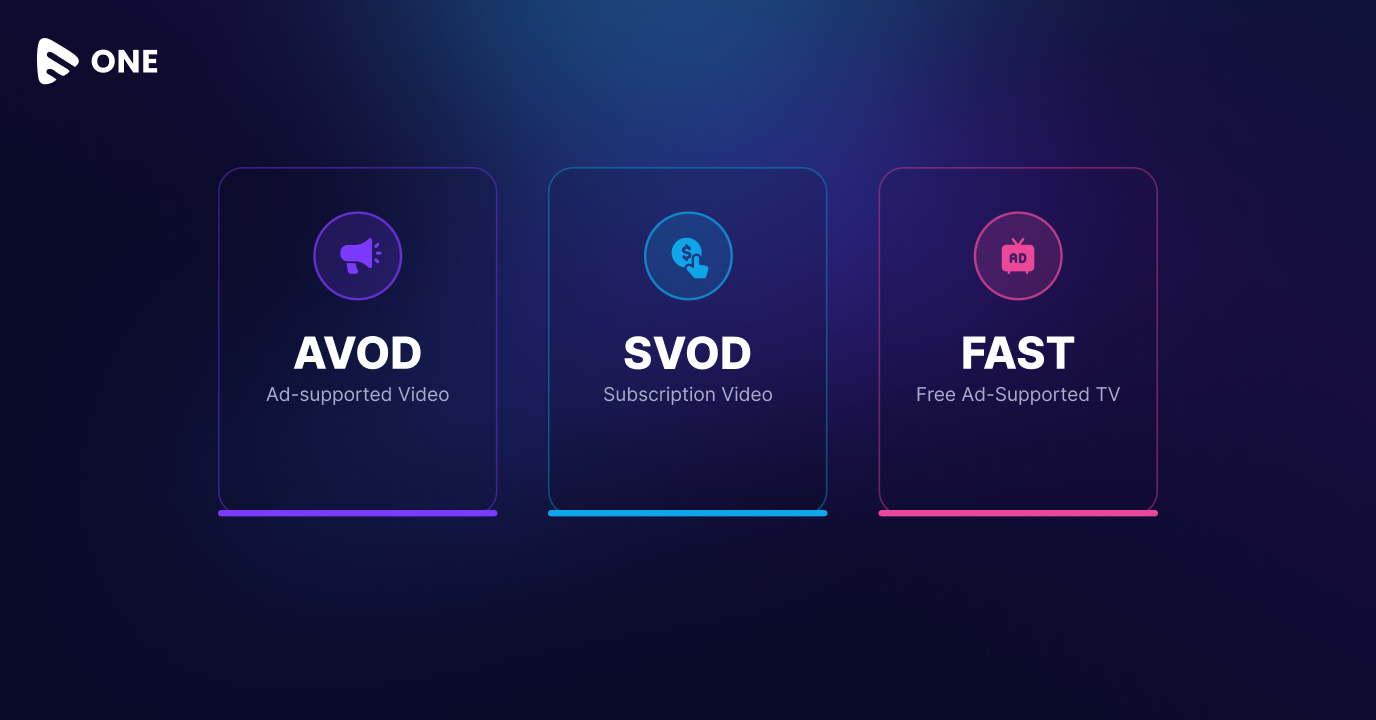
AVOD, SVOD, and FAST are not interchangeable options. Each represents a fundamentally different contract with your viewer — and with your revenue model. The streaming wars of the last five years have made this clearer than ever: The shift from traditional television to online TV platforms has made monetization strategy even more critical.
This breakdown is for OTT operators who want to make that choice with clarity, not guesswork.
AVOD vs SVOD vs FAST: What Each Model Means
SVOD: The Subscriber Relationship
Subscription Video on Demand is a monetization model where viewers pay a recurring fee for access to your content library. Netflix, Disney+, and Crunchyroll are the canonical examples, but the model works at a far smaller scale when the content-audience fit is right.
The core advantage of SVOD is revenue predictability. A platform with 20,000 subscribers paying $299/month knows its baseline before the month begins. That predictability makes content investment, infrastructure planning, and team hiring substantially easier.
But SVOD has a structural requirement most first-time OTT operators underestimate: churn management. Subscribers cancel when they run out of reasons to stay. This means SVOD platforms live and die by their content refresh cadence, exclusive libraries, or the depth of niche they own.
Where SVOD Works Well:
- Niche verticals with passionate, paying audiences — fitness, cooking, education, regional cinema, devotional content
- Premium original productions with a clear brand identity
- B2B and enterprise video platforms where access control is a core product feature
A regional Korean cinema platform, for instance, doesn’t need Netflix’s catalogue depth. It needs to be the definitive destination for its audience — something SVOD enables effectively when the niche is well-defined.
AVOD: The Audience-First Play
Ad-Supported Video on Demand removes the paywall entirely. Viewers watch for free; advertisers pay for access to those viewers. Tubi, Pluto TV (in AVOD mode), and YouTube’s non-premium layer are familiar examples.
The obvious advantage is frictionless acquisition. There’s no credit card, no trial period, no subscription commitment. That translates to faster audience growth — particularly valuable in markets where subscription fatigue or limited digital payment infrastructure constrains SVOD growth.
The less obvious constraint: AVOD is a scale game. Ad revenue is priced per thousand impressions (CPM). With a CPM of $5–$15 for mid-tier streaming inventory, a platform needs tens of millions of monthly impressions to generate meaningful revenue.
For example, a platform with 200,000 monthly active users generating modest watch time may clear $15,000–$30,000/month in ad revenue — a thin margin to operate on.
When Does AVOD Work:
- Your content category has broad, general-audience appeal
- You’re in high-CPM markets (US, UK, Australia, Western Europe)
- You have the infrastructure to serve and report on ads reliably
- You’re using AVOD as the free tier in a freemium hybrid alongside a paid tier
The freemium approach — giving away AVOD access while upselling to an ad-free premium experience — has become a dominant pattern among mid-market streaming platforms. It solves the acquisition problem of SVOD while creating a revenue ceiling that AVOD alone can’t break.
FAST: Channel Model for the Streaming Era
Free Ad-Supported Streaming TV is the youngest of the three models, and arguably the fastest-growing segment in the current streaming landscape.
FAST channels function like traditional television — a scheduled, linear programming feed with no on-demand browsing. Viewers tune in, content plays, ads run at intervals. The key difference: distribution happens entirely over IP, through connected TV platforms like Roku, Samsung TV Plus, LG Channels, Amazon Freevee, and Pluto TV.
With global FAST channel revenue projected to exceed $12 billion by 2027, the model has moved from niche experiment to mainstream strategy for content owners who want distribution without the infrastructure overhead of building a standalone OTT product.
Why FAST is Booming
Cord-cutting continues to accelerate, but cord-cutters still want the passive, lean-back experience of live TV. FAST meets that behaviour — no decisions, no browsing, content just plays. That habit maps directly onto how a significant segment of the 55+ demographic (and increasingly younger audiences in AVOD-saturated markets) consumes media.
For content owners with deep back-catalogues — documentary libraries, archival sports footage, classic films — FAST channels offer a distribution mechanism that generates ad revenue from content that would otherwise sit idle.
Where FAST Fits:
- News, sports, and live programming categories with time-bound relevance
- Catalogue-rich media companies with content depth but limited marketing budgets
- Regional language platforms targeting diaspora audiences on connected TV devices
- Networks and studios seeking additional distribution without subscriber acquisition costs
The Hybrid Reality
The industry’s mature players have largely moved past the AVOD vs SVOD vs FAST debate as a binary.
- Peacock (NBC Universal) runs all three simultaneously.
- Discovery+ layered FAST channels on top of its SVOD core.
- In India, JioCinema uses AVOD at scale while offering premium SVOD tiers for live sports and originals.
The strategic question isn’t “which model” — it’s “which model leads, and which supports it.”
A useful decision framework:
If your primary goal is… | Lead with… | Layer on… |
Rapid audience growth in a new market | AVOD | SVOD premium tier |
Stable recurring revenue from a niche | SVOD | AVOD for free trial access |
Distribution of catalogue content at scale | FAST | AVOD on your owned platform |
Live events + premium originals | SVOD | FAST for off-peak scheduling |
Read More: Buy vs Build your OTT Platform
Can your Platform Execute the Monetization Model you Choose?
Choosing a monetization model is one decision. Building the infrastructure to execute it reliably is another — and this is where many OTT launches underperform.
SVOD requires subscriber management, payment gateway integration, entitlement enforcement, and churn analytics. AVOD requires ad server integration, SSAI (Server-Side Ad Insertion), audience segmentation, and impression reporting. FAST requires playout scheduling, 24/7 channel uptime, EPG (Electronic Programme Guide) management, and distribution agreements with connected TV platforms.
For operators evaluating alternatives to Amagi, Muvi Playout handles end-to-end OTT infrastructure — FAST channels, linear TV, SSAI, EPG, and multi-model monetization in one platform.
- SVOD, AVOD, TVOD, and hybrid configurations
- app publishing across web, mobile, and smart TV
For publishers specifically focused on launching FAST channels, Muvi Playout provides:
- FAST channel scheduling
- Ad break management
- Connected TV distribution tooling without requiring a full OTT build
For live programming — sports, news, events — Muvi Live extends the stack to handle concurrent live streams at scale.
If you’re building a content business where personalization and watch-time analytics are critical to retention (as they are in SVOD), Alie AI provides the recommendation engine layer that makes content discovery — and subscriber retention — measurably better.
A Monetization Practical Guide for OTT Operators
If you’re launching a new OTT platform or re-evaluating an existing monetization approach, three questions cut through most of the complexity:
- Who is your audience, and what are they willing to pay? In markets with established digital payment habits and higher per-capita income, SVOD is viable from an early scale. In markets with subscription fatigue or lower digital payment penetration, AVOD or a freemium entry is often the more realistic starting point.
- What is the depth and exclusivity of your content? Deep, exclusive libraries justify subscriptions. Broad, general catalogues monetize better through advertising. Scheduled, curated programming fits FAST’s lean-back format. Be honest about where your content sits.
- What does your revenue curve need to look like? SVOD provides predictability. AVOD and FAST provide variability tied to ad market cycles. If your business model requires capital predictability — for content investment, licensing, or team growth — SVOD or a hybrid with a SVOD core is structurally more stable.
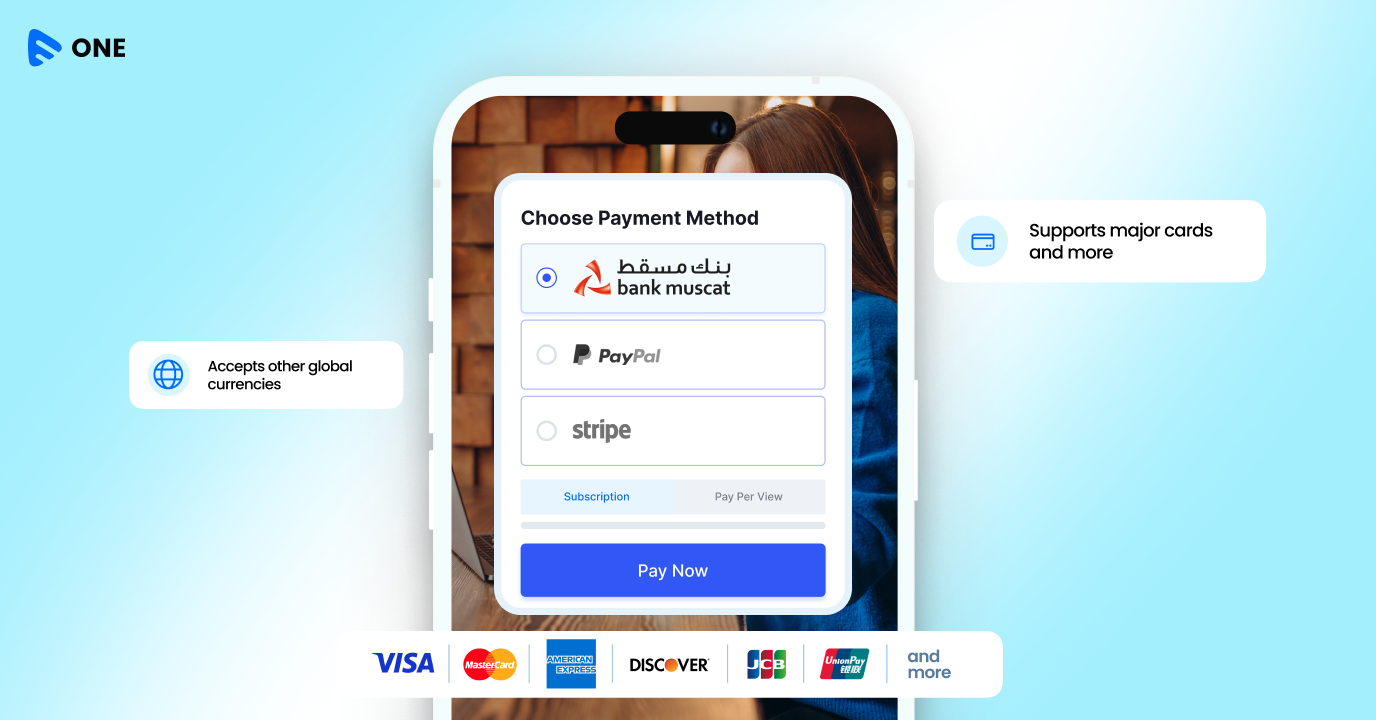
Thinking through your platform’s monetization stack? Muvi One supports SVOD, AVOD, TVOD, and hybrid models with built-in payment, analytics, and app publishing. [Explore Muvi One →]
A successful OTT monetization strategy comes down to three core decisions: understanding your audience’s willingness to pay, aligning your content depth with the right model, and choosing a revenue structure that supports your business stability. Markets, content strength, and financial goals ultimately determine whether SVOD, AVOD, FAST, or a hybrid approach will deliver sustainable growth.
Platforms that get this balance right don’t just monetize better—they scale faster and more predictably.
This is where Muvi simplifies execution. With Muvi One, you can launch and manage SVOD, AVOD, TVOD, or hybrid monetization models from a single platform—complete with built-in payments, analytics, and multi-device app publishing.
Start building a monetization strategy that adapts as you grow.
Start your free trial with Muvi One today and take your OTT platform from idea to revenue—faster.



Add your comment