Delivering consistently high video quality across phones, tablets, smart TVs, desktops, and fluctuating network conditions is no longer a “nice to have” for OTT platforms—it’s table stakes. Viewers today expect instant playback, minimal buffering, and sharp visuals regardless of where or how they’re watching.
At the heart of this experience lies Adaptive Bitrate (ABR) encoding—and more importantly, how intelligently it’s implemented.
But ABR encoding isn’t a checkbox — it’s a spectrum of decisions, each one affecting quality, bandwidth efficiency, latency, and cost. This post breaks down how Muvi approaches ABR encoding, why certain architectural choices were made, and what that means for OTT operators building on top of the platform.
The Basics: What ABR Encoding Actually Does
Adaptive Bitrate streaming solves a fundamental problem: the internet is unpredictable, but video quality expectations aren’t. A single video file encoded at one fixed bitrate will either buffer on slow connections or look unnecessarily compressed on fast ones. ABR solves this by encoding the same content at multiple quality levels — called renditions or representations — and letting the player dynamically switch between them based on real-time network conditions.
For HLS (HTTP Live Streaming), this means segmenting video into small chunks (typically 2–6 seconds each) at each bitrate level, paired with a manifest file (the .m3u8) that the player reads to understand what’s available. For MPEG-DASH, the equivalent is the Media Presentation Description (MPD). Muvi supports both formats across its delivery infrastructure, with HLS as the primary format for broad device compatibility.
The quality of ABR streaming hinges on three interlinked variables: how many renditions are generated, at what bitrate and resolution each rendition is encoded, and how efficiently the codec compresses each frame. Get this right and you deliver cinema-quality images at surprisingly low bandwidth. Get it wrong and you’re either burning unnecessary storage costs or delivering pixelated content that drives churn.
Why ABR Encoding Is the Backbone of Modern Streaming
ABR encoding works on a simple principle: instead of delivering a single video file, the same content is encoded into multiple renditions at different bitrates and resolutions. During playback, the video player dynamically switches between these renditions based on real-time network conditions and device capabilities of the end-user.
However, the quality of ABR streaming depends less on the concept itself and more on how encoding decisions are made.
Poorly tuned ABR ladders lead to:
- Visible quality jumps during bitrate switching
- Over-encoding (wasted storage and CDN costs)
- Under-encoding (soft visuals, compression artifacts)
- Device incompatibility issues
Muvi’s ABR pipeline is designed to solve these problems systematically.
Muvi vs Standalone Encoders
Muvi’s Multi-Rendition Encoding Ladder
Muvi’s encoding pipeline generates an optimized set of renditions for every piece of content ingested into the platform. Rather than applying a fixed encoding ladder to all content, Muvi’s encoding engine analyzes content characteristics and adjusts accordingly — which is called per-title encoding or content-aware encoding.
The principle here is straightforward: a slow-moving documentary requires far fewer bits to look good than a fast-paced action film with explosions and rapid camera movement. Applying the same bitrate to both wastes storage on the documentary and under-serves the action content..
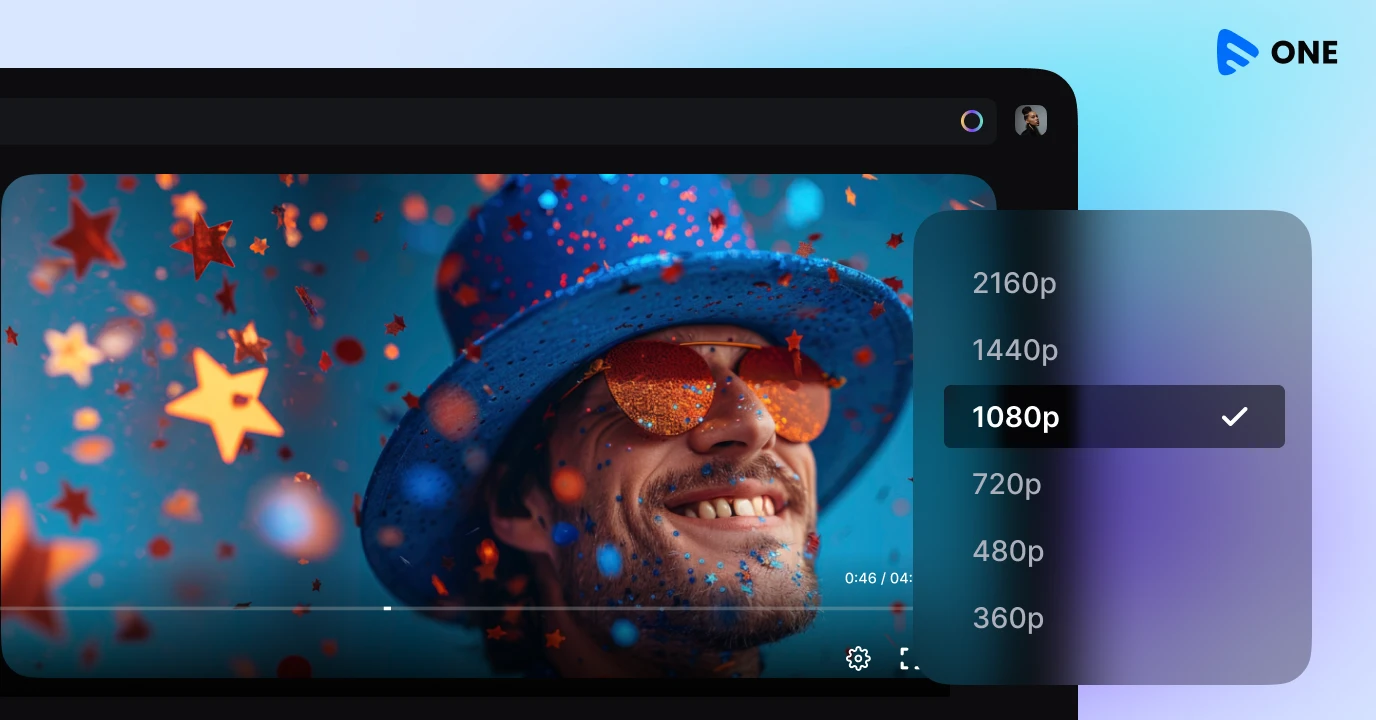
A typical rendition ladder on Muvi’s platform spans across the following quality tiers:
- 360p at 400–600 Kbps — targeting mobile devices on 3G connections
- 480p at 800 Kbps–1.2 Mbps — a balanced tier for mid-range devices and constrained bandwidth
- 720p at 2–3 Mbps — the workhorse HD tier for most connected TV and desktop viewing
- 1080p at 4–6 Mbps — full HD for high-end streams
- 1080p HDR / 4K at 8–15 Mbps — premium tiers for broadband-connected TVs and premium subscribers
These aren’t rigid presets. The bitrate boundaries flex depending on the encoded content, meaning a particularly complex scene might allocate more bits to a given rendition while a simpler sequence gets away with fewer — all automatically, within the encoding pipeline.
Per-Title Encoding: Content-Aware Optimization at Scale
One of the core optimizations in Muvi’s video encoding workflow is per-title encoding.
Instead of assigning a predefined bitrate ladder, each asset is analyzed individually before encoding begins. This analysis evaluates factors such as:
- Motion intensity
- Scene complexity
- Spatial detail
- Temporal changes
Based on this analysis, Muvi generates a custom ABR ladder per video, ensuring each rendition delivers optimal quality at the lowest viable bitrate.
Why Per-Title Encoding Matters
From a technical standpoint, per-title encoding delivers three major advantages:
- Improved Visual Quality
Complex scenes receive more bits where they matter, while simple scenes avoid unnecessary bitrate inflation. - Lower Storage and CDN Costs
Fewer wasted bits translate directly into reduced storage footprint and bandwidth consumption. - More Stable ABR Switching
Bitrate steps are more evenly spaced in perceptual quality, reducing noticeable quality jumps during playback.
Codec Selection: H.264, H.265, and the Road to AV1
Codec choice is one of the most impactful decisions in any ABR encoding strategy. More efficient codecs can deliver the same visual quality at significantly lower bitrates—reducing CDN spend, storage usage, and playback issues on constrained networks. The challenge is balancing efficiency with real-world device support.
Muvi uses H.264 (AVC) as its baseline codec to ensure maximum reach. H.264 remains universally supported across smartphones, smart TVs, set-top boxes, browsers, and gaming consoles. For platforms where compatibility matters more than marginal bitrate savings, it remains the safest option.
For platforms targeting newer devices and premium viewing experiences, Muvi supports H.265 (HEVC) encoding. HEVC typically achieves the same perceptual quality as H.264 at 40–50% lower bitrates, translating into meaningful savings at scale. Because HEVC decoding support is still uneven across older devices and some browser environments, Muvi intelligently serves HEVC where supported and seamlessly falls back to H.264 elsewhere.
Looking ahead, AV1 represents the next step in video encoding efficiency. As a royalty-free codec with compression gains beyond HEVC, AV1 adoption is accelerating across modern browsers and newer smart TV chipsets. Muvi’s encoding roadmap includes expanded AV1 support, particularly for web-first delivery scenarios where bandwidth savings have the greatest impact.
Segment Duration and Playback Stability
Segment duration also plays a critical role in ABR performance.
Muvi carefully balances segment length to:
- Enable faster bitrate switching
- Reduce playback latency
- Avoid excessive manifest and request overhead
Shorter segments improve adaptability, while overly small segments increase CDN request load. Muvi’s encoding pipeline is tuned to strike the right balance based on use case, bet it VOD or Live.
The Transcoding Pipeline: How Content Moves Through Muvi’s System
When a content owner uploads a video to Muvi — whether a raw camera file, or a broadcast-quality mezzanine file, it enters a multi-stage processing pipeline before any viewer can watch it:
1. Ingest and Validation
The system first validates the source file — checking container format, codec, frame rate, resolution, audio channels, and color space. Muvi accepts a wide range of video formats (MP4, MOV, MXF, AVI, MKV, and more) and handles the container remuxing and normalization needed before transcoding begins. Files with interlaced content get deinterlaced at this stage using adaptive deinterlacing filters that detect field order automatically.
2. Audio Processing
Audio tracks are processed in parallel with video encoding. Muvi normalizes audio loudness to the EBU R128 standard (-23 LUFS for broadcast, -14 LUFS for streaming), which ensures consistent volume levels across different pieces of content.
3. Video Transcoding
The video transcoding stage runs in parallel across multiple renditions where infrastructure allows. Muvi’s cloud-based transcoding scales horizontally — high-priority or time-sensitive content (a live sports event replay, a just-released episode) gets access to additional compute resources to reduce time-to-availability. Each rendition is encoded with two-pass encoding for VOD content, where the first pass analyzes the entire source for complexity and the second pass distributes bits accordingly.
4. Packaging and Segmentation
After transcoding, the encoded streams are packaged for delivery. Muvi uses a Just-In-Time (JIT) packaging approach, where content is stored in a single encoded format and packaged dynamically into HLS, DASH, or other formats at delivery time. This eliminates the need to store multiple pre-packaged versions of the same content and dramatically reduces storage overhead.
Device-Specific Optimization for Multi-Device Streaming
Multi-device streaming isn’t just about supporting different screen sizes. Different device categories have fundamentally different hardware capabilities, network environments, and user interaction patterns. A viewer watching on a Roku Ultra in their living room and a viewer watching on a Samsung Galaxy mid-range phone are in completely different technical contexts — and Muvi’s delivery layer accounts for this.
Connected TVs and streaming sticks:
These devices typically have stable, high-bandwidth connections (Ethernet or strong Wi-Fi) and powerful hardware decoders. Muvi serves these devices the upper rungs of the encoding ladder — 1080p and 4K renditions where available, with HDR10 and Dolby Vision passthrough for platforms that license that content.
Mobile devices:
Mobile presents the most variable environment. A user might start watching on 5G, walk into a building with poor reception, and switch to Wi-Fi — all within a single session. Muvi’s segment duration for mobile-targeted streams is kept shorter (2 seconds vs. 4–6 seconds for TV) to enable faster ABR switching. Shorter segments mean the player can react to network changes more quickly, reducing buffer events.
Web browsers:
Browser-based playback has historically been the most constrained environment because of codec licensing constraints. Muvi’s web player uses the Media Source Extensions (MSE) API for adaptive streaming in browsers, and the platform’s encoding pipeline generates browser-specific renditions that account for the codec support matrix across Chrome, Firefox, Safari, and Edge.
Low-Latency Live Streaming: A Different Set of Tradeoffs
Live streaming ABR encoding is a fundamentally different problem from VOD. You cannot do two-pass analysis on a stream that hasn’t happened yet. The segment duration needs to be short enough to keep latency acceptable but long enough that the network and CDN can handle delivery. Buffer depth must be small to minimize end-to-end delay but large enough to absorb jitter.
Muvi supports Low-Latency HLS (LL-HLS) and Low-Latency DASH (LL-DASH) for live events that demand near-real-time delivery — live sports, auctions, interactive events. LL-HLS uses partial segments (chunks of 200–300ms) to allow players to start buffering the next segment before the previous one is complete, reducing latency from the traditional 15–30 seconds of standard HLS to 3–5 seconds at typical network conditions.
On the encoding side, live streams are encoded using a constant-bitrate (CBR) or capped variable-bitrate (capped-VBR) mode rather than the unconstrained VBR used for VOD. This ensures that segment file sizes remain predictable, which is important for CDN caching behavior and for preventing rebuffering when segment delivery time is tight. The keyframe interval is set equal to the segment duration, ensuring each segment starts with a clean I-frame that the player can seek to without dependencies on preceding segments.
Quality Metrics: How Muvi Measures What Viewers Actually Experience
Bitrate and resolution are encoding parameters — they’re not the same as quality. A high-bitrate encode using a poor encoder preset can look worse than a well-tuned encode at lower bitrate. Muvi’s quality assurance process uses perceptual quality metrics rather than just technical parameters.
VMAF (Video Multimethod Assessment Fusion), developed by Netflix and now widely adopted across the industry, is Muvi’s primary quality validation metric. VMAF combines multiple image quality measurements — including detail fidelity, motion handling, and noise artifacts — into a single score that correlates well with how humans actually perceive quality. Muvi’s encoding pipeline runs automated VMAF scoring on a sample of encoded renditions as part of quality control, flagging encodes that fall below acceptable thresholds for review.
SSIM (Structural Similarity Index) and PSNR (Peak Signal-to-Noise Ratio) are also tracked as secondary metrics. While PSNR is less correlated with human perception than VMAF, it remains a useful sanity check for detecting encoding errors — artifacts, banding, and codec issues that might not trigger a VMAF alert but indicate something went wrong in the transcode.
DRM Integration Without Re-Encoding
Content protection is a requirement for most commercial OTT platforms, and DRM implementation has historically meant either re-encrypting content every time a delivery format or key changes, or storing multiple encrypted copies of the same content. Muvi’s JIT packaging architecture solves this elegantly.
Content is stored once in a clean, unencrypted (or internally encrypted) form. When a viewer requests a stream, the packaging layer applies the appropriate DRM encryption — Widevine for Android and Chrome, FairPlay for Apple devices, PlayReady for Microsoft ecosystem devices — on the fly as the segments are packaged. The same encoded content simultaneously serves all three DRM systems without duplication.
CDN Integration and Delivery Optimization
Even perfectly encoded content fails if it doesn’t reach the viewer reliably. Muvi’s delivery layer is designed to work efficiently with CDN infrastructure, with encoding decisions made in awareness of how content will actually be cached and delivered.
Longer segments (6 seconds) result in larger files that CDN caches can store fewer of in memory, potentially increasing cache miss rates. Shorter segments (2 seconds) have higher cache efficiency per unit of content but increase the number of HTTP requests from each player, raising origin load. Muvi’s default 4-second segment duration for VOD content represents a tested balance point for most CDN configurations, with the flexibility for operators to tune this based on their specific CDN setup.
ABR Encoding: What This Means for OTT Operators
The ABR encoding decisions described above aren’t theoretical — they show up directly in platform metrics. Content-aware encoding reduces storage costs by 20–35% compared to fixed-ladder encoding for typical OTT catalogs, according to internal Muvi benchmarks.
Codec optimization with HEVC reduces CDN bandwidth costs per stream. Perceptual quality validation catches encodes that would have generated viewer complaints before they reach production.
For operators building on Muvi, the practical implication is that they don’t need to think about most of this. The platform handles encoding configuration, format support, device detection, codec negotiation, DRM application, and CDN integration as integrated infrastructure. The operator focuses on content and audience — Muvi handles the technical complexity of getting that content to viewers at the best possible quality.
Final Thoughts
The decisions made in the encoding pipeline — codec choice, bitrate ladder construction, segment duration, quality metrics, packaging architecture — all feed directly into what a viewer experiences the moment they press play. Getting it right is not a one-time engineering task; it’s an ongoing optimization that requires measuring real-world performance, adapting to new codecs and device capabilities, and keeping up with the evolving landscape of streaming protocols.
Muvi’s ABR encoding infrastructure has been built and refined through years of operating at scale across diverse content types, device ecosystems, and geographies. The result is a platform that lets OTT operators deliver high-quality multi-device streaming without needing to become encoding experts themselves — while still giving technical teams the visibility into how the system works when they need it.
To test things out, take a 14 Day Free trial or Talk to our Sales team, now!









Add your comment