Core Capabilities Behind Scalable Streaming
 High Availability
Support continuous access during peak usage with infrastructure designed for stronger uptime and resilience.

 Advanced Monitoring
Track infrastructure health to identify issues early and reduce performance bottlenecks.
 Load Distribution
Balance incoming traffic across resources to support steadier platform performance.
 Storage Optimization
Support heavier media workloads with scalable storage layers built for efficient delivery.

How Muvi Scales Streaming Infrastructure

Strengthen an existing infrastructure resource.
Vertical scaling increases the capacity of a current server or resource by adding more compute power, memory, or storage. It is useful when a workload needs more power within the same infrastructure layer.
- Add more vCPUs, memory, or storage
- Improve performance for heavier processing demand
- Strengthen an existing resource before adding new instances

Add more resources to distribute demand.
Horizontal scaling increases capacity by adding more servers or infrastructure resources. It helps spread traffic across the system instead of depending on a single resource.
- Add servers or instances as traffic grows
- Distribute demand across multiple infrastructure resources
- Support larger audiences with greater flexibility
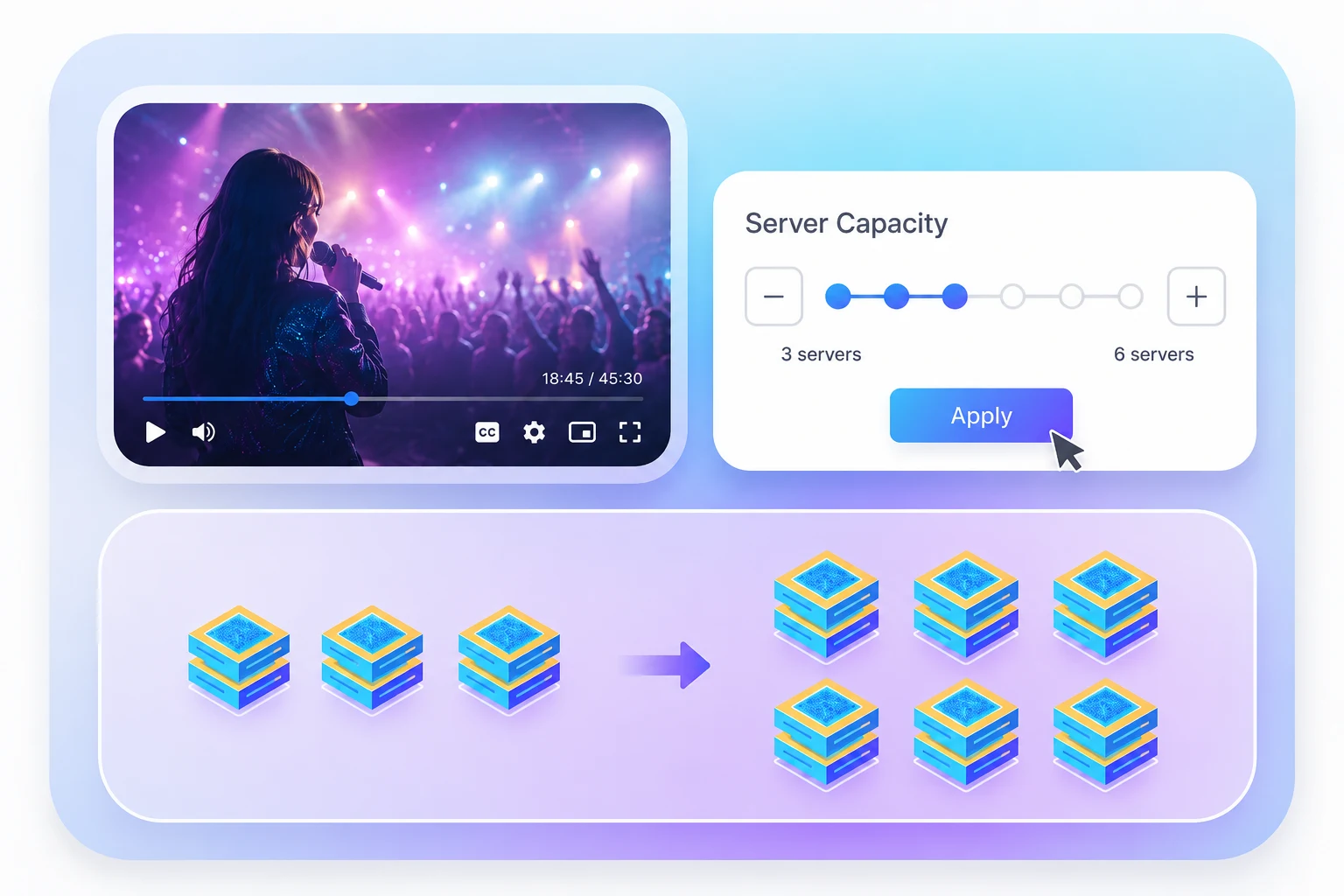
Make planned capacity changes with direct control.
Manual scaling allows teams to change infrastructure capacity based on expected needs, planned events, or operational decisions. It works well when capacity changes are known in advance.
- Useful for launches, campaigns, and planned events
- Gives teams control over infrastructure adjustments
- Helps align capacity with operational planning

Prepare capacity before known traffic windows.
Scheduled scaling adjusts infrastructure capacity at pre-defined times. It is useful when traffic patterns are predictable or tied to recurring events.
- Scale ahead of recurring demand periods
- Support scheduled releases, premieres, or campaigns
- Reduce last-minute infrastructure changes
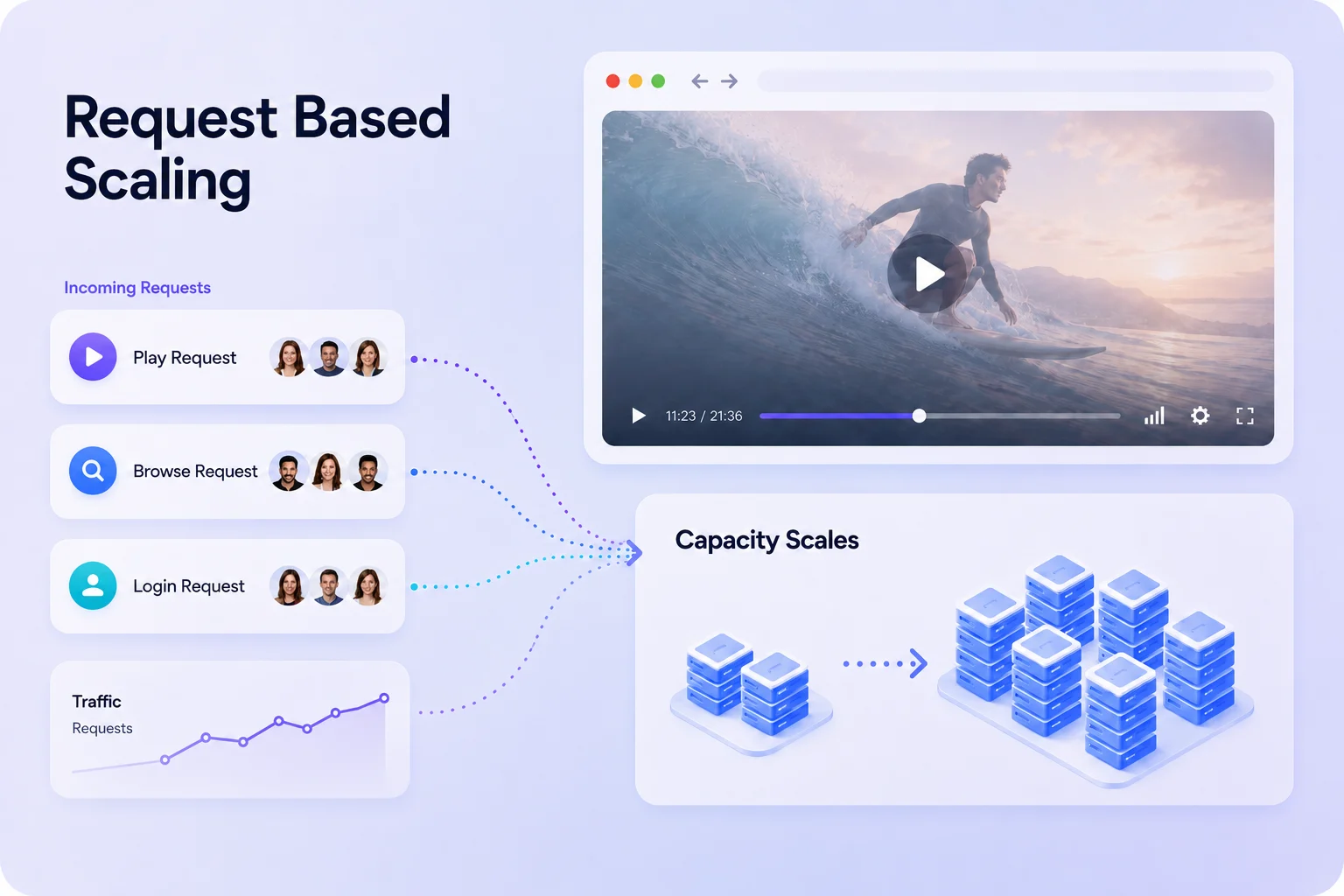
Let incoming platform activity drive capacity changes.
Request-based scaling adjusts capacity based on incoming traffic, viewer activity, or request volume. It helps infrastructure respond when platform usage starts rising.
- Track traffic and request volume
- Add capacity as viewer activity increases
- Support demand that changes with audience behavior
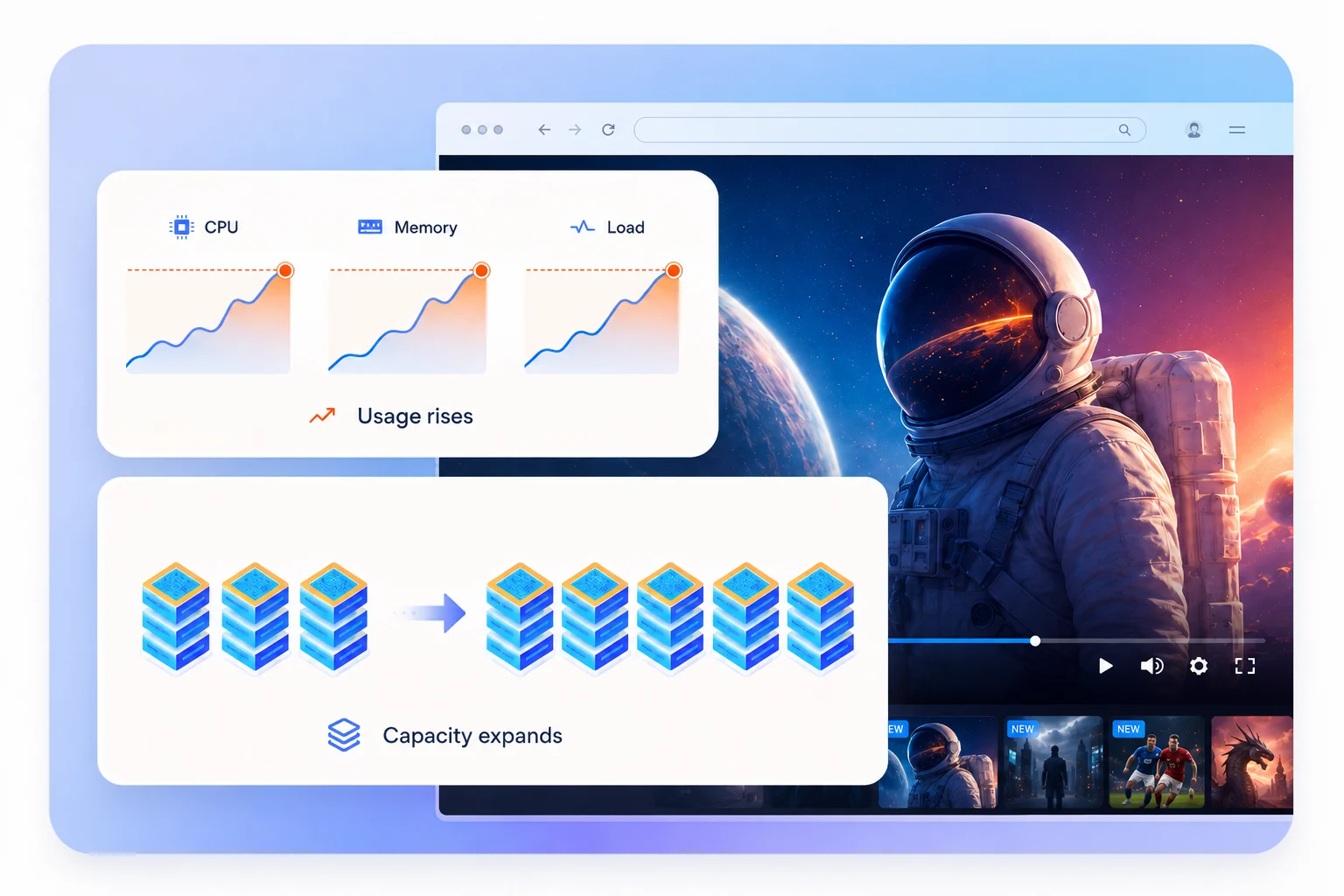
Scale when system usage shows pressure.
Resource-based scaling adjusts capacity based on infrastructure signals such as CPU usage, memory usage, load, or overall resource pressure. It helps reduce strain before performance is affected.
- Respond to CPU, memory, or load thresholds
- Reduce pressure during heavier workloads
- Keep infrastructure more responsive under usage spikes