Since microdramas first emerged in a form we all recognise a couple of years back, the question everyone was asking was whether this hype is going to last, or die out faster than it emerged? We now have a pretty clear answer. Microdrama is blooming, scaling and adding new layers to the way the entertainment and advertising industries work.
This piece was put together by the team at Allrites, a content licensing platform and Muvi’s content licensing partner. We license film, series and microdrama titles to platforms, broadcasters and distributors worldwide, so the growth of microdramas is something we follow closely and have a direct stake in. Consider this our honest read on where the format stands in 2026.
Since you, the reader, most probably already know the basics and history of the format, we are going to skip that part and jump straight into what matters right now. We are looking at a few key developments in the field: the main numbers, how microdrama is spreading globally, product placement, how broadcasters and big players are positioning themselves in the space, and what it actually takes to build a microdrama product.
Global Microdrama Statistics in Q1 2026
According to Omdia, global microdrama revenues reached $11 billion in 2025 and are projected to grow to $14 billion by the end of 2026. Of that, $3 billion will be generated outside China, with the US now the largest international market. To put that in perspective, the entire format barely existed five years ago.
The engagement numbers are just as striking. In the US, microdrama apps such as ReelShort generate higher daily mobile viewing time than major streaming services. ReelShort averages 35.7 minutes per user per day, compared to Netflix’s 24.8 minutes.
Beyond the US, India, Brazil and Mexico are all significantly outpacing Europe in adoption, which speaks to the genuinely global pull of the format. Within Europe, the UK is leading, while Germany reaching 4.4 million monthly active users in 2025. The European numbers look modest today, but the trajectory is clear.
And what about the Middle East? The microdrama wave has not yet made the same landfall in the Middle East and North Africa as it has in China or the US. But the foundations are already there, and in some ways the region was ahead of the conversation before it even started.
Platforms like Telfaz11, UTurn Entertainment and Jordindian claim to have built the blueprint for episodic short-form digital drama long before “microdrama” became a global term. Telfaz11 in particular went from YouTube comedy series aimed at Saudi youth to feature films, pioneering the mobile-native-to-big-screen pipeline that the Western industry is only now beginning to map.
An UAE-originated VOD platform Starzplay has confirmed it is actively moving into vertical storytelling, describing the future of TV as “fluid and platform-agnostic.” The ingredients brands and distributors need are in place: audience scale, mobile infrastructure, trusted creator ecosystem, and behavioural data all pointing in the same direction. The institutional investment is the missing piece, which means the window for early movers is open.
Product Placement and Industry Adoption
Product placement has been a commercial backbone of film and television for decades. Finally, the buzzworthy microdrama format has entered brands’ fight to eyeballs. The format is structurally well-suited for it: episodes are short, plots move fast, and products can be woven into scenes naturally without stopping the story. Gen Z, which makes up the core microdrama audience, is unusually sensitive to advertising that feels like advertising, so the more organic the integration, the better it performs.
What is genuinely new is virtual product placement (VPP), which uses AI to insert branded products into content after filming rather than negotiating a deal before cameras roll. John Attard, co-founder of AI production tool startup Framewerx, told Variety ahead of Cannes Lions 2026 that “every conversation I’ve had recently is about microdramas and virtual product placement in microdramas. Brands want control, and they want quality.” The commercial infrastructure for this is being actively assembled. Rembrand, a VPP startup, raised $23 million in Series A funding with one of the world’s biggest beauty brands, L’Oréal, among its investors. Guess we are going to see a lot of lipsticks integrated into microdramas soon.
On the institutional side, it was an open question for a while whether microdramas would stay an amateur production business or whether big players would jump in too. We now have a clear answer. Broadcasting organisations cannot adopt microdramas within their core product, since the format is vertical, mobile-first and algorithmically distributed by nature, which makes it structurally incompatible with a linear TV screen. What they are actually doing is using their brand, commissioning power and institutional credibility to produce microdramas that live on YouTube, Instagram or their own streaming apps.
That distinction matters. Every single “broadcaster” name currently active in the space is engaging through a streaming or digital product, not through the broadcast channel itself, and that tells you something important about where the format actually lives. NBCUniversal’s Peacock has licensed several shows from ReelShort and is gearing up to release two original Bravo unscripted microdramas this summer. Fox Entertainment has inked a multiyear deal with creator Dhar Mann’s production company for an initial slate of 40 original scripted vertical-video shows premiering on Holywater’s My Drama app. TelevisaUnivision’s ViX in Mexico and GloboPlay in Brazil are embedding short-form serial content within their AVOD and freemium ecosystems, using microdramas to drive engagement and reach.
On the non-broadcaster but equally significant side, Range Media Partners announced a partnership with Google’s 100 Zeros to produce a microdrama slate debuting in fall 2026, with shows in development from “The Bachelor” creator Mike Fleiss, “American Idol” creator Simon Fuller and director McG. Traditional talent is also signing on with revenue-share models rather than upfront fees, which shows a new kind of flexibility in deal structures that was not there even two years ago.
Nordic public broadcasters, NRK in Norway, Yle in Finland and RÚV in Iceland, are moving more carefully but in the same direction. Yle began commissioning micro-format content nearly ten years ago and produced what is believed to be the first-ever Instagram Stories drama in 2017. NRK has projects in development, and RÚV is running its first trial series. SVT in Sweden is looking at how existing content from its back catalogue could be re-edited into vertical microdramas, pointing to a repurposing opportunity for archives that no one has fully mapped yet.
Technical Requirements for Building a Microdrama App
All of this momentum raises an obvious practical question. If you are a broadcaster, distributor or studio looking at this space, what does it actually take to build a microdrama product?
A few requirements come up consistently. The viewing experience needs to be vertical and edge-to-edge by default, not a landscape player squeezed into a portrait frame. Episodes need to load and transition instantly, since the entire format depends on swipe-driven, binge-style consumption rather than deliberate browsing. The catalogue itself also behaves differently from traditional VOD: a single series can run 60 or more short episodes, so the content management system needs to handle bulk uploads, fast categorisation and metadata at that volume without becoming a bottleneck.
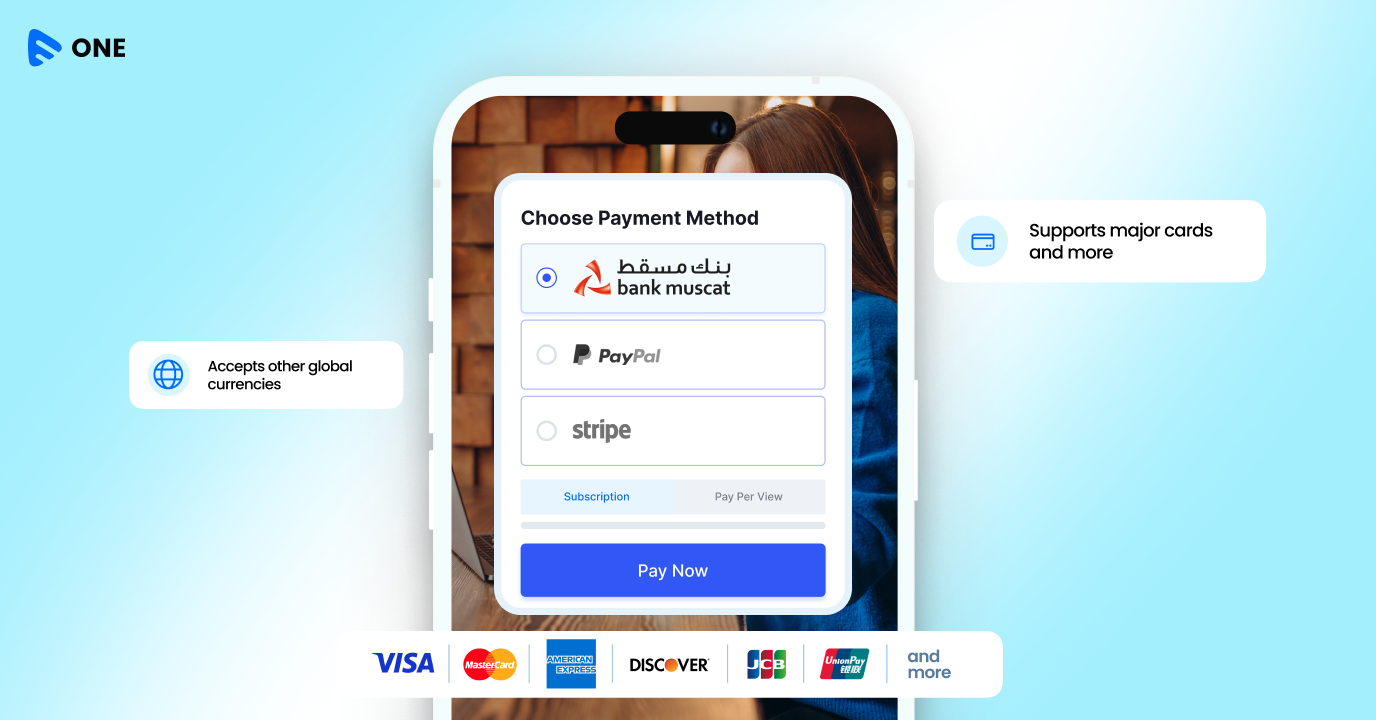
Monetisation is its own puzzle. Microdrama audiences convert through a mix of models rather than one clean structure: some viewers stay on free episodes and convert through ads, some buy virtual coins to unlock premium chapters, some prefer a flat subscription, and some respond to referral or rewards mechanics. A platform built only for traditional subscription VOD will not flex easily into this kind of layered, episode-level monetisation.
This is the layer Muvi operates in. Muvi Shorts, built on the Muvi One infrastructure, is designed specifically for this kind of vertical, episodic short-form product: native iOS and Android apps, an edge-to-edge vertical player, bulk content management for high-volume catalogues, and monetisation that supports coins, pay-per-view, subscriptions and ad-supported free episodes side by side. For platforms that already run on Muvi One, the Shorts SDK allows a vertical, swipeable feed to be added directly into an existing app rather than building a separate one from scratch.
The practical upshot is that the technology layer for microdrama no longer needs to be built in-house from zero. Whether you are a broadcaster experimenting with a digital vertical, a rights holder looking to launch a branded app around a catalogue, or a studio testing the format for the first time, the infrastructure exists to move quickly rather than spend a year building it.
Is There Still Room for Players?
Overall, microdrama being a relatively new format makes it quite fun to observe. It is moving towards the same pattern other formats have travelled before it, developing its own unique industry infrastructure, commercial logic and culture along the way.
So we have established that the microdrama format no longer needs validation. The numbers are real, the institutional players are in, the brand interest is serious and the talent ecosystem is maturing fast. A mobile-native experiment from China, now worth $11 billion and growing, with the infrastructure around it, rights, distribution, brand integration, local adaptation, being built in real time. The wave is global, but in many markets it has not fully hit yet, which means there is still ground to claim.
For content businesses, that means two things practically: rights and infrastructure. You need content worth building around, and you need a platform that can actually carry it.
Allrites & Muvi To Build a Microdrama App
This is exactly where Allrites and Muvi come together. Allrites is a content licensing platform with a dedicated microdrama catalogue, giving buyers direct access to titles available for licensing across territories, as well as rights for local adaptations for those who want to produce their own version in their own language. Muvi One is an all-in-one platform for launching and running video streaming products, built to support exactly the kind of mobile-first, multi-format content businesses that the microdrama economy is producing.
Put together, the two cover the full picture. If you are an entertainment app, broadcaster or studio looking to move into microdrama, Allrites and Muvi are a strong duo to have in your corner: one bringing the content and rights, the other bringing the technology to actually build and scale the product around it. Whether you need a catalogue to license, a platform to build on, or both, this is the partnership built to support that move end to end.
The content is here. The audience is here. The commercial logic is proven. The only real variable left is how fast you move.








Add your comment