Digital subscriptions now account for a third of all reported account takeover incidents, and digital media platforms see attack rates nearly three times higher than the average industry. That’s not a hypothetical risk sitting in a security report somewhere — it’s happening to streaming platforms in production, right now, at the login screen. End-user security is what stands between a subscriber’s account and that attack, and for OTT platforms, it’s no longer optional infrastructure. It’s the difference between a subscriber base you can trust and one that quietly leaks revenue to fraud.
This guide breaks down what end-user security actually means for a streaming platform, the real threats it defends against, and what a complete implementation looks like — including how Muvi One handles it.
What Is End-User Security in OTT & Streaming?
End-user security refers to the practices, controls, and technologies that protect the people using a platform — not the platform’s backend infrastructure, and not the content itself. For a streaming business, that means protecting the subscriber’s account, login credentials, payment details, and personal data from unauthorized access, theft, or misuse.
It’s a distinct concern from content security. DRM, watermarking, and anti-piracy tools exist to stop your video and audio from being stolen or redistributed. End-user security exists to stop someone else’s account from being stolen and misused — which is a completely different attack surface, but just as damaging to subscriber trust and platform revenue. Our guide on why security matters for OTT platforms covers how these two categories work together as a full security posture.
Two different problems, one platform. Muvi One protects both your content and your subscribers with a dedicated Platform Security suite built for streaming. See what’s included →
Why End-User Security Matters for Streaming Platforms
Streaming subscriptions are an attractive, low-effort target for attackers. Credentials leaked from unrelated breaches get tested against streaming logins at scale — a technique called credential stuffing — because so many people reuse the same password across multiple services.
The business impacts compounds quickly. A stolen account can enable password sharing beyond the household, unauthorized geographic access that breaches licensing agreements, and payment fraud if stored card details are exposed. On top of the direct fraud cost, there’s the reputational one: subscribers who experience an account breach rarely give a platform a second chance.
This is exactly the layer general OTT security discussions sometimes skip past. Our broader piece on cybersecurity for OTT platforms covers platform-wide risks, but end-user security specifically is what determines whether an individual subscriber’s account stays theirs.
Common Threats to End-User Security on OTT Platforms
- Credential stuffing and password reuse. Attackers run stolen username/password combinations from other breaches against streaming logins, betting that subscribers reused a password.
- Account and password sharing. Not always malicious, but still a security and revenue problem — one paid login circulating across dozens of unrelated devices weakens accountability and makes it harder to tell legitimate access from a breach.
- Phishing. Fake login pages or “your subscription payment failed” emails trick subscribers into handing over credentials directly, bypassing technical defenses entirely.
- Geo-restriction bypass. Subscribers or resellers using VPNs to access content outside licensed regions also signals accounts being used well outside their intended, verified access pattern.
- Unauthorized device access. Without limits on concurrent sessions or device counts, a single compromised or shared login can serve far more viewers than the subscription was ever priced for.
Key Components of End-User Security for OTT Platforms
A complete end-user security setup for a streaming platform typically includes:
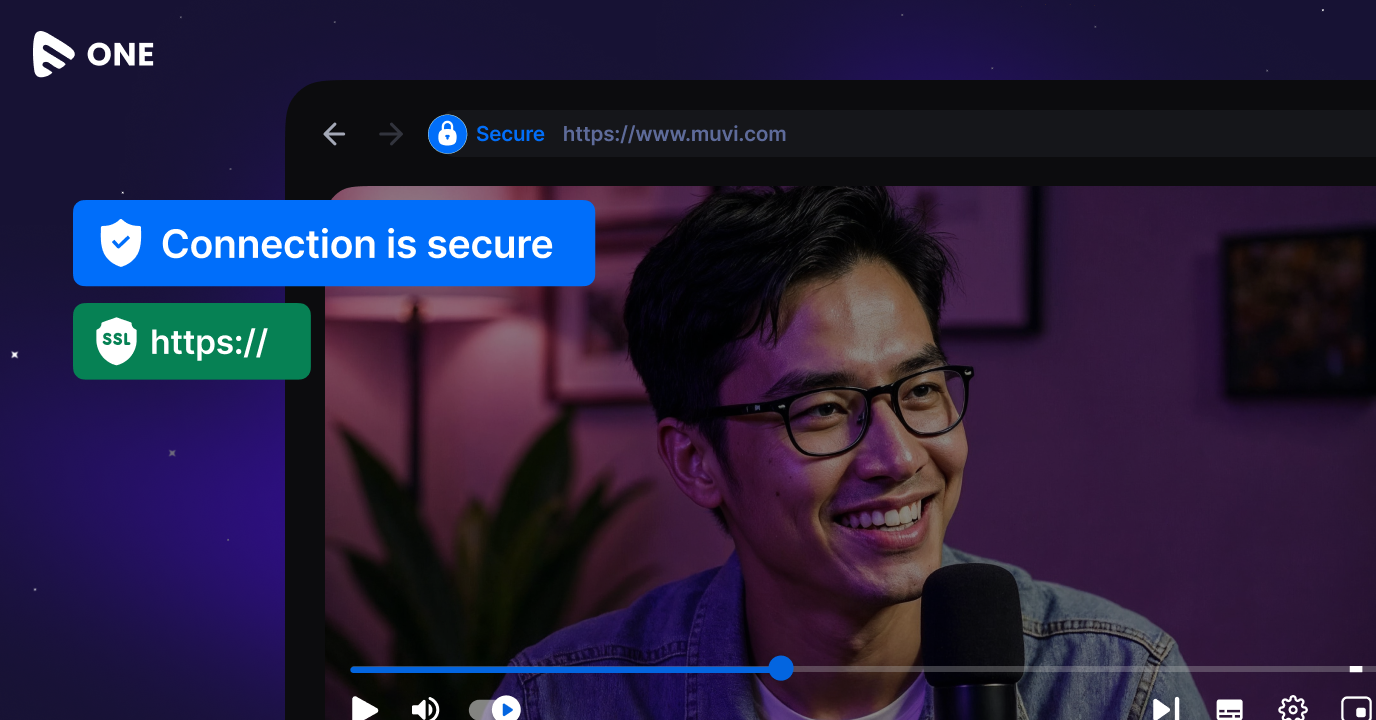
- Encrypted data transmission (SSL/TLS): Every piece of data moving between a subscriber’s device and the platform — login credentials, payment details, viewing activity — needs to be encrypted in transit, not just at rest.
- OTP and multi-factor authentication: Adding a one-time password step at login or sign-up verifies the person is who they claim to be.
- Biometric authentication: Face or fingerprint login ties access to something the user physically has, rather than something that can be phished, leaked, or shared.
- Simultaneous stream and device limits: Capping concurrent sessions per account curbs both password sharing and the blast radius of a compromised login.
- Geo-blocking and VPN detection: Restricting access by region and identifying proxy/VPN traffic protects licensing compliance and flags abnormal account usage patterns.
- Compliance-driven data handling: Frameworks like GDPR and PCI DSS govern how subscriber data and payment information must be stored, processed, and eventually deleted.
All of this, built in. Muvi One’s Platform Security suite covers SSL encryption, OTP authentication, biometric login, and simultaneous screen restriction out of the box. Start your 14-day free trial →
End-User Security vs. Content Security: What’s the Difference?
It’s easy to conflate between End User Security vs Content Security, but they protect different things and need different tools.
Content security protects the asset — your video and audio files — from piracy, illegal redistribution, and unauthorized downloads. This is the domain of Multi-DRM, forensic watermarking, and screen-recording prevention, covered in depth in our post on secure online video streaming.
End-user security protects the person — the subscriber’s identity, credentials, and account — from being compromised or misused. A platform can have airtight DRM and still lose revenue and trust if subscriber accounts are easy to take over. The two need to work together: content security stops your video from leaking out, and end-user security stops someone else’s account from being the leak point in the first place.
Best Practices to Strengthen End-User Security on Your OTT Platform
- Enforce OTP or two-factor authentication at login, not just at registration, especially for account changes like password resets or payment updates.
- Offer biometric login wherever the device supports it — it’s both more secure and lower-friction than a typed password.
- Set concurrent-device and stream limits appropriate to each subscription tier, so password sharing has a hard ceiling.
- Monitor for abnormal login patterns, such as a single account logging in from multiple distant regions within a short window.
- Educate subscribers directly — a short in-app note about phishing red flags or password hygiene costs little and closes a gap that no backend control can fully cover on its own.
- Review compliance posture regularly against frameworks like GDPR and PCI DSS, particularly as your platform expands into new regions with different data protection laws.
Compliance & End-User Security
Regulatory frameworks shape how end-user data has to be handled at every stage, from collection to deletion. GDPR governs how EU subscriber data is collected, stored, and erased on request. PCI DSS sets the standard for handling payment card data securely. Depending on your platform’s footprint, HIPAA, ADA/VPAT accessibility standards, and ISO 27001 information security certification may also apply. Compliance and end-user security reinforce each other: a platform that meets these standards is, by definition, handling subscriber data more carefully. You can see the full picture of what this looks like in practice on our global compliances page.
How Muvi One Delivers End-to-End User Security
Muvi One’s Platform Security suite is built specifically to close the gaps outlined above: SSL certification on every site and app, OTP authentication via email or SMS, biometric login support, simultaneous screen restriction to curb account sharing, geo-blocking with IP-based filtering, and VPN detection to stop geo-restriction bypass. It’s backed by ISO/IEC 27001:2013 certification along with GDPR, PCI DSS, ADA/VPAT, and HIPAA compliance, so subscriber protection isn’t a bolt-on feature but part of the platform’s foundation.
Protect your subscribers the way you protect your content. See Muvi One’s full end-user security stack in action. Take a 14 day Free Trial →





Add your comment