Over half of U.S. users now unlock apps and accounts with biometrics on a daily basis, and the global passwordless authentication market is on track to nearly triple by 2032. That shift isn’t limited to banking apps and smartphones anymore — it’s landing squarely on streaming platforms. Viewers are done typing passwords on a TV remote, and streaming businesses are done losing revenue to shared logins. Biometric login for streaming is how both problems get solved at once.
This blog breaks down what biometric login actually means for OTT platforms, why face and fingerprint authentication are becoming the default, and how streaming businesses can implement it without slowing down the viewer experience.
What Is Biometric Login for Streaming?
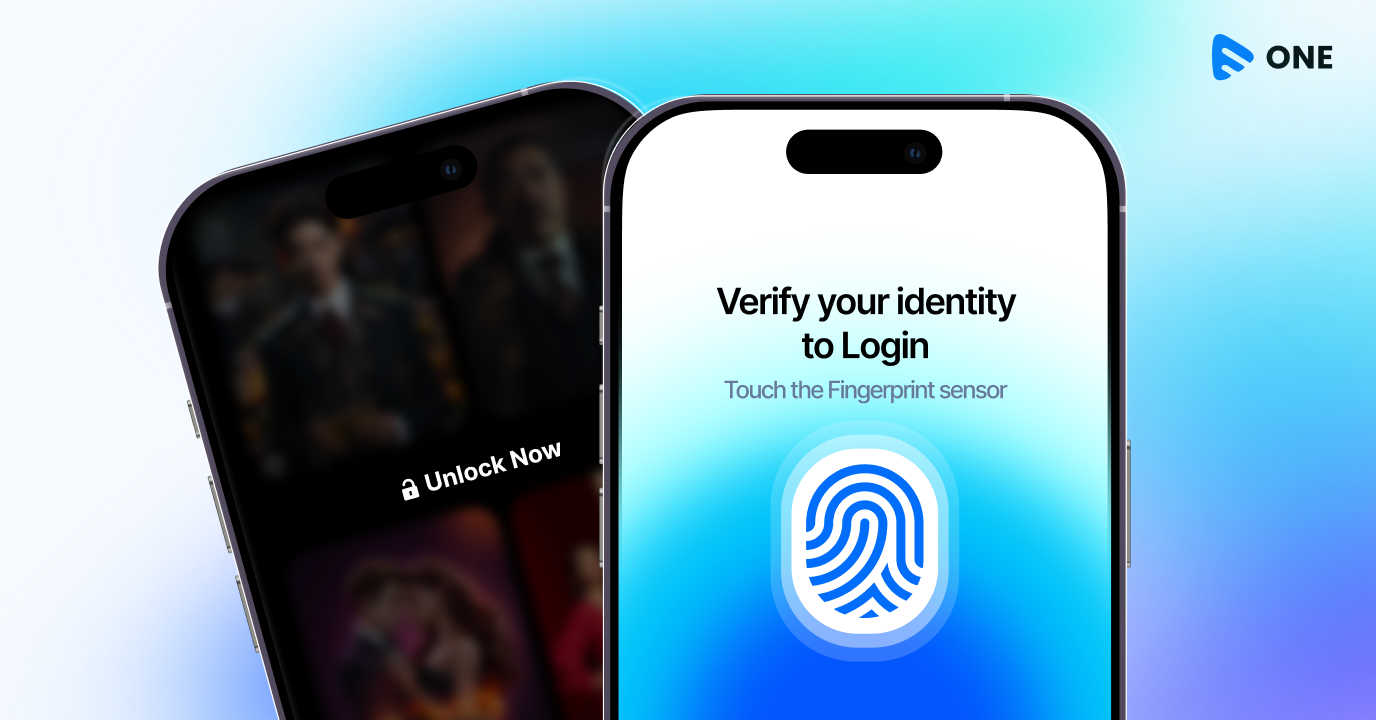
Biometric login or biometric authentication replaces the traditional username-and-password screen with something a viewer already carries: their face, fingerprint, or voice. Instead of typing credentials into a smart TV interface the app scans a face via the device camera or reads a fingerprint via a paired phone, and access is granted in under a second.
For streaming platforms, this isn’t just a UX nicety. If you’re already investing in platform security, biometric login is simply the next layer, applied at the exact point where most breaches and shared-password abuse actually start: the login screen.
Want login security that doesn’t slow viewers down? Muvi One’s built-in SSO and user-authorization layer make it easy to add modern authentication to your streaming platform. Explore Muvi One →
The Real Problem: Passwords Are Broken for Streaming
Streaming apps have a login problem that’s different from a typical SaaS product. Viewers log in through various devices like smart TVs, tablets, phones, etc — often the same day. Typing a password using a TV remote’s on-screen keyboard is slow enough and also leads to credential-stuffing attacks.
Streaming services have publicly grappled with this exact issue through widespread password sharing. Biometric login sidesteps the password writing process entirely.
It also plugs directly into the credential-based attacks that OTT platforms already face — phishing pages that mimic sign-up screens, credential stuffing using leaked password lists, and brute-force login attempts. We’ve covered these threats in more depth in our breakdown of cybersecurity risks for OTT platforms.
Why Biometric Login Is Gaining Ground Right Now
Biometric authentication is gaining momentum in streaming:
- Passwordless is going mainstream. The global passwordless authentication market is projected to grow from roughly $21.6 billion in 2026 to $60+ billion by 2032, driven largely by consumer comfort with face and fingerprint unlock on phones.
- Consumers already trust it. A large majority of consumers now consider biometrics more secure than traditional passwords.
- Devices already have the hardware. Face ID, Android biometric APIs, and fingerprint sensors are standard on most phones and many smart TVs and tablets — meaning platforms don’t need to build new hardware, only the integration layer.
- Fraud costs are rising. As OTT subscriber bases scale, so does exposure to bot-driven credential stuffing and account takeover — both of which biometric login effectively neutralizes.
Face vs. Fingerprint Authentication: How Each Works in a Streaming App
Facial recognition captures a scan of the viewer’s face — usually through the device camera — and matches it against a securely stored biometric template. On streaming platforms, this is most useful on smart TVs and tablets, where a camera is already present and typing is painful. It’s fast, contactless, and works well for quick profile switching within a household.
Fingerprint authentication reads a fingerprint via the device’s built-in sensor, typically on a phone or tablet. It’s marginally faster than face scans in good conditions and doesn’t require good lighting, which makes it a strong option for mobile-first streaming apps.
Most platforms don’t have to choose one over the other. The smarter approach is device-aware: fingerprint on mobile where a sensor is standard, face recognition on TVs and tablets where a front camera is available, and a traditional password or OTP as fallback everywhere else.
Business Benefits of Biometric Login for Streaming Platforms
- Faster, friction-free sign-in. Biometric login removes the single biggest drop-off point in the streaming funnel — the login screen — and typically completes in under two seconds versus the 15–30 seconds it takes to type a password on a remote.
- Fewer account takeovers. Because there’s no password to phish, leak, or brute-force, biometric login closes off the most common attack vector for OTT accounts, complementing DRM and encryption protections you may already have covering the content delivery side of your platform.
- Better control over account sharing. Biometric checks make it harder for one subscription to silently serve unlimited unrelated households, since access is tied to a verified physical trait rather than a password anyone can text to a friend.
- Higher retention. A smoother login experience reduces churn caused by “I forgot my password” abandonment — a real and measurable drop-off point, especially on connected TVs.
- Regulatory and trust signals. As data privacy expectations rise globally, offering secure, modern authentication also signals that a platform takes user data seriously — which matters as much for brand trust as for compliance.
Real-World Use Cases in OTT
- Profile switching: Multiple users on one household account can switch profiles instantly via face scan instead of PIN entry.
- Parental controls: Biometric verification can gate access to mature content or purchase approvals, replacing easily-shared PIN codes.
- Payment authorization: Pay-per-view and in-app purchases can require a fingerprint or face scan as a second factor, cutting down on accidental or unauthorized charges.
- Cross-device continuity: A viewer authenticated biometrically on their phone can carry that trusted session to a paired smart TV app without re-entering credentials.
Challenges in Biometric Login for Streaming Apps
Biometric login isn’t a plug-and-play switch. Streaming platforms need to think through a few things before rollout:
- Device fragmentation. Not every smart TV or budget device has a camera or fingerprint sensor, so a password or OTP fallback is still necessary.
- Privacy regulation. Biometric data is treated as sensitive personal data under laws like GDPR and India’s DPDP Act, which means secure storage (ideally as encrypted templates, not raw images) and clear consent flows are non-negotiable.
- User trust. A meaningful share of consumers remain wary of how biometric data is stored and used, so transparency about what’s collected — and why — matters as much as the technology itself.
How Muvi One Supports Secure, Modern Streaming Authentication
Muvi One is built with the security foundation that makes advanced authentication like biometric login viable in the first place — including SSO, user authorization controls, and Multi-DRM-backed content protection, so identity verification and content security work together rather than as separate systems. If you’re evaluating how authentication fits into a broader security strategy, our guides on Multi-DRM for streaming security and demystifying DRM for OTT platforms are a good next read.
For platforms still weighing whether to build this kind of infrastructure in-house or launch on a ready-made solution, it’s worth comparing the real cost and timeline tradeoffs — we’ve laid those out in detail in Buy vs. Build Your OTT Platform. And if you’re earlier in the journey and still mapping out what a modern streaming stack needs end to end, What Is OTT? Everything You Need to Know is a solid starting point.
The Future of Biometric Login in Streaming
Expect three things to accelerate over the next few years: multimodal authentication (combining face and fingerprint for higher accuracy), on-device biometric processing (so raw biometric data never leaves the user’s device), and behavioral biometrics that quietly verify identity through viewing patterns rather than an explicit scan at all. For streaming platforms, the direction is clear — authentication is moving from “something you remember” to “something you simply are,” and platforms that adapt early will have a real edge in both security and viewer experience.
Ready to build a streaming platform viewers actually trust? Muvi One combines secure authentication, Multi-DRM, and zero revenue-sharing — all with no coding required. Get started free →




Add your comment