For OTT platforms in 2026, the question is no longer whether apps matter—it’s where investment creates the highest long-term return. As audience behavior shifts across connected TVs, smartphones, and streaming devices, OTT operators are increasingly forced to decide how to allocate development budgets, shape content strategy, and manage platform distribution.
The debate around smart TV apps vs mobile apps is not simply about screen size. It reflects deeper differences in how users discover content, consume it, and ultimately pay for it. A mobile-first audience behaves very differently from a connected TV audience, and platforms that ignore those differences often struggle with retention and monetisation.
This guide breaks down how Smart TV and mobile viewing differ in 2026, where each platform performs best, and how OTT businesses should approach investment moving forward.
Why OTT app strategy matters more in 2026
OTT competition has matured significantly over the last few years. Earlier, simply launching a streaming platform with good content was enough to attract viewers. In 2026, that is no longer the case. Most categories—whether entertainment, sports, education, or regional streaming—already have multiple platforms competing for the same audience. As a result, user experience and accessibility across devices have become just as important as the content itself.
Today, OTT growth is increasingly shaped by how users interact with platforms across mobile devices, Smart TVs, tablets, and connected streaming devices. Audiences no longer consume content from a single screen.
Device behavior is changing faster than monetisation models
A few years ago, mobile streaming dominated most OTT growth discussions. Smartphones drove content discovery, daily engagement, and viewing time, particularly in emerging markets. Users now commonly discover content on mobile devices but prefer consuming long-form content on larger screens. A viewer may browse trailers or short clips on a smartphone during the day, then switch to a Smart TV in the evening for movies, live sports, or episodic content. The impact of this shift goes far beyond screen preference. It directly affects several business metrics that OTT platforms rely on for growth. Watch time tends to increase significantly on connected TVs because viewers are more comfortable consuming long-form content in a living room environment. Monetisation efficiency also changes, as larger screens often generate better ad visibility and stronger subscription value perception.
Platforms that optimize only for mobile or only for television often leave engagement opportunities untapped. A mobile-only strategy may succeed in acquisition but struggle with deep engagement. A TV-only approach may create strong viewing sessions but limit discovery and user onboarding. The strongest OTT businesses are recognizing that these environments support different stages of the viewer journey.
This is why OTT app development has become central to growth strategy rather than just technical expansion. App distribution is no longer about simply being present on multiple devices. It is about ensuring that the viewing experience feels consistent, intuitive, and optimized for how users naturally consume content on each screen.
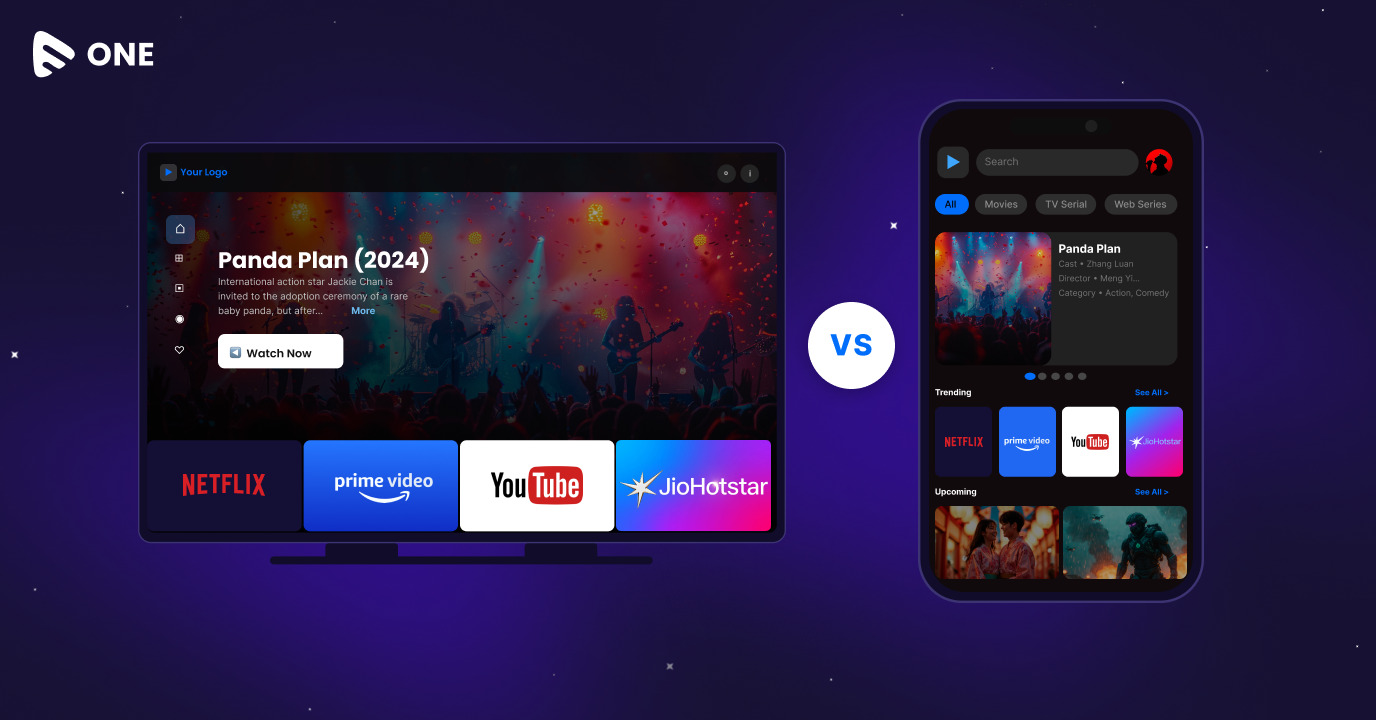
Smart TV Apps Vs Mobile Apps: A Detailed Comparison
Both mobile and smart TV apps have their fair share of audience. Each has its own specific purpose. So how does one decide where to invest? Here is a comparison of both streaming services.
Mobile apps still dominate accessibility and discovery
Despite the rapid growth of connected TV, mobile devices remain the primary entry point into the OTT ecosystem. For most streaming businesses, the first interaction a user has with the platform still happens on a smartphone. This makes mobile apps critical not just for reach, but for discovery, engagement, and audience acquisition.
For many OTT businesses, mobile apps drive the earliest stages of audience growth. First-time registrations frequently happen on smartphones because onboarding feels quick and convenient. Mobile apps also support continuous engagement through notifications, personalized recommendations, and social sharing behavior. Even users who primarily watch long-form content on Smart TVs often maintain their relationship with a platform through mobile interactions.
Regional OTT services also gain significant advantages from mobile-first accessibility. In markets where mobile internet usage dominates, a strong smartphone experience often matters more than premium television distribution during the early growth stage.
Mobile Viewing: Its Few Disadvantages
However, mobile engagement also comes with challenges. Viewing behavior on smartphones is often fragmented and interruption-heavy. Notifications, multitasking, and shorter attention spans reduce session consistency compared to connected TV environments. Users may open the app frequently but engage in shorter viewing periods, which can increase churn risk if the platform fails to build deeper viewing habits.
This is why mobile should not be viewed only as a playback environment. Its real strength lies in discovery, accessibility, and engagement frequency.
Smart TV Apps: Deeper Engagement Drivers
Smart TVs are changing how audiences consume streaming content at home. What was once considered an extension of mobile viewing has now evolved into a television-first experience for many users. As a result, OTT platforms are investing far more heavily in connected TV ecosystems than they did just a few years ago.
The growth of Smart TV viewing reflects a broader shift in household entertainment habits. Streaming is no longer seen as secondary to traditional television—it has become the primary viewing experience for many households. Users now expect OTT platforms to function with the same comfort and continuity once associated with cable or satellite TV, but with the flexibility of on-demand streaming.
Major streaming platforms like Netflix, Disney+, and YouTube continue investing heavily in connected TV experiences because larger screens consistently generate higher engagement metrics. Smart TV environments also encourage shared or family viewing, which increases the perceived value of the subscription itself. When multiple household members engage with the platform together, the service becomes more deeply tied to household entertainment routines. This makes cancellation less likely and improves long-term retention.
Another important factor is consistency. Connected TV users are more likely to return for scheduled or recurring content such as weekly shows, sports programming, or themed content blocks. This predictable viewing behavior strengthens engagement patterns and increases overall platform loyalty.
Why most OTT platforms need both ecosystems
The real strategic question for OTT platforms is not whether Smart TV apps or mobile apps matter more. It is understanding how each ecosystem supports different stages of audience growth and user behavior.
In 2026, OTT consumption is increasingly becoming a cross-device journey. Users rarely stay within a single viewing environment anymore. Instead, they move between mobile devices, televisions, tablets, and web browsers depending on where they are, what type of content they are consuming, and how much time they have available.
Because of this shift, platforms that focus entirely on one ecosystem often struggle to maximize both acquisition and long-term engagement.
- Mobile drives acquisition while TV drives engagement. For many OTT platforms, mobile apps are where audience relationships begin. Smartphones dominate content discovery because users spend large portions of their day browsing social media, watching clips, receiving notifications, and interacting with digital content in short bursts.
- Connected TV environments encourage immersive viewing behavior that mobile devices rarely achieve consistently. Once users move to larger screens, they are more likely to watch more.
For many streaming businesses, the ideal user journey now looks something like this:
Step 1: Discovery happens on mobile devices
Step 2: Users get redirected to smart TVs for comfortable long-term viewing
Step 3: Retention happens on smart TVs
This behavior is becoming increasingly common across OTT ecosystems. Users expect platforms to follow them seamlessly between devices, allowing them to start content in one environment and continue it in another without friction.
As a result, mobile and television are no longer competing channels. They serve complementary roles within the same audience lifecycle.
The operational challenge of multi-platform OTT distribution
While supporting multiple ecosystems is strategically important, it also introduces significant operational complexity.
Maintaining OTT apps across iOS, Android, Roku, Fire TV, Apple TV, Samsung TV, LG TV, and web platforms requires continuous development and maintenance effort. Each ecosystem operates differently, with its own technical standards, testing requirements, certification processes, and update cycles.
For example, a feature optimized for Android may need separate adjustments for tvOS or Roku OS. Smart TV platforms often require additional interface optimization because users navigate using remotes rather than touchscreens. Even app approval timelines vary significantly between ecosystems, creating operational overhead for streaming businesses trying to scale quickly.
Launching across mobile, web, and Smart TVs from one platform: Muvi One
For many OTT businesses, one of the biggest challenges is not launching a streaming service—it is expanding consistently across multiple devices without creating operational complexity. This is where Muvi One, a fully functional OTT streaming software solution simplifies execution.
Instead of stitching together multiple vendors for hosting, encoding, app development, monetisation, and delivery, Muvi One brings these components into a single OTT platform ecosystem. The platform includes built-in hosting and encoding, allowing operators to upload content once and prepare it automatically for playback across different devices and network conditions.
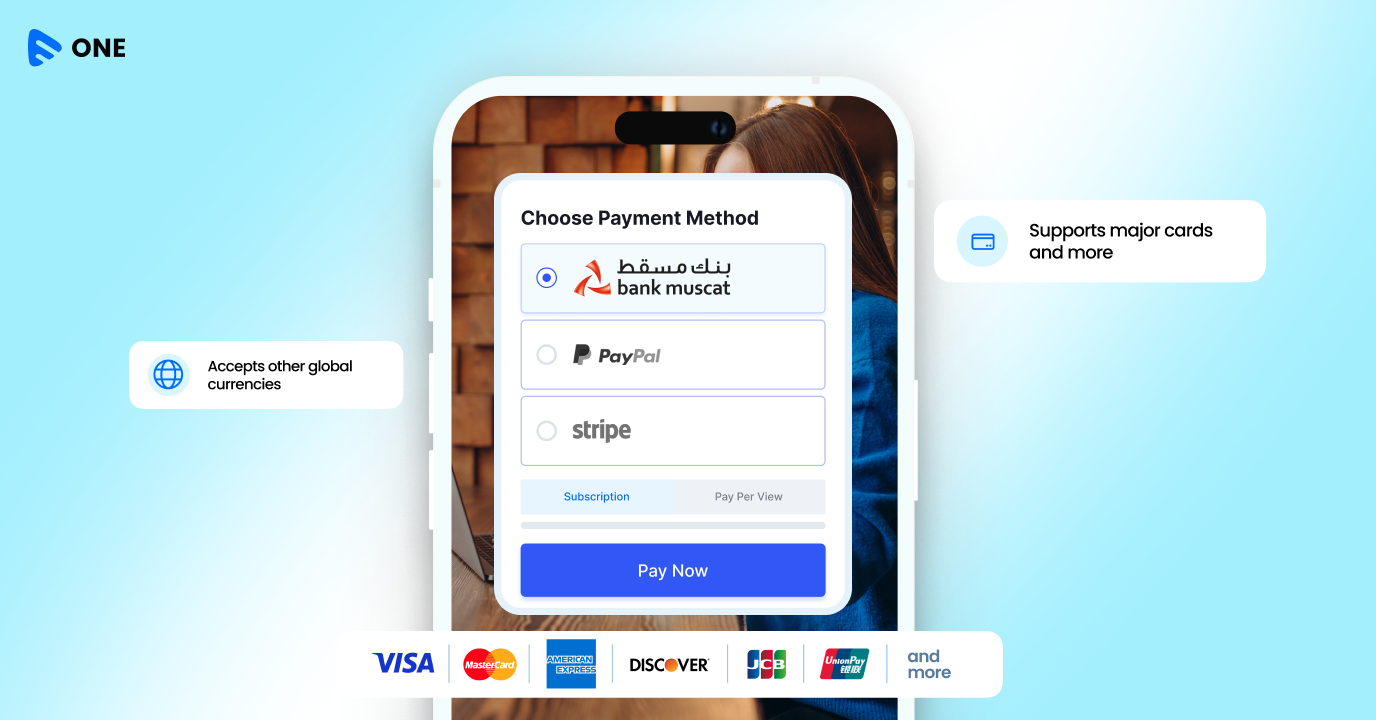
It also includes content management tools that help organize libraries, manage categories, publish releases, and control how content appears to users. On the monetisation side, platforms can enable subscription, advertising, transactional, or hybrid revenue models without integrating separate payment and billing systems manually. Most importantly, Muvi One supports deployment across multiple viewing environments from the same operational layer. This includes mobile apps, web browsers, Smart TVs, and connected TV devices like Roku, Fire TV, and Apple TV. Instead of approaching each ecosystem independently, operators can manage cross-device streaming from one platform.
The practical advantage is not just technical convenience—it is operational focus. When teams spend less time maintaining infrastructure and coordinating fragmented systems, they can allocate more resources toward audience acquisition, content programming, retention strategy, and monetisation growth.
Muvi One can help you achieve that professional efficiency. Get a free 14-day trial to learn more.


Add your comment