Every video streaming platform eventually hits the same wall: the audience that made the platform work in its home market isn’t the audience that will make it grow. Growth comes from the next country, the next language, the next region where people are already searching for content — just not in English.
That’s the real job of a multilingual video streaming platform. It isn’t a checkbox next to “subtitles available.” It’s whether a Spanish-speaking viewer in Madrid, an Arabic-speaking viewer in Dubai, and an English-speaking viewer in Toronto can each open the same platform and feel like it was built for them — the interface, the search results, the URLs, all of it.
This post breaks down what it actually takes to build a multilingual video streaming platform, and how Muvi One’s multilingual feature set — platform-wide translation, RTL support, AI-powered translation, geo-translation, and multilingual SEO — is built to handle it.
What Makes a Video Streaming Platform Truly Multilingual With Muvi One
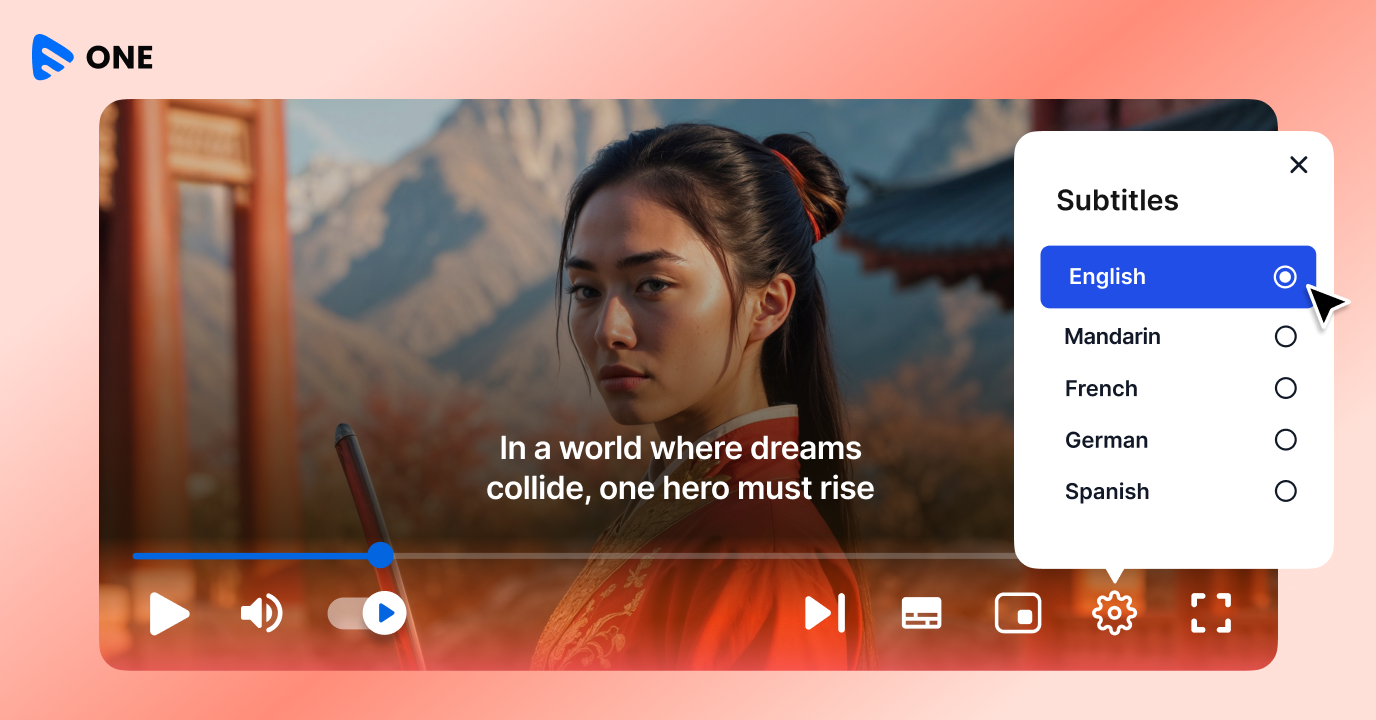
Most conversations about a multilingual video streaming platform start and stop at subtitles. Subtitles matter, but they only solve one part of the problem — the content itself. The bigger, often-overlooked layer is the platform surrounding that content: the homepage, the navigation menu, the search bar, the account settings, the checkout flow, and every page a search engine crawls.
A video streaming platform that only translates subtitles but keeps its interface in English is still asking non-English speakers to navigate in a language they don’t use. A genuinely multilingual video streaming platform covers both layers — content and interface — at the same time.
By default, a video streaming platform built on Muvi One launches in English. But that default isn’t a limit. Muvi One lets you translate the entire website and apps into multiple languages and set a different language as the platform default altogether — useful for operators launching a video streaming platform built primarily for a non-English-speaking market from day one.
This matters because viewers rarely tolerate friction. If switching languages feels buried or incomplete, most people won’t bother hunting for the option — they’ll just leave. Platform-wide language support keeps that friction out of the experience entirely.
Muvi One Multilingual Video Streaming Platform Features
Here are a list of specific features that come with Muvi One multilingual support.
AI-Powered Translations
Translating a full platform manually — every label, every menu item, every page — used to be one of the slowest parts of going multilingual. Alie AI, Muvi’s streaming-focused AI engine, is built to remove that bottleneck.
From the Languages & Translations panel, Alie instantly translates an entire website and app into multiple languages, localizing static text, navigation labels, and page elements while maintaining context and accuracy across the platform. What once took a translation team weeks now runs from a single panel.
Bonus Tip:
Alie AI also powers AI Subtitles (auto-generated in the primary language) and AI Translations, which extend subtitle translation to 75+ languages — so content-level and interface-level translation both run on the same AI engine. |
RTL Language Support
Arabic and Hebrew aren’t just “another language” from a platform design standpoint — they read right-to-left, which changes how menus, buttons, and text need to be laid out entirely. A platform that only supports left-to-right languages will render RTL text awkwardly, if at all.
Muvi One includes native RTL language support, so platforms serving Middle Eastern, North African, or Israeli audiences can translate the full interface into an RTL format without a workaround or a separate build. For operators specifically targeting these regions, this isn’t optional infrastructure — it’s the baseline requirement for a usable product.
Multilingual SEO
There’s one gap worth flagging: a video streaming platform can support ten languages and still get zero organic traffic in nine of them, because search engines were never told those language versions exist. Multilingual SEO — language codes in URLs, updated sitemaps per language, translated page meta information, and auto-redirection — is the layer that fixes this.
Muvi One handles it automatically, so the translation work happening everywhere else on the platform actually reaches new searchers instead of only serving people who already know the platform exists.
Automated Geo-Translation
Manual language selection — a dropdown in the corner of the screen — assumes a visitor already knows to look for it. Geo-translation removes that assumption. With location-based translation support, a platform automatically serves content in the regional language when a user logs in from a specific geography, rather than defaulting to English and waiting for them to switch.
For platforms actively expanding into new regions, this is often the difference between a first-time visitor staying long enough to explore the catalog and bouncing within seconds because the homepage didn’t read as “built for them.”
Export & Import Language Strings
Not every operator wants AI to handle every translation — some need in-house teams or professional translators to review and finalize copy, especially for brand voice or legal text. Muvi One supports that workflow too: export the default English language strings, translate them through whatever process the team prefers, and import the finished translations back into the platform.
This keeps translation flexible. Teams can combine Alie’s AI-powered speed for bulk translation with human review on the strings that need precision — without re-entering text manually inside the CMS.
Final Comments
None of these features work in isolation. AI translation with Alie makes going multilingual fast. RTL support makes the platform usable for Arabic and Hebrew audiences. Geo-translation makes the experience feel automatic. Multilingual SEO makes each language version discoverable. Language string export/import keeps the process flexible for teams that want more control.
Together, they turn a multilingual video streaming platform from a marketing bullet point into something a team can actually operate on — which is what separates video streaming platforms that genuinely expand into new markets from the ones that just claim to.
A multilingual video streaming platform isn’t a single feature — it’s the combination of platform-wide translation, RTL support, AI-powered translation, geo-translation, multilingual SEO, and flexible language string management working together. Muvi One is built with all of it from the ground up, so reaching a new language market doesn’t mean rebuilding your platform for it. Get a free 14-day trial to learn more.





Add your comment