In Video Streaming, great content attracts viewers. However, the right payment model turns them into revenue. If you pick the wrong model, you cap your own revenue. If you pick the right one — or the right mix you end up earning more from more people.
This guide breaks down three models streaming platforms use today: coins (virtual currency), subscriptions, and pay-per-view (PPV), explore where it works best, and show how leading streaming platforms combine them to maximize revenue.
Why This Decision Matters More Than Ever
Not long ago, subscriptions seemed like the perfect monetization model. Today, that’s changing.
Consumers are becoming more selective about recurring payments. According to Deloitte, 47% of US streaming subscribers feel they already pay too much for their subscriptions, while 39% canceled at least one streaming service in the previous six months.
That’s why many streaming platforms are expanding beyond subscriptions. Flexible payment options like pay-per-view (PPV) and virtual coins let viewers pay only for the content they actually want, removing the commitment of a recurring subscription.
The trend is especially visible in short-form entertainment. Microdrama and episodic content, much of which is monetized through virtual coins, is booming. According to research, short drama apps generated $2.98 billion in in-app purchase revenue in 2025, a 115% year-over-year increase. Omdia estimates the global microdrama market is expected to grow to $14 billion in 2026.
The takeaway is simple: there isn’t a single “best” monetization model anymore. The right choice depends on your content, your audience, and where your streaming business is today.
Download: Microdrama Decoded: Unlock the Secrets of Viral Short Video Apps
Subscriptions: Predictable Revenue, Real Ceiling
Subscriptions (SVOD) are the default for a reason. One price, unlimited access, predictable monthly revenue you can forecast against. They work best for platforms with evergreen catalogs — the kind of content people come back to every week.
Where subscriptions win:
- Predictable, recurring revenue that’s easy to forecast and raise money against
- Strong fit for large libraries and habitual viewing (movies, series, courses)
- Typical SVOD ARPU sits around $8–15/month, rising to $20–25/month for premium sports bundles
Where subscriptions struggle:
- Growth has a ceiling: churn eats into gains the moment content demand slows
- Industry-wide OTT churn runs 5–30% per month, and involuntary churn from failed payments alone accounts for roughly 34% of total churn
- Subscription-only models leave money on the table from casual viewers who’ll never commit to a monthly fee. Most subscription apps monetize only 3–8% of their user base, meaning hybrid approaches are needed to capture value from the other 92–97%
Subscriptions are still your foundation if you have a large, repeatable catalog. But relying on them alone means you’re asking every viewer to make the same commitment – which is not good for a growing audience.
→ Running subscriptions solo? See how Muvi One handles hybrid billing without a rebuild.
Pay-Per-View: High Intent, High Friction
PPV (or TVOD) charges per title or event. It works brilliantly for premium content with a hard release date or a clear “must-see” moment — for example, live sports finals, exclusive premieres, or one-off concerts.
Where PPV wins:
- Captures maximum willingness-to-pay for must-see moments. PPV events typically transact at $40–80 per event, well above a monthly subscription price
- No commitment needed, so it converts viewers who’d never subscribe
- Proven ARPU lift when layered onto a subscription base: one regional sports OTT platform running an SVOD base with PPV for marquee matches tripled its ARPU in six months
Where PPV struggles:
- Every purchase requires a new checkout- Each payment creates friction, increasing the chances that viewers abandon the purchase before completing it.
- High checkout abandonment hurts conversions- Global cart abandonment rates hover around 70%, and Baymard Institute estimates that improving checkout design alone can boost conversions by up to 35%.
- Repeated purchases amplify the friction- Unlike subscriptions, PPV asks viewers to complete the checkout process every time they want to watch new content, making impulse purchases less likely.
- Revenue is less predictable- Since there are no recurring payments, your earnings depend entirely on individual content purchases, making revenue forecasting more difficult.
PPV is a strong add-on for exclusive or event-driven content. As a standalone model, it puts too much weight on a checkout flow.
Read More: How to Monetize Live Sports Tournaments with PPV?
What Is PPV Streaming? How Does Pay Per View Work?
Coins: Prepaid, Frictionless, Built for Repeat Purchases
Coins (or a virtual wallet) flip the checkout problem on its head. Viewers top up their balance once — with real money, through their usual payment method — and then spend coins to unlock content whenever they want. No repeated checkout, no repeated card entry, no repeated “are you sure” moment.
This is exactly the model powering the fastest-growing corner of streaming right now: microdrama and short-form episodic apps.
Where coins win:
- Removes the biggest source of drop-off: repeated checkout. Once a viewer buys coins, unlocking the next episode is a single tap, not a full payment flow again
- Matches how the biggest growth apps already monetize. ShortMax posted the fastest growth in its category — up roughly 3,888% year-over-year — running on a coins-plus-social-distribution model (Sensor Tower via Omdia)
- Increases prepaid spend through bonus packs. Larger coin packs with bonus coins nudge viewers to top up more than they’d spend on a single unlock, lifting ARPU without raising sticker prices
- Fits episodic and short-form content perfectly. ReelShort users in the US spend an average of 35.7 minutes per day in the app — more than Netflix mobile, Prime Video, or Disney+ mobile users (Omdia) — and coins are the mechanism behind nearly every one of those repeat unlocks
- Turns growth into a built-in loop. Referral rewards paid in coins cost platforms nothing extra to fulfill (they’re already selling coins for cash) while referral programs broadly cut acquisition costs sharply: referral CAC typically runs 50–80% lower than paid channel CAC, and referred customers show a 37% higher retention rate than customers acquired through other channels (Extole)
Where coins need a partner:
- Coins work best alongside subscriptions or PPV, not fully in place of them. They’re a payment layer, not a full monetization strategy on their own
- They need clear pack pricing and bonus tiers to actually lift ARPU — a flat “buy coins” button without incentive design underperforms
Coins solve the one problem subscriptions and PPV can’t: getting a viewer who’s already paid once to pay again, in seconds, without friction.
Coins Vs Subscriptions Vs PPV: Quick Verdict
Most platforms that scale past their first year run all three together with subscriptions, PPV and coins— and that’s exactly what Muvi One is built for.
Quick Summary
| | Coins | PPV (TVOD) | Subscriptions (SVOD) |
Payment pattern | Prepaid wallet, spent over time | One-time, per title/event | Recurring, monthly or annual |
Best content fit | Episodic, short-form, microdrama, unlockables | Live events, premieres, exclusives | Deep, evergreen catalogs |
Revenue predictability | Medium (top-ups vary) | Low (spikes around events) | High (recurring, forecastable) |
Checkout friction | Low after first top-up | High — repeated on every purchase | Low after signup |
Typical viewer commitment | None | None | Ongoing |
Where it shines | Repeat, low-cost unlocks | High-value, time-bound moments | Habitual, high-frequency viewing |
Setup complexity on Muvi One | Native, plug-in ready | Native, plug-in ready | Native, plug-in ready |
Also Read: Create a Microdrama Short Video App like Dramawave
Who Each Model Is Best For
Confused as to which monetization model would best suit your platform?
Model | Best for platforms |
Coins | Publish frequent episodic or short-form content and want viewers to keep spending without repeating checkout every time |
PPV | Have a handful of high-demand, time-bound moments a year — live sports, concerts, premieres — where full one-time value matters more than recurring commitment |
Subscriptions | Have a large, evergreen catalog and want predictable monthly revenue from habitual viewers |
How to Choose
- If your content is episodic or short-form (drama, courses, creator content) → lead with coins. Frequent, low-cost unlocks are what coins are built for.
- If you have a handful of unmissable, time-bound events a year → add PPV on top of whatever else you run. Don’t build a whole platform around it alone.
- If you have a large, evergreen catalog people return to weekly → keep subscriptions as your revenue base.
- If you’re seeing subscription cancellations rise or PPV checkout drop-off climb → that’s the signal to add a coin wallet. It captures spend from viewers who won’t commit to a plan and won’t repeat checkout for every title.
- If you want the highest blended ARPU → run all three together. Hybrid models typically land at $12–25/month blended ARPU, well above single-model averages.
The Real Answer: Combine All Three
The platforms winning right now aren’t choosing one model. They’re stacking them.
Hybrid monetization models let streaming platforms grow their audiences while optimizing ARPU across mature and developing markets at once. And the ARPU gap between hybrid and single-model platforms is significant: hybrid ARPU typically lands between $12–25/month, well above SVOD-only or AVOD-only ranges (industry benchmarks).
A practical mix looks like this:
- Subscriptions anchor your recurring revenue and reward loyal, high-frequency viewers
- PPV captures full value from event-driven, or exclusive content
- Coins remove checkout friction for everything in between — episode unlocks, microdrama, bonus content — and turn one-time buyers into repeat spenders
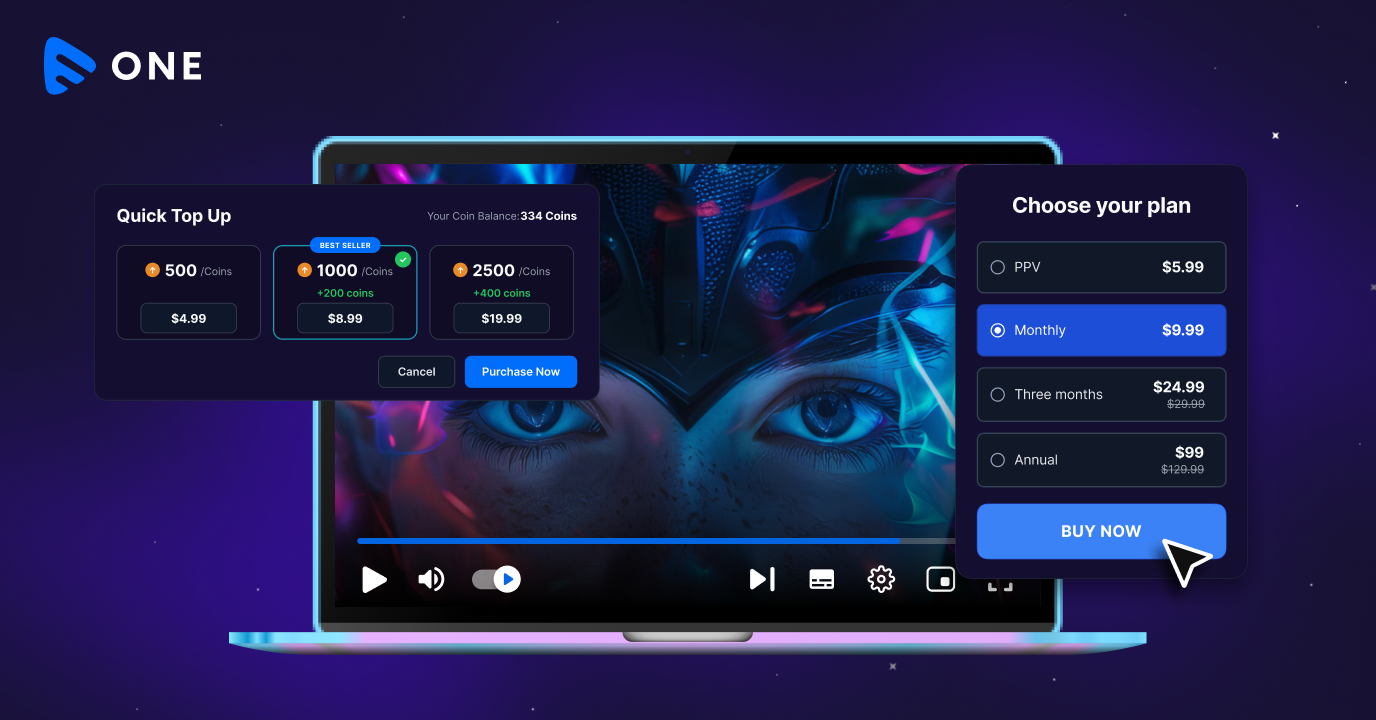
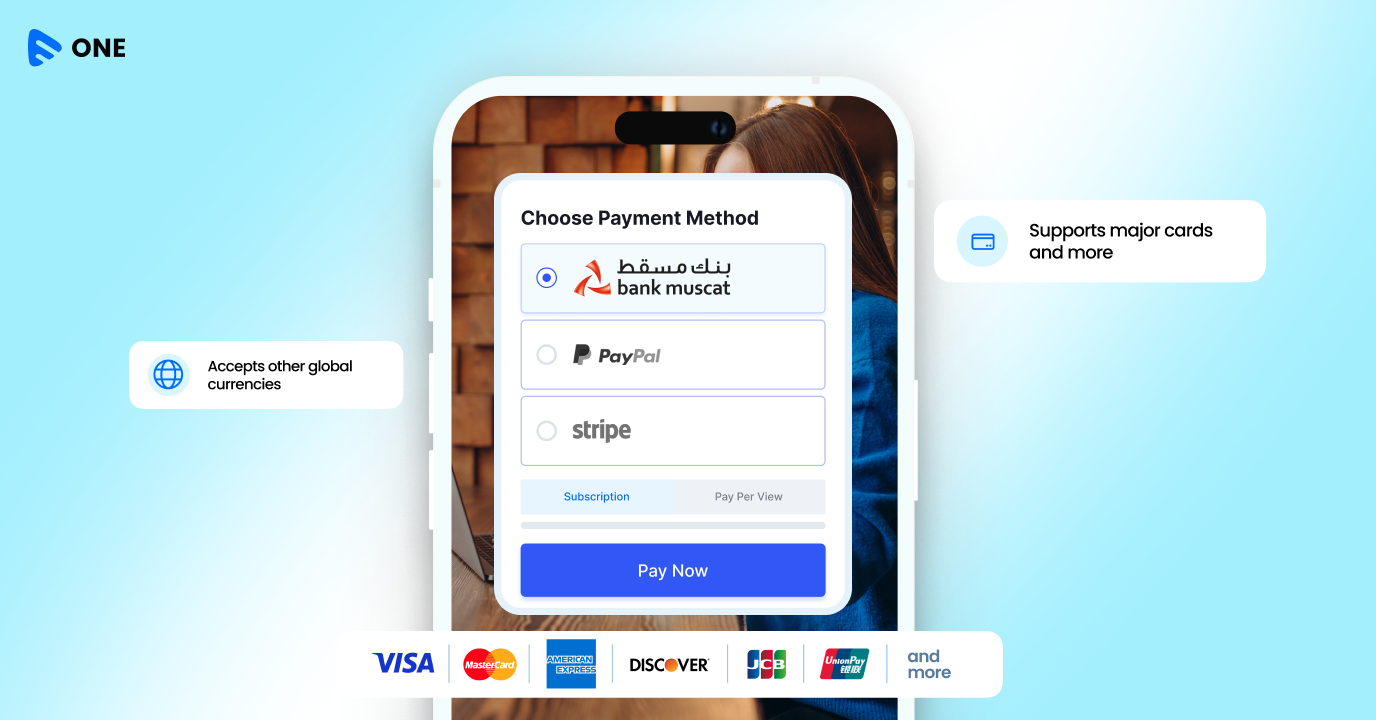
This is precisely why Muvi One built Coins as a native layer on top of existing PPV and subscription tools, not as a replacement for them. From the Muvi CMS, you can enable coins, set bonus coin packs, attach coin pricing to PPV or subscription plans, and reward referrals in coins — all connected to the same content and payment workflows you’re already running. Viewers can pay with coins, fiat, or both, and you get one dashboard to track it all.
See how Muvi Coins works →
What to launch your own microdrama short video app like Reelshot or Dramawave? Take a look at our exclusive solution Muvi Shorts that is tailored to meet all your short video content needs from coin wallet, vertical video player, PPV access, phone upload options, referrals, etc!
Take a 14 Day Free Trial to get better clarity!







Add your comment