On November 18, 2025, a Cloudflare outage disrupted roughly 20% of global websites for several hours causing losses in millions of dollars. For OTT platforms relying on a single CDN provider, that kind of event is not a fringe scenario. It is an infrastructure risk sitting inside every streaming stack.
When video buffers or a live feed drops, they leave. That is why the world’s largest streaming operations — Netflix, ESPN+, and major broadcasters — run a multi-CDN strategy as standard practice.
This post breaks down what a multi-CDN strategy actually delivers for enterprise OTT operators, the core architecture behind it, and how Muvi One’s Ultimate plan gives you multi-CDN infrastructure built in — without needing to engineer it from scratch.
What Is a Multi-CDN Strategy?
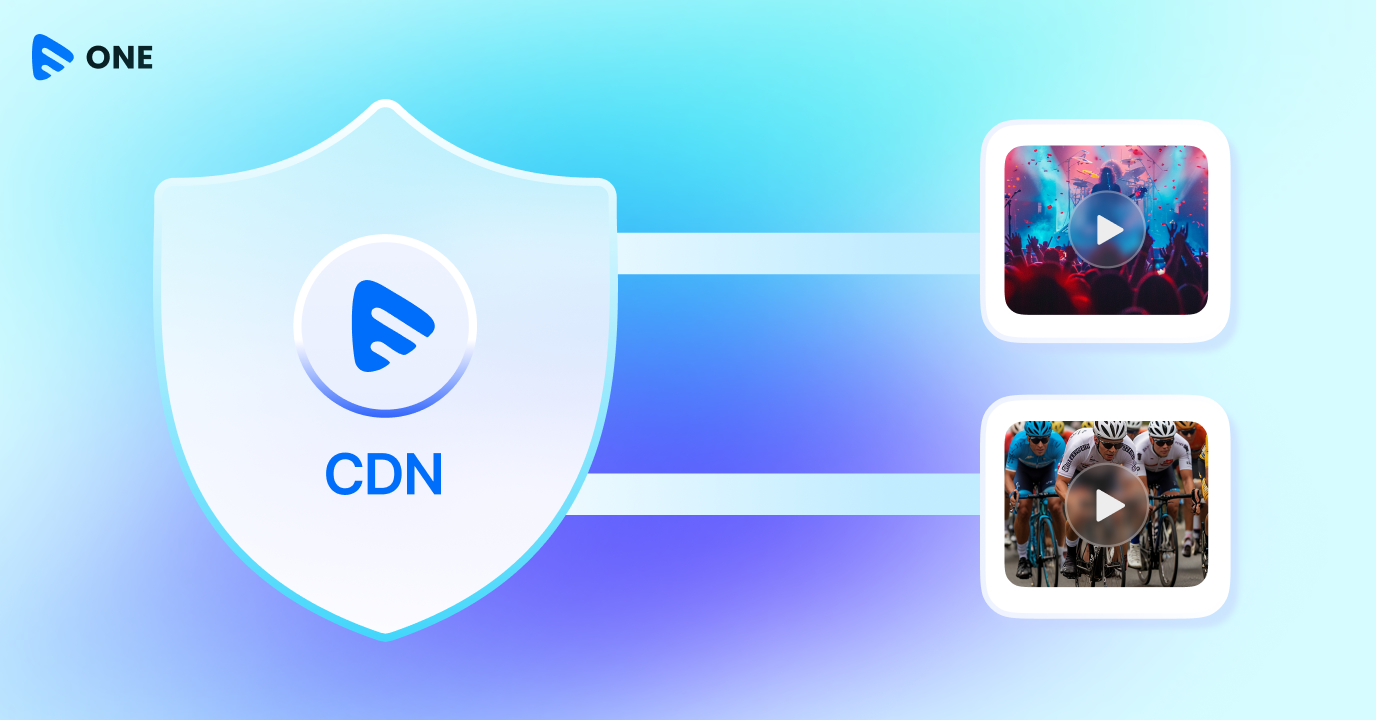
A multi-CDN strategy is an infrastructure approach that distributes content delivery across two or more CDN providers simultaneously. Rather than routing all viewer traffic through a single network, a multi-CDN setup dynamically steers each request to the best-performing provider based on real-time conditions — geographic proximity, latency, availability, and cost.
For OTT platforms, the stakes of getting this wrong are immediate.
The core elements of a multi-CDN architecture include:
- Multiple CDN providers operating in parallel, each with independent infrastructure and coverage
- Intelligent traffic routing that steers requests to the optimal provider in real time
- Automatic failover that redirects traffic when one CDN experiences degradation or an outage
- Regional optimization — configuring specific CDNs for specific geographies where they perform best
- Continuous performance monitoring across all active providers to inform routing decisions
Single CDN vs. Multi-CDN: The Real Business Difference
Most OTT platforms start with a single CDN. The problem surfaces as platforms grow global audiences, launch live events, or expand into regions where their primary CDN provider has limited infrastructure.
Here is where the practical differences become impossible to ignore:
Resilience and Uptime
A single CDN is a single point of failure. When that provider experiences issues your entire audience is affected simultaneously. A multi-CDN setup distributes that risk. Traffic automatically reroutes to a healthy provider, and most viewer sessions continue without interruption.
Geographic Performance
No single CDN performs equally well in every region. A multi-CDN strategy lets you assign traffic by region — matching viewers to the CDN that genuinely serves them best.
Peak Event Scalability
Live sports, product launches, major premieres, and breaking news create intense concurrency in narrow time windows. A single CDN can hit capacity constraints during these moments. Distributing load across multiple providers means your peak event infrastructure scales across multiple independent networks simultaneously.
Cost Optimization
Different CDN providers have different pricing models and regional cost structures. A multi-CDN strategy lets you route baseline traffic through cost-efficient networks and reserve premium capacity for high-value moments — reducing egress costs while maintaining performance standards.
According to a 2025 Streaming Media survey, nearly 35% of streaming operators already run a multi-CDN approach. |
Why Enterprise OTT Platforms Require a Multi-CDN Approach
A multi-CDN strategy becomes an operational requirement as soon as a platform crosses certain thresholds.
Global Audience Coverage
Enterprise platforms serve viewers across multiple continents, time zones, and network environments. Delivering consistent quality across that footprint with a single CDN is architecturally difficult. A multi-CDN strategy lets you match delivery infrastructure to where your audience actually lives.
Live Streaming at Scale
Live content is the highest-stakes delivery scenario in OTT. Unlike VOD, live streams cannot be pre-cached and served from edge nodes gradually. A single CDN absorbing a major live event’s traffic load faces capacity constraints that a multi-CDN setup handles by distributing across independent networks.
Compliance and Data Sovereignty
Enterprise platforms operating in regulated markets — healthcare, finance, government, education — often face requirements around where content can be stored and delivered. A multi-CDN strategy enables routing content through CDN providers that meet specific regional compliance requirements.
SLA and Uptime Commitments
Enterprise buyers and content partners expect uptime commitments that a single CDN dependency cannot reliably support. A multi-CDN architecture is the infrastructure layer that makes high-uptime SLAs commercially credible rather than aspirational.
How Multi-CDN Traffic Routing Actually Works
Understanding the mechanics of multi-CDN routing helps enterprise teams evaluate what their OTT platform actually needs from an infrastructure provider.
DNS-Based Routing
The most common entry point for multi-CDN. When a viewer requests content, the DNS resolver directs that request to a specific CDN based on predefined rules — geographic proximity, provider health status, or weighted traffic distribution.
Performance-Based Traffic Steering
A more dynamic layer where an orchestration system continuously monitors latency, throughput, error rates, and availability across each CDN provider. When one provider’s performance degrades traffic shifts to a higher-performing alternative in real time. This approach delivers measurably better Quality of Experience (QoE) than static routing.
Regional CDN Assignment
Rather than dynamically steering every request, some platforms assign specific CDNs to specific geographies based on known performance characteristics. This is particularly valuable in markets like mainland China, where CDN performance and regulatory requirements differ significantly from the rest of the world. Content gets served from the regionally appropriate network.
Automatic Failover
When a CDN provider experiences an outage or significant degradation, multi-CDN systems automatically redirect traffic to healthy providers. The goal is viewer sessions that continue without interruption.
Multi-CDN Strategy in Practice: Key Use Cases
Enterprise OTT operators typically arrive at a multi-CDN strategy through one of several recurring operational challenges:
- Live sports and events: Platforms broadcasting live sports, concerts, or global premieres.
- Global expansion: Platforms entering new regions — particularly markets like Southeast Asia, the Middle East, or mainland China.
- Enterprise content distribution: Enterprises streaming training content, all-hands events, or product launches to global employee bases.
- Broadcaster migration to OTT: Traditional broadcasters moving workloads to OTT need delivery infrastructure that matches the reliability expectations of linear TV audiences.
MUVI ONE — ULTIMATE PLAN Is your platform ready for global-scale delivery? Multi-CDN, 99.999% uptime & disaster recovery — all built in to Muvi One Ultimate. Explore Muvi One Ultimate → |
Multi-CDN on Muvi One: Built Into the Ultimate Plan
Most OTT platform providers treat multi-CDN as a custom engineering project — something that requires procurement, integration work, ongoing orchestration management, and specialized infrastructure expertise. Muvi One takes a different approach.
Multi-CDN support is a built-in feature of the Muvi One Ultimate plan. That means enterprise teams get multi-CDN delivery infrastructure without building a separate CDN orchestration layer on top of a generic OTT platform.
What Muvi One Ultimate includes alongside Multi-CDN: Custom CDN, Storage & Infrastructure Setup — configure delivery infrastructure around your audience geography and compliance requirements 50,000+ concurrent users — enterprise-scale audience capacity with room to grow 99.999% uptime SLA — the infrastructure reliability tier that enterprise buyers and content partners expect Dedicated Server — full isolation from shared infrastructure, protecting performance during traffic spikes Disaster Recovery — built-in recovery infrastructure ensuring business continuity during failures Custom Firewall — additional network-level security control beyond standard DDoS protection GDPR / HIPAA / DPA Compliance Support — regulatory frameworks for healthcare, finance, and data-sensitive use cases VAPT, ADA, SOC 2 Reports — third-party verified security posture for enterprise procurement |
The combination of multi-CDN routing, dedicated server infrastructure, 99.999% uptime, and disaster recovery in a single managed plan is what makes Muvi One Ultimate materially different from platforms that offer generic OTT tooling and expect enterprise teams to assemble their own delivery infrastructure.
What to Look for in a Multi-CDN-Ready OTT Platform
Enterprise teams evaluating OTT infrastructure for multi-CDN capability should look beyond marketing claims. Here are the practical questions worth asking:
- Regional flexibility: Can you assign different CDN providers to specific geographic regions? Does the platform support CDNs including markets like China?
- Built-in vs. bring-your-own: Does the platform include multi-CDN orchestration, or does it require your team to build and manage a separate CDN layer on top of the OTT platform?
- Failover behavior: How does the platform respond when a CDN provider experiences degradation? Is failover automatic and transparent, or does it require manual intervention?
- Uptime SLA: What uptime commitment backs the multi-CDN infrastructure?
- Compliance alignment: Can the CDN routing configuration satisfy data sovereignty and regulatory requirements in your key markets?
- Support for peak events: What happens when your audience spikes to 50,000+ concurrent viewers during a live event? Does the platform’s multi-CDN infrastructure absorb that?
The Infrastructure Decision Is Also a Business Decision
The question for enterprise OTT operators is not whether multi-CDN matters. The question is whether to build it, manage it, and maintain it internally — or choose a platform that delivers it as a first-class feature.
Muvi One Ultimate brings multi-CDN support, custom CDN and infrastructure configuration, dedicated servers, disaster recovery, and a 99.999% uptime SLA into a single enterprise OTT platform. If your platform is serving global audiences and you need delivery infrastructure that matches your commercial commitments, it is worth a conversation with the Muvi team.
Ready to explore multi-CDN delivery for your platform? Muvi One Ultimate is built for enterprise OTT operators who need infrastructure that performs at global scale. Visit here to learn more or request a custom quote. |
Deliver everywhere. Downtime nowhere. Talk to the Muvi team and get a custom quote for your enterprise OTT platform. |




Add your comment